About Cestrum nocturnum L.
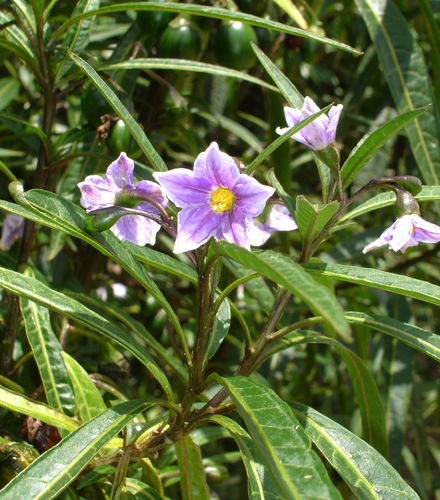
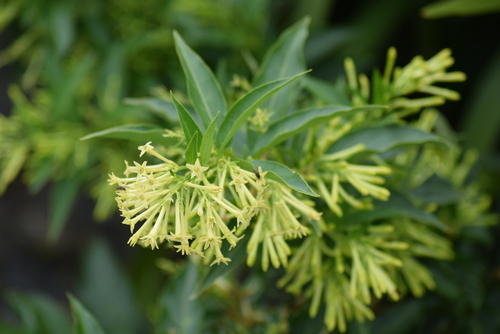
Cestrum nocturnum L. is an evergreen woody shrub with slender, multi-branched growth that reaches 4 m (13 ft) tall, and it bears dense foliage. Its leaves are simple, narrow lanceolate, 6–20 cm (2.4–7.9 in) long and 2–4.5 cm (0.79–1.77 in) wide, with a smooth glossy surface and an entire margin. Leaf tips are pointed or tapered, while leaf bases are rounded or blunt, and leaf stalks measure 0.8 to 2 cm long.
Human ingestion of C. nocturnum has not been well documented, but caution is recommended. All members of the Solanaceae (nightshade) family contain the alkaloid toxin solanine, though some members of this family are commonly eaten without harmful effects. The most commonly reported issues linked to C. nocturnum are respiratory problems triggered by its scent, and feverish symptoms that develop after ingestion. People with respiratory sensitivities or asthma in particular have reported difficulty breathing, nose and throat irritation, headache, nausea, or other symptoms after exposure to the strong scent of the plant's blossoms. Some Cestrum species contain chlorogenic acid, a potent sensitizer, and this compound may be responsible for these scent-related effects in C. nocturnum. Some plant guides classify C. nocturnum as toxic, and warn that ingesting any plant parts, especially fruit, may cause elevated temperature, rapid pulse, excess salivation, and gastritis.
Spoerke and Smolinske (1990) recorded that ingestion of 15 pounds of C. nocturnum plant material caused a cow to develop salivation, clamped jaws, collapse, and eventual death. A postmortem examination found gastroenteritis and congestion in the liver, kidneys, brain, and spinal cord. While the plant's berries and sap are suspected to be toxic, most recorded cases of berry ingestion have not caused problems, with only one exception. Morton documented two cases where children ate handfuls of berries with no significant effects, and another two cases with small amounts of berry ingestion that also caused no adverse effects. In a separate case documented in this source, a 2-year-old child who ingested green berries over several weeks developed diarrhea, vomiting, and blood clots in the stool, alongside anemia and purpura (skin discoloration caused by subcutaneous bleeding). A solanine alkaloid isolated from the child's stool was found to be hemolytic to human red blood cells.
Extracts of this plant have shown larvicidal activity against the mosquito Aedes aegypti, with no observed toxicity to fish. When freshwater fish are exposed to sublethal concentrations of C. nocturnum plant extracts, the extracts do cause hematological changes in the fish.
In cultivation, Cestrum nocturnum is grown as an ornamental plant in subtropical regions, valued for its flowers that release a strong fragrance at night. It grows best in average to moist, light sandy soil with a neutral pH between 6.6 and 7.5, and is hardy to USDA hardiness zone 8. It can be fertilized biweekly with a weak diluted mixture of seaweed and fish emulsion fertilizer.