About Ceroctis capensis (Linne, 1767)
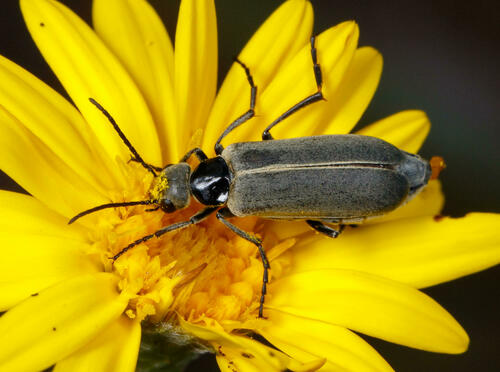
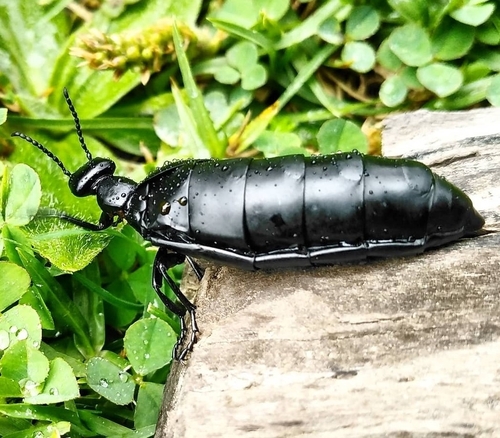
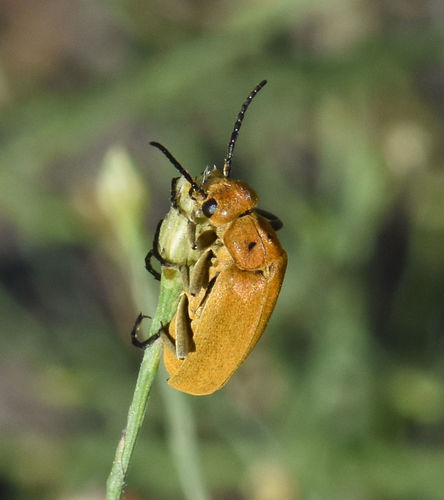
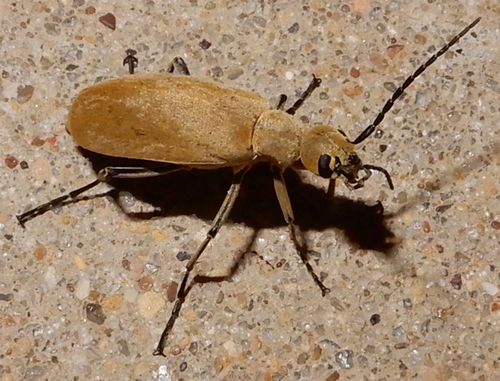
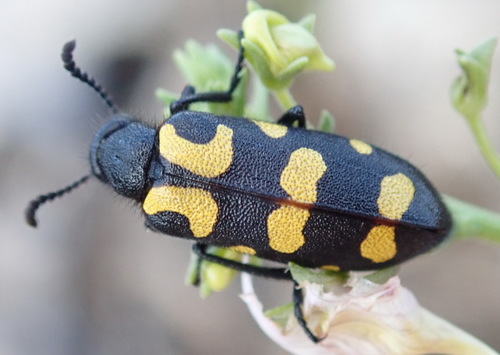
Ceroctis capensis, commonly called the spotted blister beetle, is a diurnal species in the Meloidae (blister beetle) family, endemic to Southern Africa where it lives in a wide range of habitats. When roughly handled, it secretes a toxic liquid from the joints of its legs that causes blistering on human skin. This species bears a general resemblance to Mylabris oculata, another member of the same beetle family. It can be found on a wide variety of plants, flying between flowers and eating floral plant parts, and shows a preference for plants in the legume family and members of the Watsonia genus. It reaches a body length of around 12 millimeters; its elytra are black marked with yellow spots, while its head, antennae, and legs are solid black. Adult blister beetles in the Meloidae family are vegetarian, flying slowly between plants. They are protected by aposematic colouring that warns predators of their toxicity. In contrast, meloid beetle larvae act as parasites or predators of locust egg packets, or feed on the eggs, pollen, and honey of bees. Newly hatched triungulin larvae climb plant stalks and release pheromones that are similar to those produced by female bees. The larvae climb onto male bees lured by the false pheromone signal, then transfer to female bees during mating. Female bees then carry these larvae back to their own nests. Some other meloid species lay their eggs directly at the entrance of bee nests.