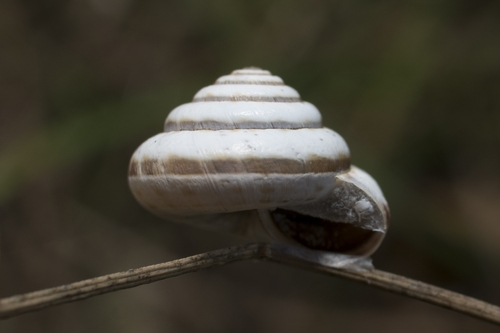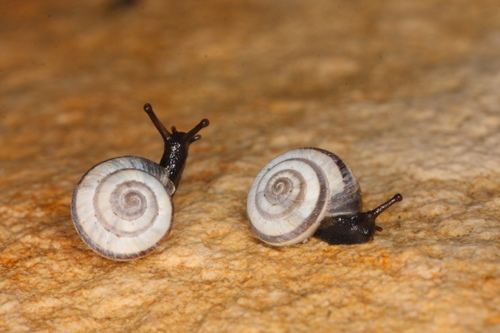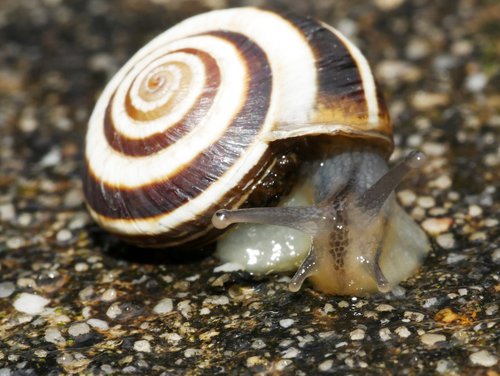
About Cernuella virgata (Da Costa, 1778)
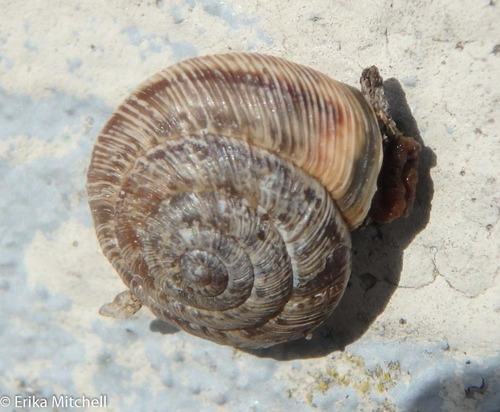
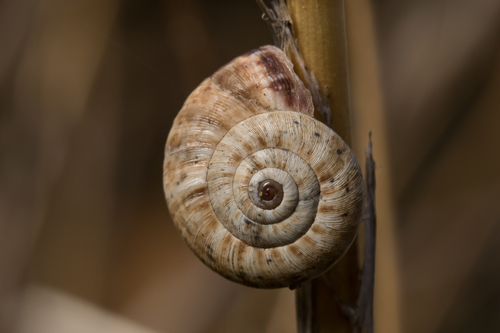
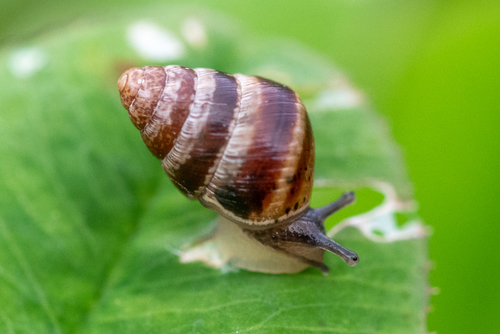
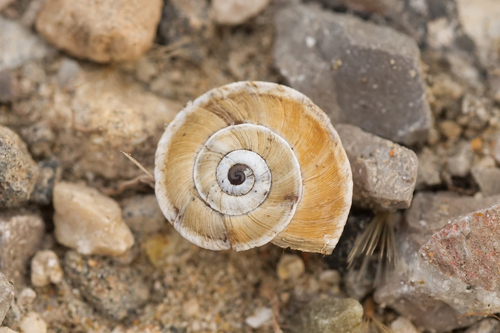
Shell description: The shell of Cernuella virgata measures 6 to 19 mm in height and 8 to 25 mm in width. Shell coloration is quite variable, but it often has a creamy-white background with a variable number of markings ranging from pale to darker brown. Some shells have bands at the periphery and on the underside. Technical description (for terms, see gastropod shell): The shell measures 15 x 12–23 mm, and has 4.5–5.5 convex whorls. The last whorl is initially angulated or rounded. The aperture is rounded, with a whitish or reddish lip on the inside, and the margin is not reflected. The umbilicus is always open, measures 1/10 to 1/6 of the shell diameter, and is sometimes slightly eccentric. The periostracum is whitish or yellowish, sometimes with a red hue, and usually has two brown color bands on the upper side and 3–4 narrower bands on the lower side; it is initially finely ribbed, and weakly striated on lower whorls. Distribution: This snail is endemic to the Mediterranean region and Western Europe, including the British Isles. Specimens of this species have been recovered from the Roman occupation layer at Volubilis, an archaeological site in present-day Morocco. Cernuella virgata is an invasive species and agricultural pest in parts of Australia, where it arrived around 1920. In Australia, it is commonly called the "common white snail". Another invasive land snail species in Australia, Theba pisana, is sometimes confused with Cernuella virgata. The two species are somewhat similar in appearance and live in similar conditions. However, Theba pisana is larger, has a more inflated shell, a lower spire, and a nearly covered umbilicus. Life cycle: The egg of Cernuella virgata is 1.5 mm in size.