About Cermatulus nasalis
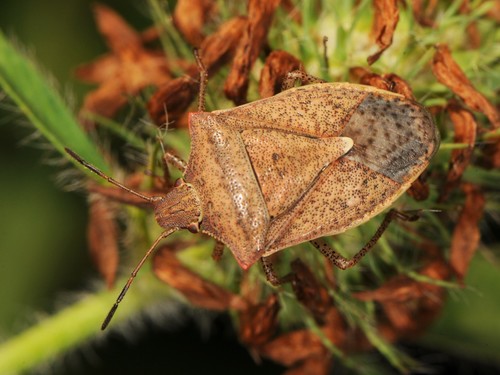
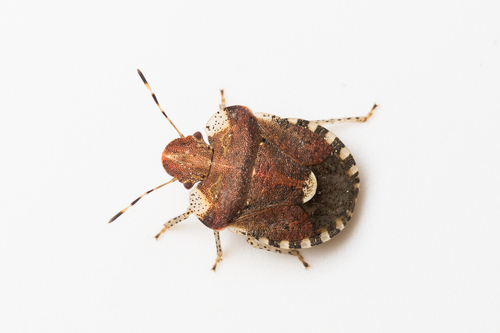
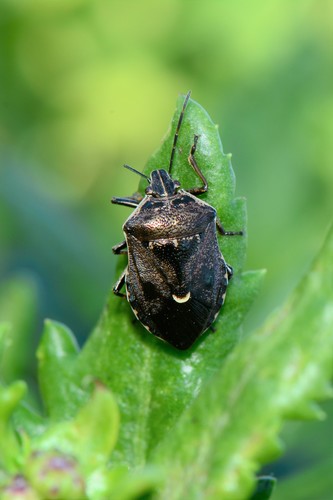
Female Cermatulus nasalis range in length from 10.5 to 12.5 millimetres (0.4 to 0.5 in), and males are slightly smaller. The head is brown, with a bluntly rounded snout. The prothorax is broadly triangular, marked with fine perforations; it ranges in colour from yellowish-brown, orangeish-brown, to rusty-brown, with blackish markings and fine brownish-black punctuations. The dorsal surface of the abdomen is black, while the ventral surface is mottled yellowish-brown. The forewings are mostly brown, with each bearing a large black triangular patch on the posterior part. The antennae and legs are yellowish-brown.
Cermatulus nasalis is a predatory insect that feeds on a variety of insect species; it plunges its beak into prey to suck out body fluids. This species produces just one generation per year, with breeding occurring over several weeks during summer. Females lay a batch of approximately thirty black eggs in three neat rows, on a leaf or section of bark. Newly hatched nymphs are red with black heads; they initially feed on egg-coating bacteria and plant sap. They moult five times, with each instar having a unique pattern of red and black markings. Starting from the second instar, nymphs are predators that feed on caterpillars and other soft-bodied insects.