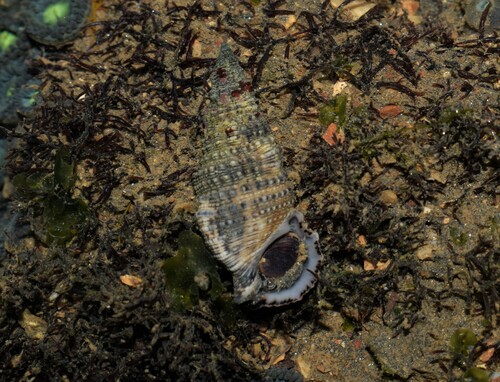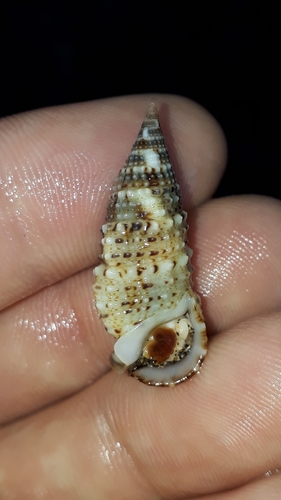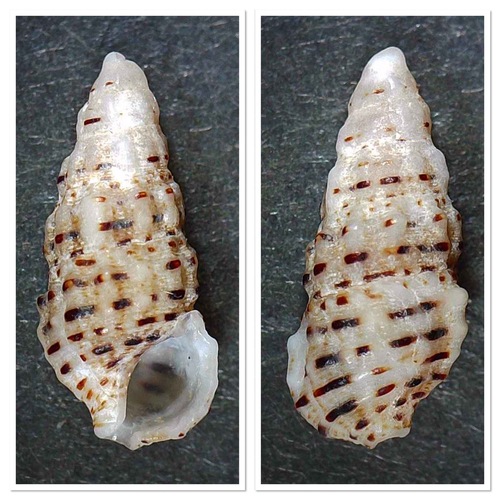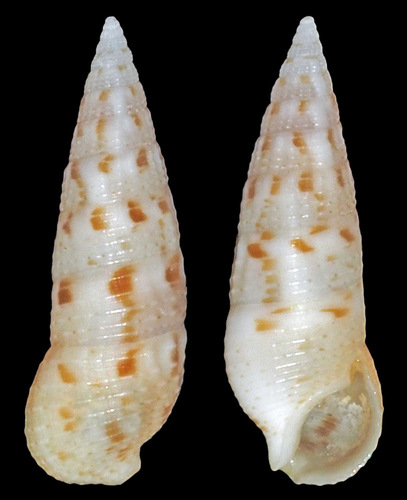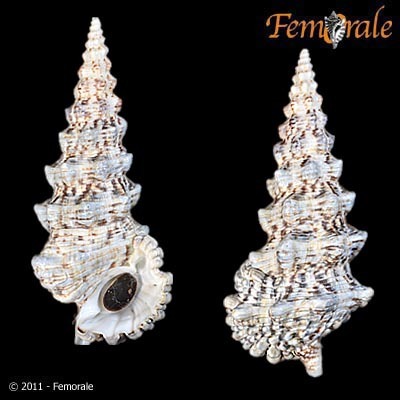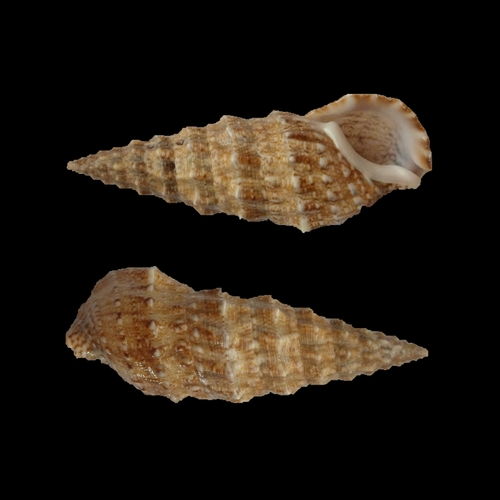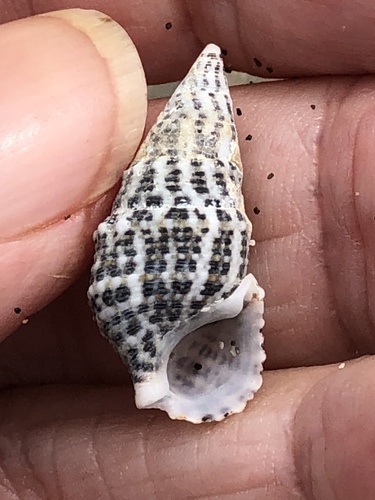
About Cerithium litteratum (Born, 1778)
This species is a marine gastropod with the scientific name Cerithium litteratum (Born, 1778). As of 2010, the maximum recorded shell length for this species is 34 mm. This species occurs in shallow waters and reefs of the Western Central Atlantic Ocean, ranging from South Carolina to Florida (including the Gulf of Mexico) in North America, through Belize in Central America, down to Brazil in South America. It has also been documented in the Indian Ocean. It prefers tropical climate water temperatures and associated ecosystems. It is classified as an occasional alien species in the Mediterranean Sea, based on a 1978 discovery by fishers in the Aegean Sea. As of 2010, this snail has been found from sea level down to a maximum recorded depth of 88 m below sea level, placing it in the sunlight pelagic zone. This snail is a herbivore that feeds primarily on algae. Small hermit crabs, most commonly Calcinus tibicen, and also including Paguristes punticeps and Paguristes cadenati, are well known to occupy the empty shells of this snail. Experimental evidence confirms that this snail supports coral recruitment by removing algae from substrate surfaces; these algae would otherwise outcompete settling coral. Various fish prey on this snail. For example, the Caribbean hogfish Lachnolaimus maximus can crush this mollusc with its jaw. Biomechanical research has found that predation on this snail is limited by jaw force, rather than by the gape of the jaw.