About Cerithideopsis scalariformis (Say, 1825)
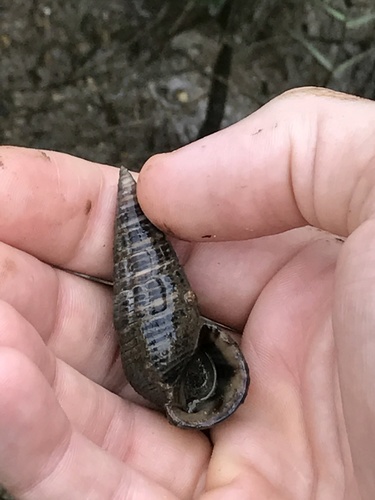
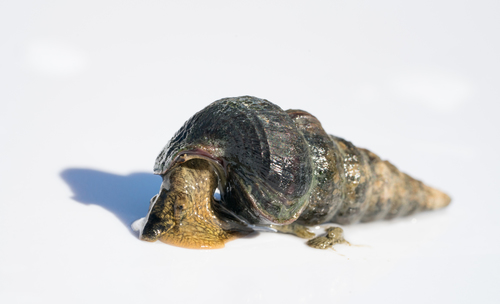
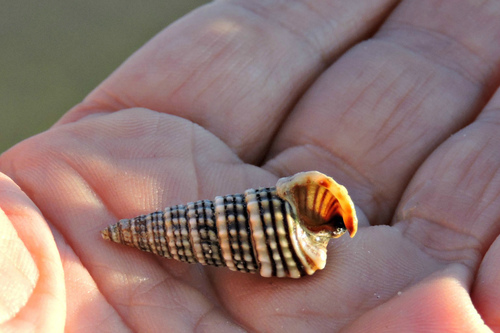
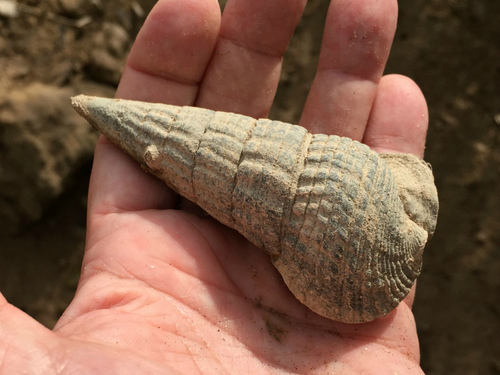
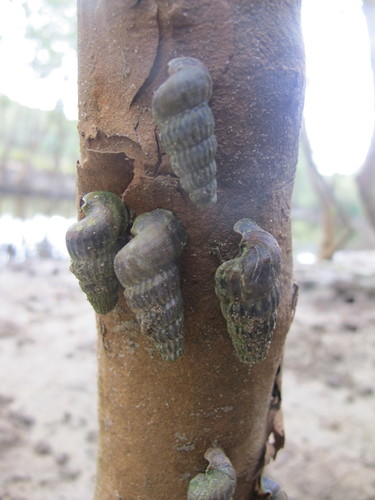
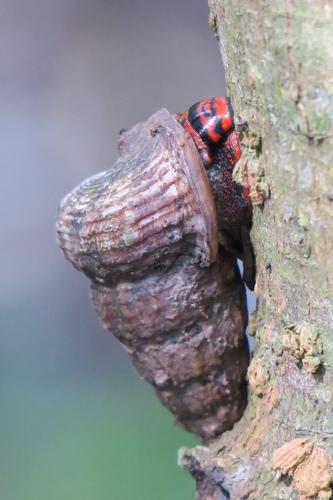
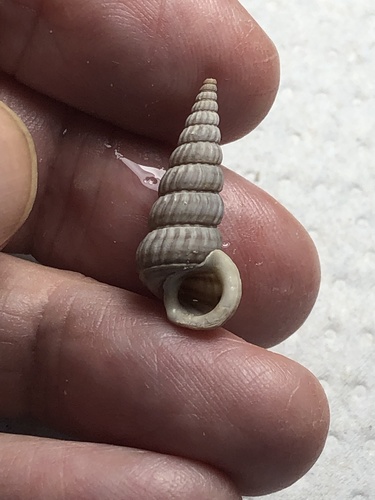
Commonly known as the ladder hornsnail, Cerithideopsis scalariformis (Say, 1825) has an elongated, spirally coiled shell, just like other species in its genus. The radula, a rasping feeding structure, has no cusps on the underside of its rachidian tooth. This species is typically some shade of grey, and its transverse sculpturing is often eroded and whitish. It reaches a maximum length of 33 mm (1.3 in).
This species is native to the warm tropical and subtropical waters of the western Atlantic Ocean, the Caribbean Sea, and the Gulf of Mexico. Its range covers the coast of Georgia, and both the west and east coasts of Florida, including the Indian River Lagoon. It is an amphibious species that lives in mud both above and below the high water mark. It is abundant in tidal creeks, estuaries, salt marshes, and mangrove swamps across its range. It tolerates a wide range of temperature variation and is resistant to desiccation.
The ladder hornsnail feeds on detritus and microalgae. It is preyed on by mud crabs, and likely also by fiddler crabs, blue crabs, clapper rails, other wading birds, opossums, and raccoons. Juveniles sometimes have incomplete tentacles, which may be caused by attacks from killifish. In the Indian River Lagoon, breeding occurs between September and November. During breeding, the snail produces bright green egg spirals covered in jelly. The eggs hatch after around three weeks, and the young develop directly into juveniles with no free-living larval stage. Juveniles tend to live underwater, while adults mostly live above the high water mark. Juveniles reach maturity by August or September. Over time, adult shells become eroded, and adults are often parasitized by trematodes. Most individuals likely die during their second winter.