About Cerithideopsis californica (Haldeman, 1840)
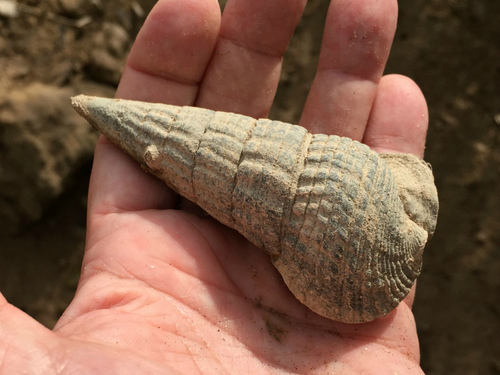
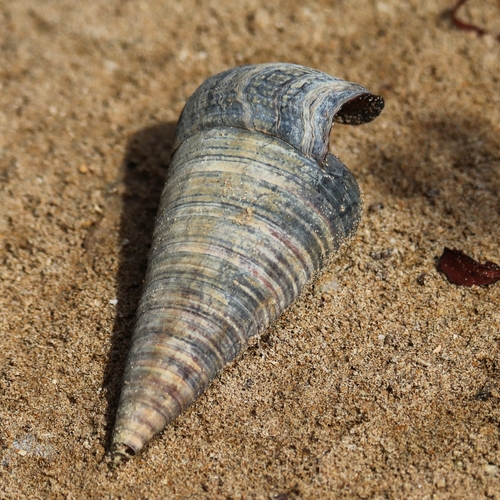
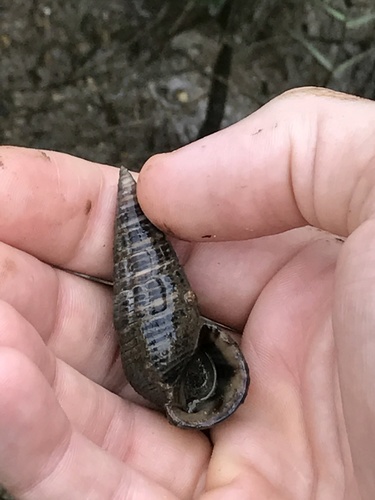
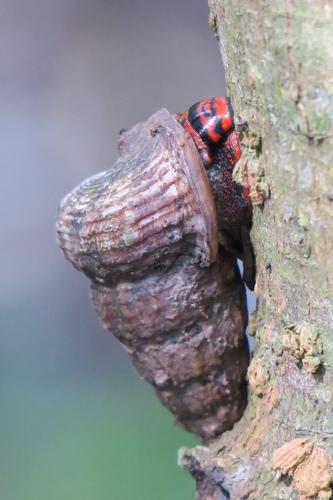
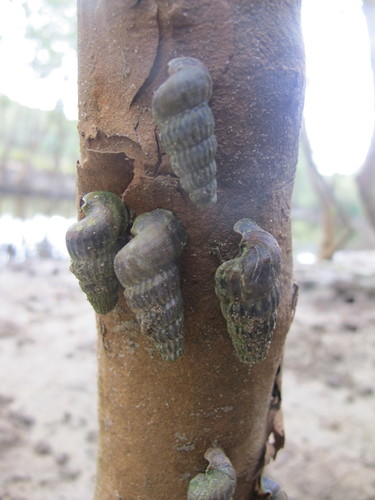
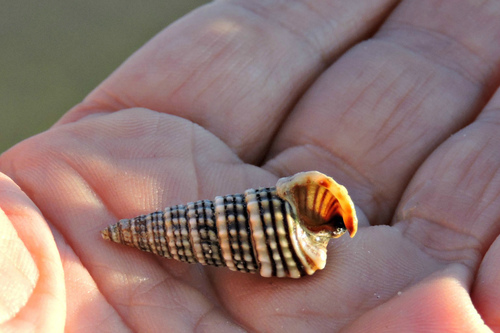
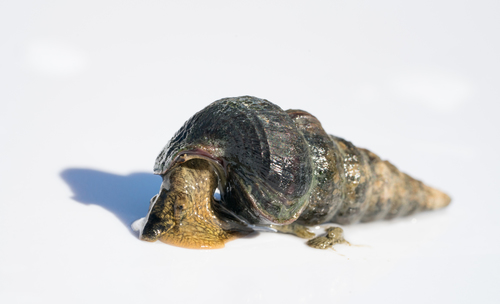
Cerithideopsis californica (Haldeman, 1840) has a turriform-shaped shell that reaches approximately 1 inch (25 mm) in length. This species is distributed along the Pacific coast of North America, ranging from central California, USA south to Baja California Sur, Mexico. Its type locality is noted as "California, in brackish water". It inhabits estuaries dominated by salt marshes, and feeds primarily on benthic diatoms. Across its range in California, this snail grows and reproduces from spring through fall, between March and October, and stops both growth and reproduction during the winter months of November through February. These snails can live a maximum of at least 6 to 10 years, and this lifespan holds true for both uninfected and infected individuals. At least 18 species of trematodes parasitically castrate this species, commonly called the California horn snail. Trematodes infect snails via a free-swimming miracidium larva, or when the snail ingests a trematode egg that then hatches. After infection, trematode parthenitae replicate clonally and produce free-swimming offspring called cercariae. These cercariae go on to infect second intermediate hosts, which include a variety of invertebrates and fish, where they form cysts known as metacercariae. The trematodes complete their life cycle by infecting bird final hosts when birds eat infected second intermediate hosts.