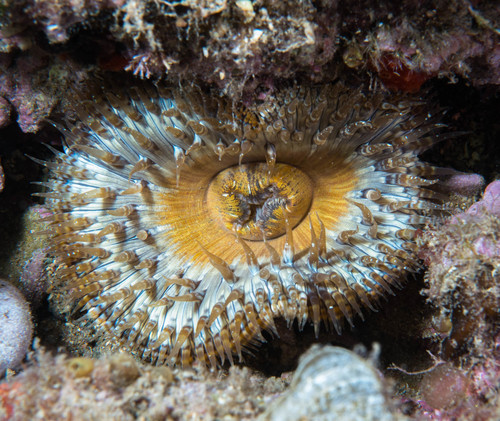
About Cereus pedunculatus (Pennant, 1777)
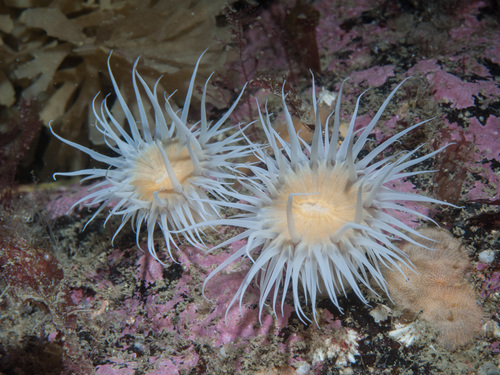
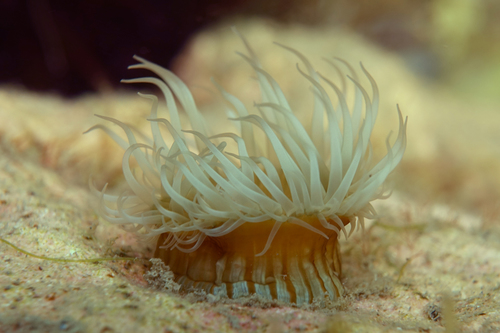
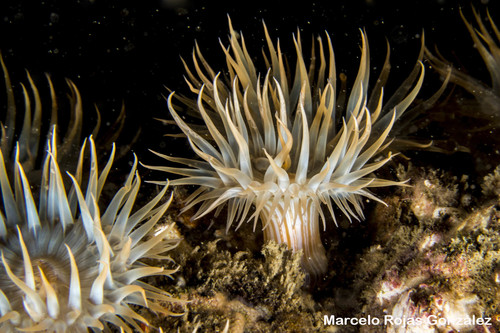
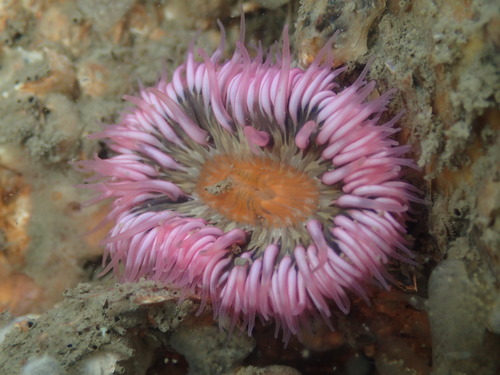
Cereus pedunculatus has a base that is sometimes frilled at the edge. The base is wider than its trunk, which is covered with small dots and can be cream, pink, brown, or violet in color. The trunk may be stalk-like and grow up to ten centimetres tall, or it may have a more trumpet-like shape. Both trunk forms can retract into a squat, tentacle-fringed mound. The oral disc may be seven centimetres wide, or even wider. This species has more than 500 short, flaccid tentacles, which may be plain-colored, banded, or speckled. Cereus pedunculatus is distributed in the northeast Atlantic Ocean south to the Azores, as well as in the North Sea and the Mediterranean Sea, found at depths down to 50 metres. It is common around the southern and western coasts of the British Isles. It may grow in rock pools, often with its base and column concealed in a crevice, or it can be found in muddy gravel, where it anchors to a stone or other sub-surface object. In the muddy gravel habitat, only the tentacles project above the substrate, and the whole animal can withdraw into the substrate when danger threatens.