About Cercopithecus nictitans (Linnaeus, 1766)
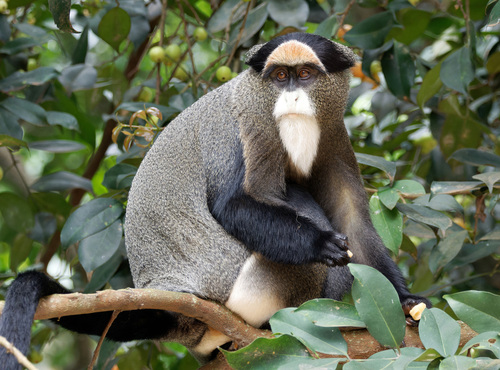
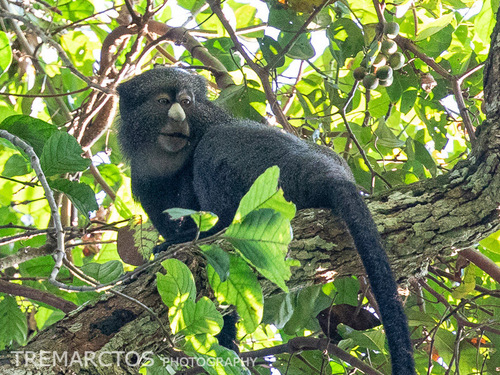
The greater spot-nosed monkey, also called the putty-nosed monkey, has the scientific name Cercopithecus nictitans. It is one of the smallest Old World monkeys, and a guenon belonging to the C. mitis group. It is native to West Africa. While it lives in rain forests to some degree, it is found more often in the transition zone between rain forest and savannah. It is primarily arboreal and often associates with monkey species other than its own. Both of its common names refer to the species’ prominent white nose. Greater spot-nosed monkeys live in social groups that contain one adult male, multiple adult females, and their dependent offspring. Little recent research has been done on the species’ behavior, and most existing research focuses on its auditory communication. Males of this species use three distinct call types: 'booms', 'pyows', and 'hacks'. These calls are used in a range of contexts, including as alarm calls. As observed in some other monkey species, researchers have argued that the acoustic structure of greater spot-nosed monkey alarm calls changes depending on what type of predator has been spotted. The species is also reported to combine different calls into sequences that carry an entirely different meaning than the individual calls that make up the sequence.