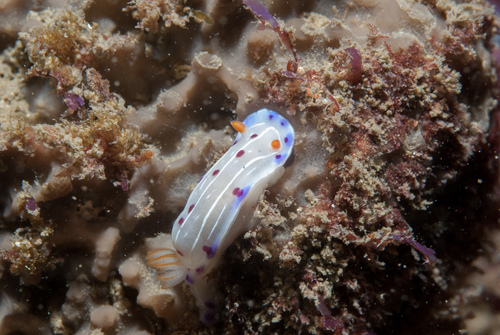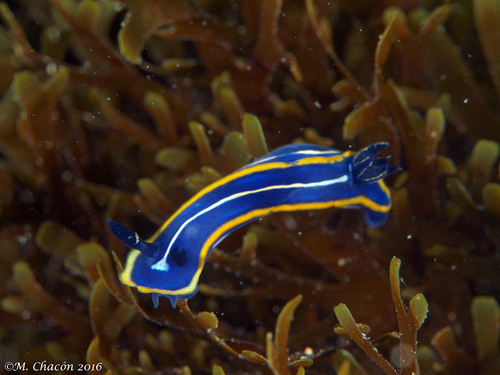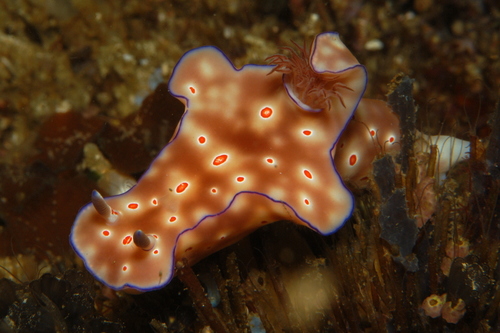
About Ceratosoma trilobatum (J.E.Gray, 1850)
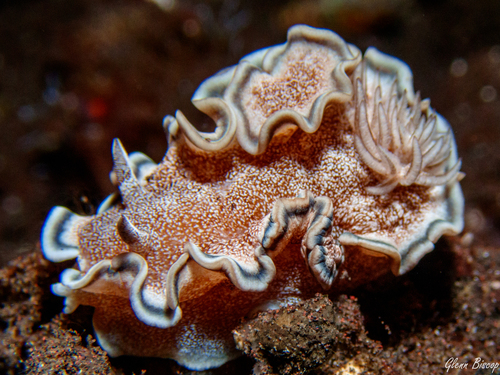
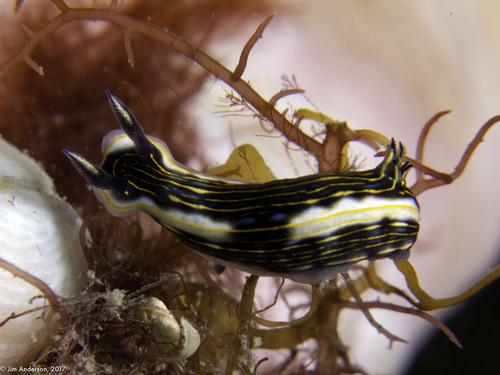
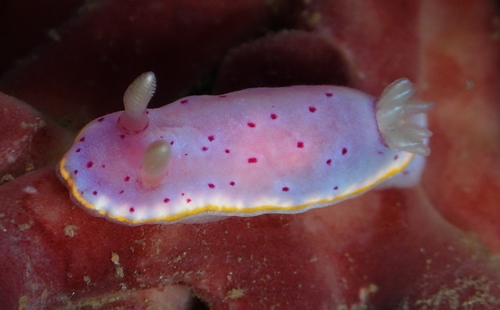
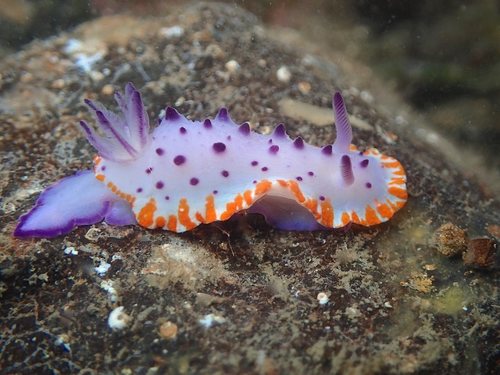
Ceratosoma trilobatum can reach a maximum length of 15 centimeters. Its body coloration is extremely variable, but always made up of bright colors. Body color is not a useful characteristic for identifying this species, because it can easily be confused with Ceratosoma tenue. The distinctive physical characteristics of Ceratosoma trilobatum are two mantle lobes, one on each side of the front half of the body: the first lobe sits around the head region, and the second is located near the gills. The purple margin along the mantle and foot forms an unbroken line. Another unique feature of this species is a horn-like structure that covers the gills; this structure acts like a lure and also functions as a defensive chemical weapon that deters any potential predator that attempts to bite this area. The gills and rhinophores can be retracted into internal sheaths, and the base of these structures has a purple margin. This species of sea slug was first described from specimens found in India. It is widely distributed across the tropical waters of the Indo-Pacific region, ranging from the eastern African coast to Japan, and including the Red Sea.