About Ceratopteris thalictroides (L.) Brongn.
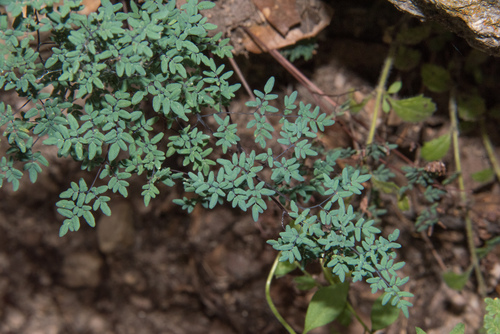
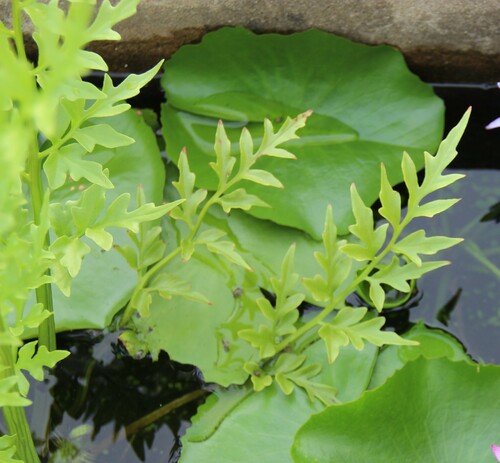
Ceratopteris thalictroides (L.) Brongn. is a fern that roots in mud, and individual plants vary in size and appearance. The stipes of mature plants are 3–15 mm in diameter, spongy, and air-filled. The entire frond including its stipe ranges from 4–60 centimeters (1.6–23.6 in) in length. Fertile fronds are pale green when young, turning brown at maturity, and measure 15–100 centimeters (5.9–39.4 in) or more in total length including the stipe, with pinnae reaching up to 40 centimeters (16 in) long. Proliferous or dormant buds, covered in overlapping dark scales, grow in the axils of fertile pinnae and are winged. Sterile pinnae are deeply incised, with segments measuring 2–15 mm by 10–30 mm, while fertile segments measure 1–2 mm by 10–80 mm.
This species is widespread across tropical and subtropical regions of the world, ranging as far north as Japan and as far south as western Australia.
Ceratopteris thalictroides is most often found near stagnant water or in slow-moving sections of rivers, growing in swampy areas, swamp forests, sago swamps, marshes, and both natural and man-made ponds. It grows well in full sun to moderate shade, at altitudes from sea level up to 1,300 meters (4,300 ft), though most populations occur below 500 meters (1,600 ft). This fern often forms dense masses on or around logs and other floating vegetation. One recorded population was found in a freshwater mangrove dominated by Sonneratia, growing among the tree's finger-like pneumatophores. In some regions, Ceratopteris thalictroides displays seasonal growth patterns: it reaches maturity and releases spores during the dry season, by which point plants have lost nearly all of their sterile fronds. The species has been reported to function as an annual in wild settings, repopulating from spores each growing season, but it can live indefinitely in cultivation. It can reach full maturity in as little as 29 days.
In cultivation, Ceratopteris thalictroides grows best in soil with a pH between 5 and 9, under very high light levels, and it typically grows quickly. Like all aquatic plants, it can benefit from added carbon dioxide. Its method of reproduction is similar to other ferns, and it also produces small adventitious plantlets on the mother plant that are released when they are fully developed. In aquariums or water gardens, it provides useful shade for shy fish and small fry, and its dense roots absorb excess nutrients from the water, which helps prevent algae growth.