About Ceratophyllum submersum L.
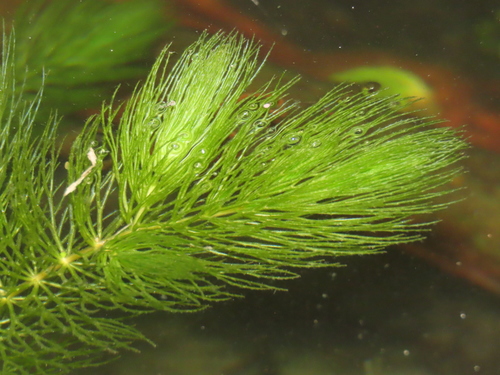
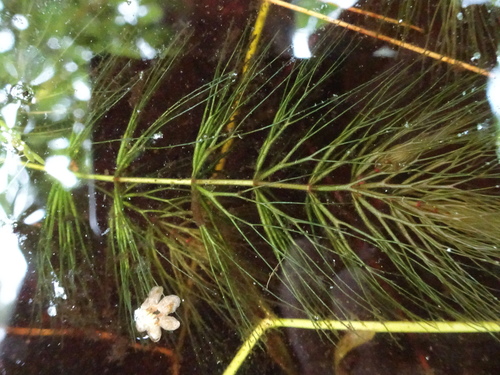
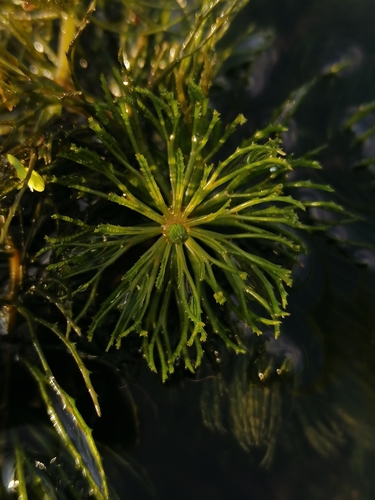
Ceratophyllum submersum L. is a free-floating aquatic plant. Its stems fork three to four times, and stem ends bear 6 to 8 threadlike leaf tips. This species tolerates temperatures between 4°C and 30°C, with an optimal growth temperature range of 15°C to 30°C. Mature plants typically reach a total height of either 15–30 cm (6–12 inches) or 30–45 cm (12–18 inches).
Ceratophyllum submersum, commonly called soft hornwort, closely resembles the related rigid hornwort (Ceratophyllum demersum). A clear texture difference becomes visible in mature plants of the two species, and they can be reliably distinguished by the number of leaf divisions: rigid hornwort’s leaves divide only one or two times, while soft hornwort’s leaves divide three or four times.
Soft hornwort prefers to grow in eutrophic waters located near agricultural systems. Like C. demersum, it is a self-regulating, rapid-growing plant that grows best in moderately lit environments. It develops an auburn color tint when grown in high light conditions. Due to its fast growth rate, it requires frequent trimming, or needs to be placed in a large tank or body of water to grow properly.
This species grows fully submerged in freshwater in tropical regions around the world, and has been introduced to new temperate areas including Ireland. It also grows successfully in the Rosetta branch of the Nile River in Egypt, where it thrives in different sites at different times of the year.
In terms of ecology, the presence of C. submersum in water correlates with reduced levels of nitrogen forms including NH4 and NO3, and increased pH, conductivity, and dissolved oxygen. Unlike C. demersum, which shows a negative association with all phytoplankton classes, C. submersum shows a positive association with phytoplankton, chlorophyll a, and Cyanophyceae. The two species do not typically share the same habitat; the cosmopolitan C. demersum has a much wider distribution, although they occupy similar niches. In some cases, C. submersum can outcompete and fully overtake C. demersum in a body of water within a single growing season.
For human use, C. submersum is commonly added to aquariums to reduce nitrogen levels in artificial aquatic environments. It is less widely used for this purpose than C. demersum. It is propagated by cutting stem segments and placing them into an aquatic system. After organic matter is broken down into soluble inorganic forms, C. submersum helps to oxygenate wastewater.