About Ceratitis capitata (Wiedemann, 1824)
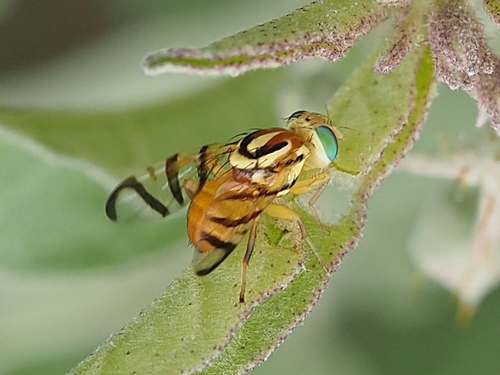
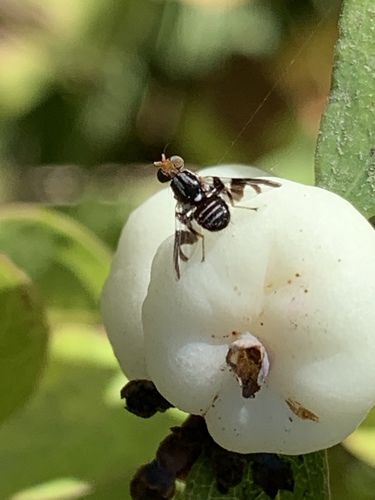
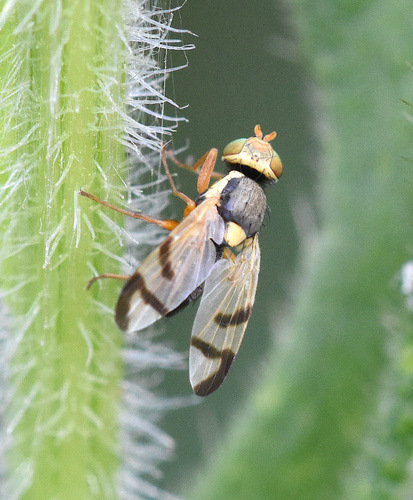
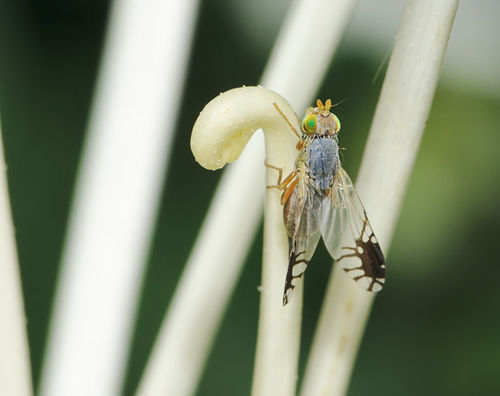
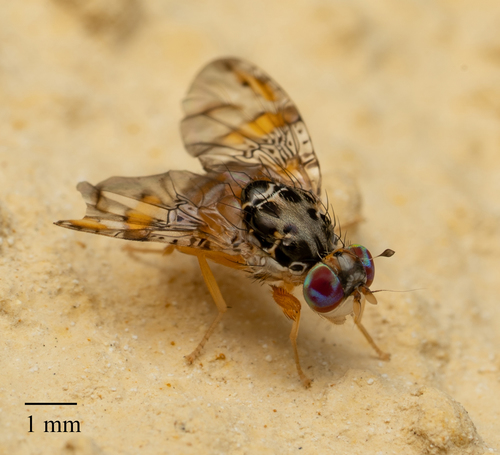
Ceratitis capitata, commonly known as the Mediterranean fruit fly or medfly, is a yellow-and-brown fly native to sub-Saharan Africa. It has no close relatives in the Western Hemisphere, and is ranked among the most destructive fruit pests globally. Occasional medfly infestations have occurred in California, Florida, and Texas, which require extensive eradication work to stop the fly from becoming established in the United States. C. capitata is the most economically important fruit fly species, for two reasons: it survives cooler climates more successfully than most other fruit fly species, and it can inhabit more than 200 types of tropical fruits and vegetables, causing severe destruction and degradation to these crops. Eradicating medfly after it is introduced to a new area can be extremely difficult and expensive, and C. capitata infestation also lowers crop yields and forces costly sorting processes for fresh fruits and vegetables. The Geographic Distribution Map of C. capitata shows the distribution of the Mediterranean fruit fly across the world. Most information for the map comes from existing national Mediterranean fruit fly surveillance reports, so the map shows assessments of this pest's presence at the national level, and at the sub-national level in some cases. According to the map, C. capitata is present across all of Africa, South and Central America, the Middle East, and Southern Europe. It has been confirmed to be absent from most of North America, the Indian subcontinent, parts of South America, and most of Australia. Climate change may play a role in changing C. capitata's distribution and abundance. C. capitata has a four-stage life cycle: egg, larva, pupa, and adult. Female medflies lay groups of roughly 10 to 14 eggs, depositing them just under the skin surface of their host fruit. After being deposited below the fruit's skin, the eggs hatch in only a few days, emerging as maggots, or larvae. C. capitata flies are known to disperse up to 12 miles to find host fruit. When host fruit is abundant in their current area, they will not disperse farther than 300 to 700 feet. Among all fruit fly species, C. capitata has the largest variety of host fruits, including over 200 different types of fruits and vegetables. These include, but are not limited to, akee, star apple, oranges, grapefruit, guava, mango, plum, and pears. Adult and larval stage C. capitata feed in different ways.