About Cerastoderma glaucum (Bruguière, 1789)
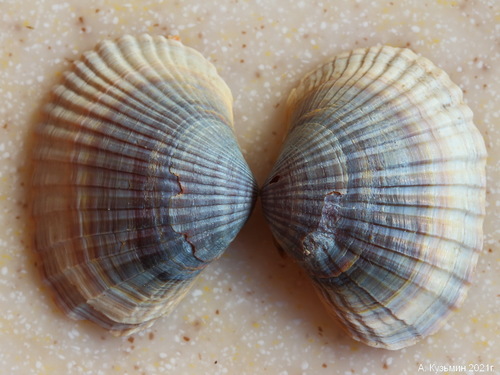
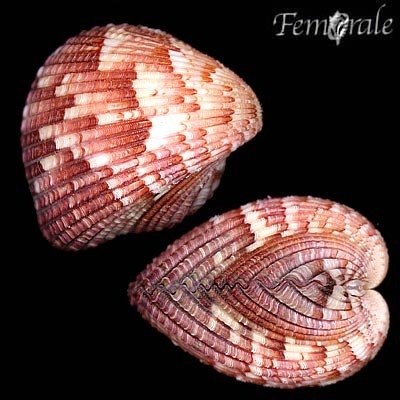
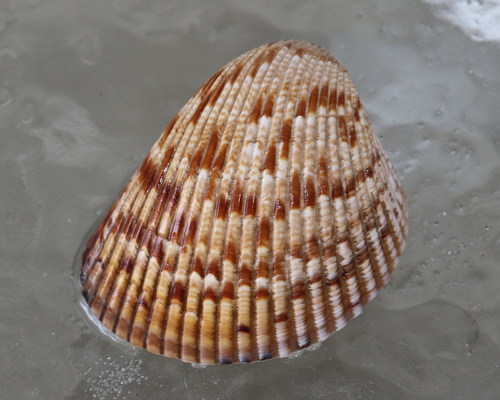
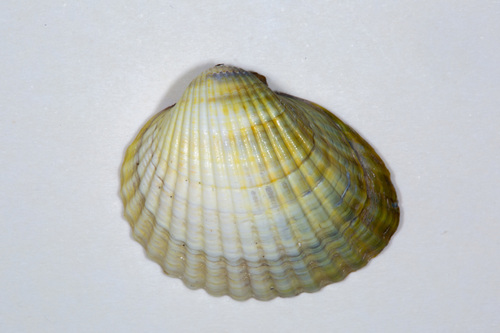
Cerastoderma glaucum, commonly known as the lagoon cockle, is a species of saltwater clam, a marine bivalve mollusc that belongs to the cockle family Cardiidae. This species occurs along the coasts of Europe and North Africa, with ranges including the Mediterranean Sea, Black Sea, Caspian Sea, and the low-salinity Baltic Sea. It is a euryhaline species that can survive in habitats with salinities ranging from 4 to 100 ‰. In north-west Europe, including the British Isles, this species typically does not inhabit open shores. Instead, it lives in shallow burrows within saline lagoons, and can sometimes be found on lower shores in estuaries. It cannot tolerate prolonged or significant exposure to air. Individuals from lagoon populations have thinner shells than individuals from estuarine populations of this species. Fully grown lagoon cockles can reach a maximum length of 50 mm. In north-west Europe, this species spawns between May and July. Its planktonic larval phase lasts between 11 and 30 days, and settled adult cockles typically have a life span of 2 to 5 years. This species was first described in 1789 under the name Cardium glaucum, almost simultaneously by both Bruguière and Poiret.