About Cephaleuros virescens Kunze ex Fr.
Cephaleuros virescens is an algal plant pathogen that infects tea, coffee, and coconut plants, causing algal leaf spot or algal rust. It infects a wide variety of tree species, and is widely distributed in the tropics and subtropics.
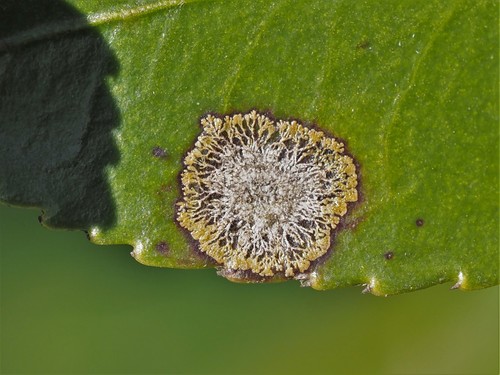
Both sexual and asexual forms of reproduction occur in Cephaleuros virescens. The asexual stage is considered the most important, as it is the more common source of inoculum in the pathogen's disease cycle. Infection occurs when either sporangia or thallus filaments are deposited on the tissues of a susceptible plant host. The pathogen is usually dispersed by water or wind. Under appropriate environmental conditions, zoospores are released from the sporangia, and symptoms begin to develop. Zoospores can penetrate the host cuticle in a haustorial manner. A flat, circular thallus develops under the cuticle. Algal filaments extend from these thalli, further increasing the surface area that the pathogen infects. The pathogen survives on existing leaves and stems as spores, and in fallen plant debris. Because it lives in tropical climates, it can survive year-round instead of relying on specialized survival structures.
As an algal species, this plant pathogen thrives under similar conditions to other algal organisms. Cephaleuros virescens prefers moist, humid weather. It flourishes in areas with frequent rain, and warm to high temperatures. It has been recorded on all continents that have tropical and subtropical environments. It is commonly found in Hawaii and Florida, and there have also been recorded incidents of the disease it causes in India and Thailand.