About Cepaea hortensis (O.F.Müller, 1774)
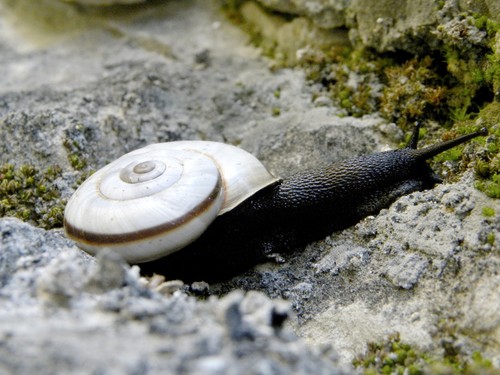
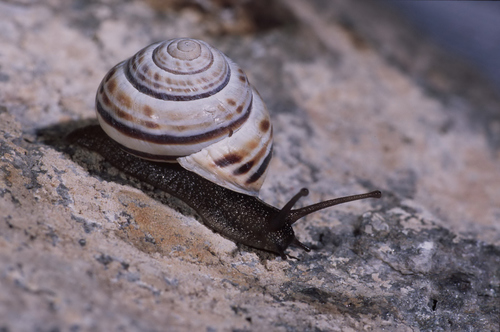
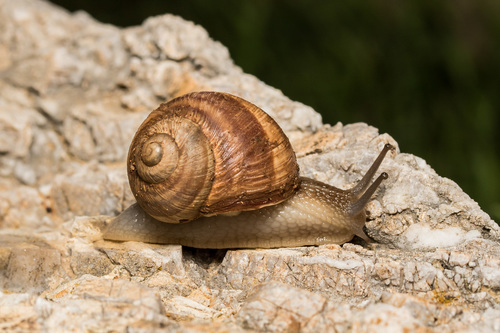
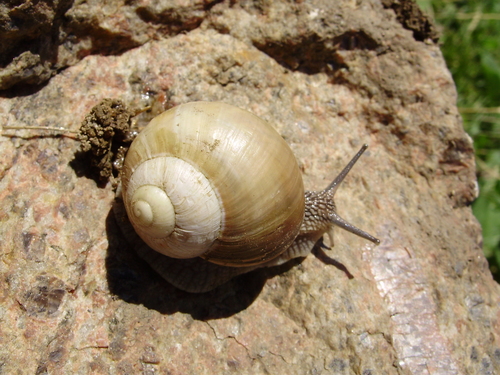
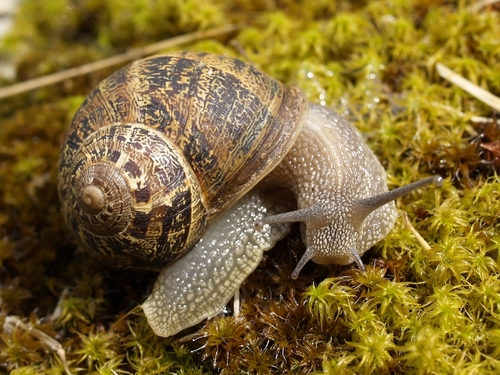
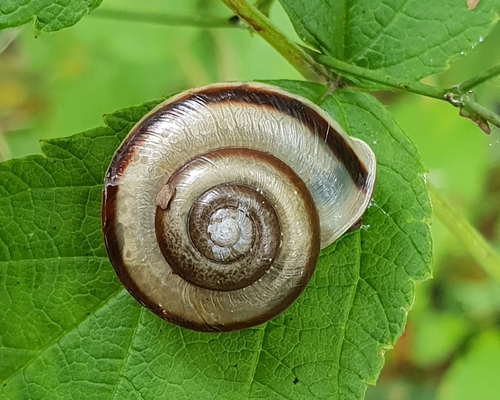
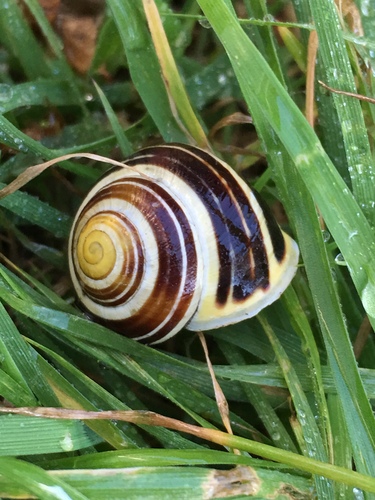
Cepaea hortensis has a shell that can reach up to 22 mm (1 inch) in diameter, and it tends to be slightly smaller than the related species Cepaea nemoralis. In adult individuals, the umbilicus is closed, while it remains narrowly open in juvenile snails. Although the most common background shell colour for this species is yellow, shells can show a full range of background colours from brown through pink to pale yellow. Up to five brown bands may be present on the shell, and some of these bands may fuse together with adjacent bands. This colour and banding polymorphism, which is also seen in Cepaea nemoralis, has been the topic of a large amount of scientific research. This snail species produces and uses love darts as part of its mating behaviour. The egg of Cepaea hortensis measures 2 mm in size. The native range of Cepaea hortensis covers Western and Central Europe. Its presence along the coast of northeastern North America is considered native, because archaeological deposits show it has been present there for at least 7850 years, which predates the arrival of Viking explorers. The range of Cepaea hortensis extends further north in Scotland than the range of Cepaea nemoralis, and it is the only Cepaea species found in Iceland and the northern parts of Scandinavia, reaching as far north as 67° 30' N. In contrast, the southern limit of Cepaea hortensis's range is also further north than that of C. nemoralis: in Spain, it only occurs in the northeast, and it is not found in Italy. Cepaea hortensis has been recently introduced to the Moscow region of Russia and to Ukraine, but it has not become as widely established there as Cepaea nemoralis. In the Swiss Alps, this species occurs at altitudes up to 2050 m. The two Cepaea species share many common habitats, including woods, dunes, and grassland, but the white-lipped snail (Cepaea hortensis) tolerates wetter and colder environments than C. nemoralis.