About Centruroides sculpturatus Ewing, 1928
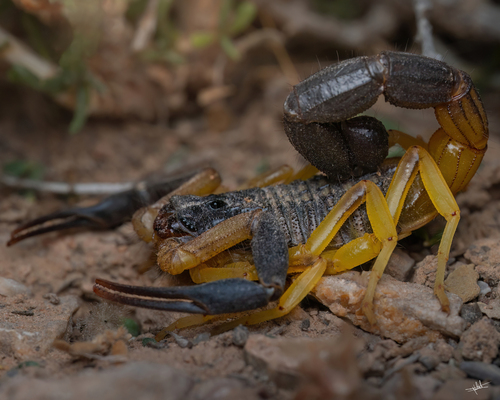
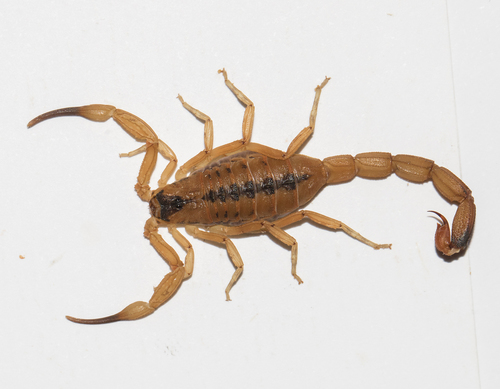
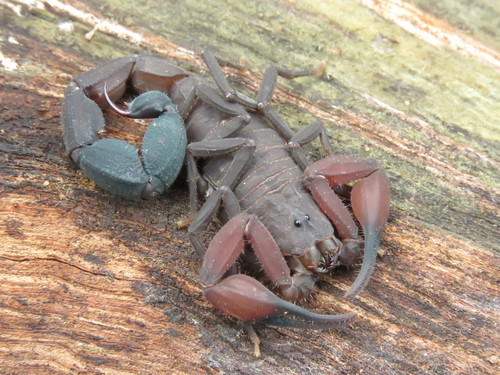
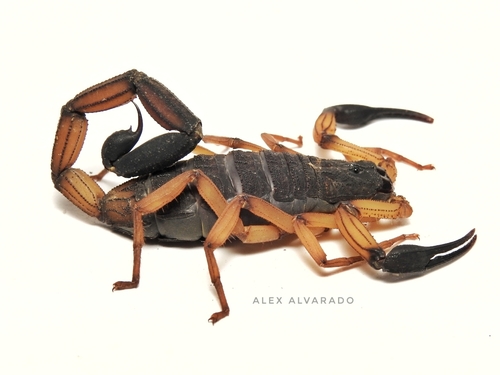
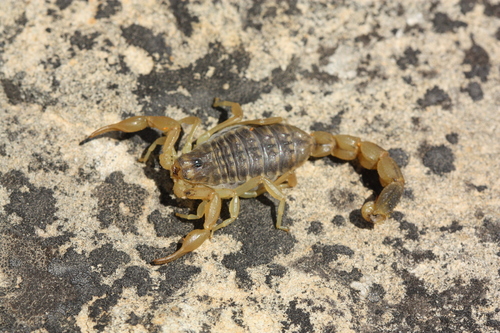
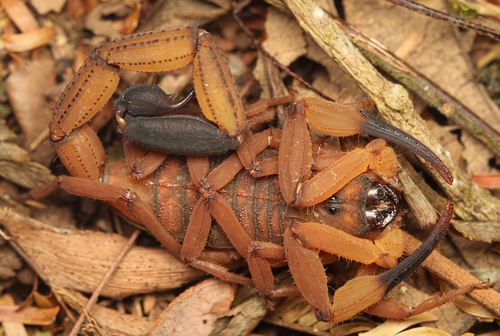
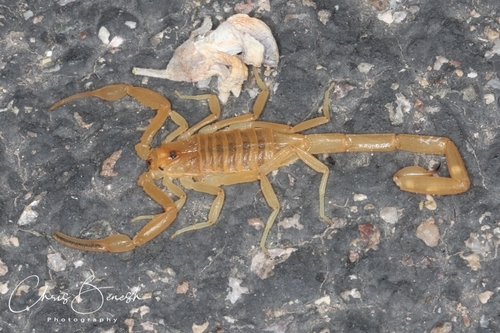
The Arizona bark scorpion, with the scientific name Centruroides sculpturatus, was once classified as part of the species Centruroides exilicauda. It is a small, light brown scorpion common to the Sonoran Desert in the southwestern United States and northwestern Mexico. Adult males can reach a body length of 8 centimetres (3.1 inches), while adult females are slightly smaller, with a maximum length of 7 centimetres (2.8 inches). This scorpion species is nocturnal and particularly well adapted to desert habitats. Layers of wax on its exoskeleton reduce water loss, helping it survive arid conditions. Even with this adaptation, Arizona bark scorpions hide during the heat of the day, typically under rocks, wood piles, or tree bark. They do burrow, and they are commonly found inside homes—they can enter through gaps as small as 1/16 of an inch wide. Arizona bark scorpions prefer riparian areas with mesquite, cottonwood, and sycamore groves, all of which hold enough moisture and humidity to support insects and other prey. The increased environmental humidity from residential irrigated lawns and other similar systems has caused a massive increase in the number of these scorpions in some areas. Centruroides is an unusual scorpion genus, because it is the only genus in the American Southwest whose species can climb walls, trees, and other objects with a sufficiently rough surface. Arizona bark scorpions exhibit negative geotaxis, meaning they prefer an upside-down orientation. This often leads to people being stung when the scorpion is on the underside of an object. The Arizona bark scorpion preys on small and medium-sized animals, including beetles, spiders, crickets, cockroaches, other insects, and other scorpions. The range of the Arizona bark scorpion covers southern California, southern Arizona, southern Nevada, extreme southwestern Utah, and western New Mexico in the United States. It is also found in Baja California, Sonora, and Chihuahua in Mexico. Arizona bark scorpions have a gestation period of several months. They give birth to live young, which are gently guided onto their mother's back after birth. Females usually produce between 25 and 35 young. The young stay with their mother until their first molt, which occurs up to three weeks after birth. The life expectancy of Arizona bark scorpions is about six years. Like most scorpions, Arizona bark scorpions are extremely resilient. During American nuclear tests, scorpions were found near the blast's ground zero alongside cockroaches and lizards, with no recorded adverse effects from the radiation exposure. Poison control centers in Arizona recommend that people seek immediate medical attention if severe symptoms develop after a sting, especially in young children. The national Poison Center hotline can be reached at 1-800-222-1222.