About Centruroides limbatus (Pocock, 1898)
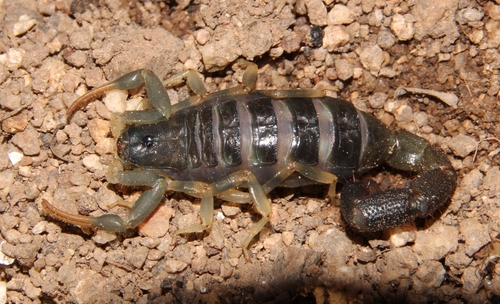
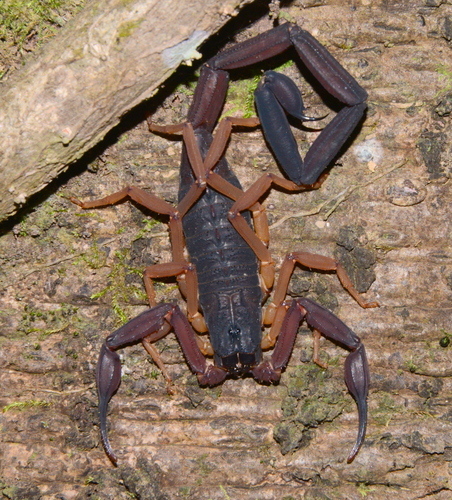
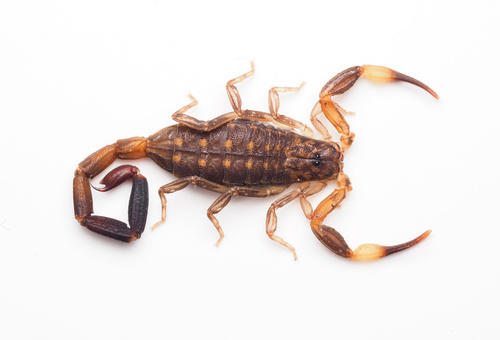
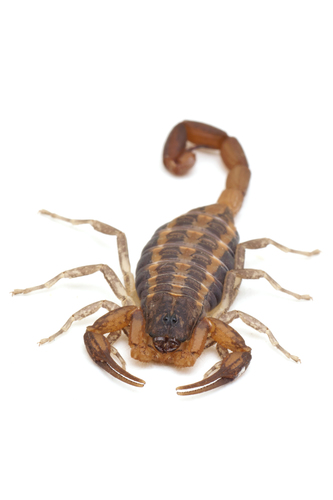
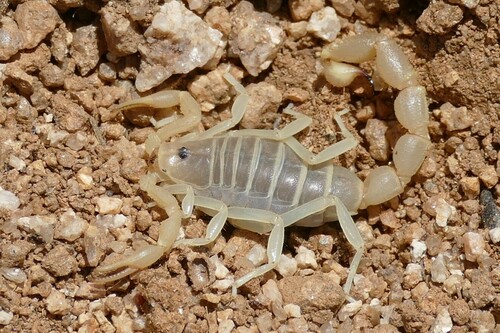
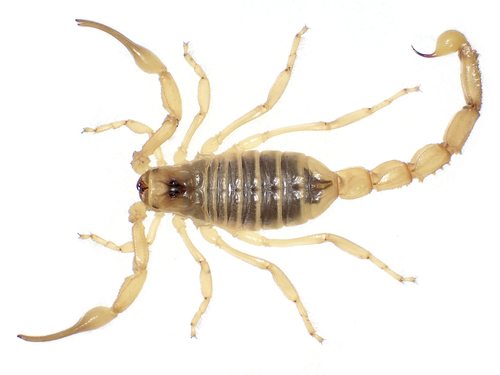
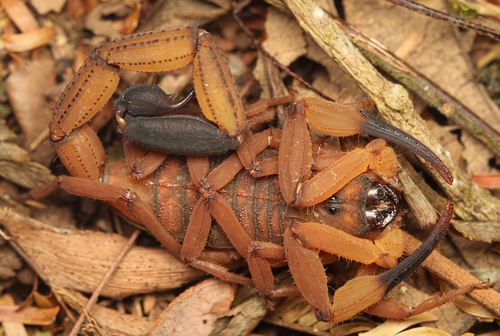
Centruroides limbatus is a relatively large scorpion that reaches a maximum length of 110 mm. This is a polymorphic species with a wide range of color variations. Most individuals have yellowish bodies, with contrasting blackish coloration on the chelicera, the fingers of the pedipalps, the fifth tail segment, and the cephalothorax. Some individuals are paler across their entire body, while others are darker overall and show a bluish-black color. Many intermediate chromatic variations exist between these two extremes. This species is confirmed to occur in Costa Rica, Nicaragua, and Panama. Online sources list it as present in Honduras, but no published reports of its occurrence there are known. A sting from this species led to an emergency room visit in the United States in at least one recorded case, but it is unclear whether the scorpion involved was part of an introduced population, or if it came from an isolated release such as an accidentally introduced lone individual or a captive pet. Within its confirmed native range, Centruroides limbatus is a common predator living in the vegetation of the forest understory, where it occurs among plant growth. It is also known to regularly enter houses and other buildings, where shelter and food are abundant. C. limbatus is diurnal, and spends nights hiding in cracks and crevices. It has been recorded at elevations from sea level up to 1400 meters.