About Centruroides exilicauda (Wood, 1863)
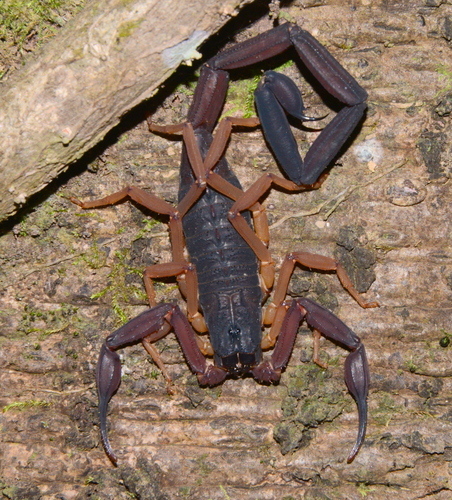
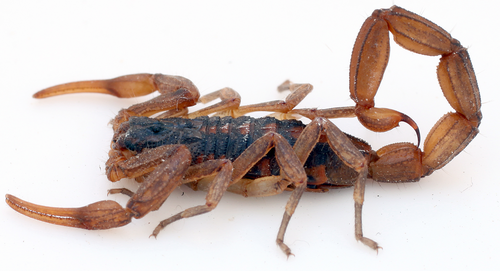
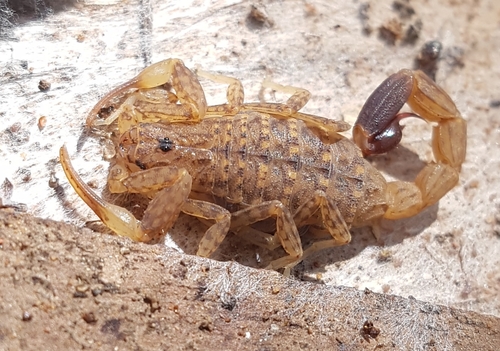
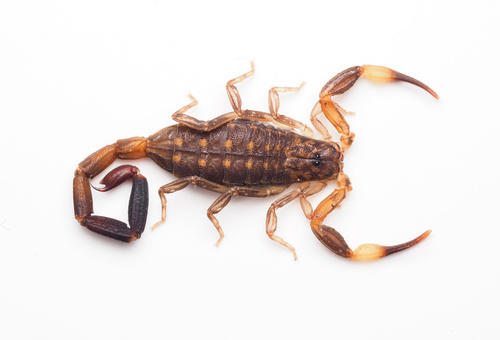
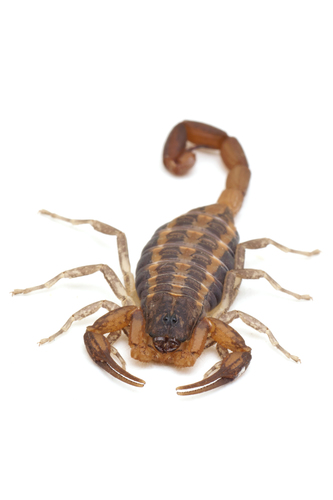
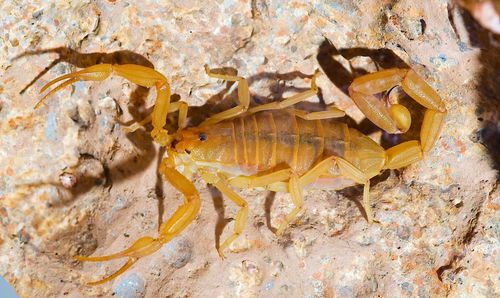
Centruroides exilicauda, commonly known as the Baja California bark scorpion, is a species of bark scorpion native to Baja California. It is closely related to the Arizona bark scorpion (Centruroides sculpturatus), and is not considered dangerous to humans. Previously, the two forms were only distinguished by their geographic range, and they were classified as a single species in 1980. Later, differences in venom toxicity were documented, and DNA analysis carried out in 2004 confirmed that they are separate species. The Baja California bark scorpion is a slender, long-tailed scorpion. While most individuals are sand-colored, darker color morphs also occur.
This scorpion species is most often found in cool, moist areas, including environments along creeks, streams, and lakesides. Centruroides exilicauda commonly shelters from daily heat by hiding beneath tree bark, in rock crevices, or under other types of ground cover. Scorpions of the Centruroides genus are capable of climbing and exhibit negative geotaxis, meaning they can cling upside down to surfaces. This species may also shelter inside homes and other human-built structures.
Scorpions in the genus Centruroides are carnivorous predators within their ecosystems. By feeding on local insects, they play an important role in controlling insect populations. They also act as prey for many larger predators, including owls, lizards, snakes, bats, mice, and shrews. Due to the natural conditions of its habitat, Centruroides exilicauda often survives without food or water for long periods of time, and its body is adapted to retain nutrients. In the wild, scorpions are carnivores that feed on a variety of prey, including insects, centipedes, spiders, and other scorpions. Wild C. exilicauda typically feed once every two to three days.