About Centruroides bicolor (Pocock, 1898)
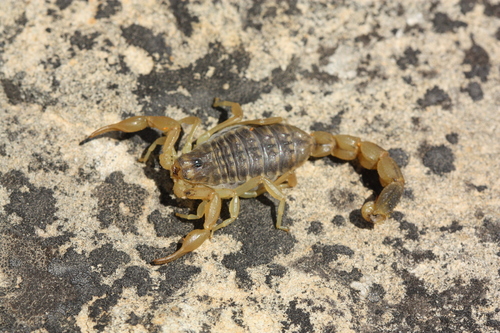
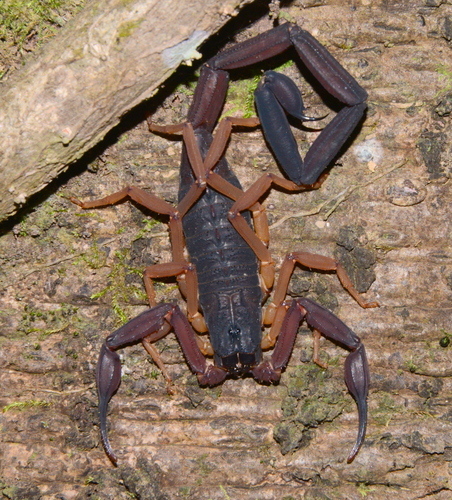
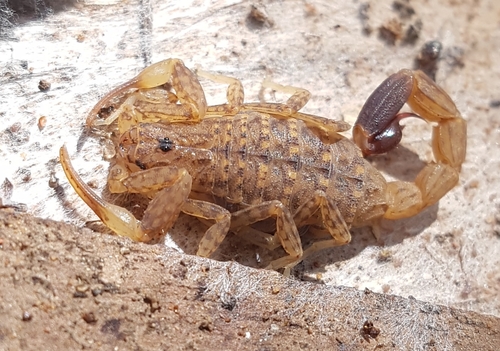
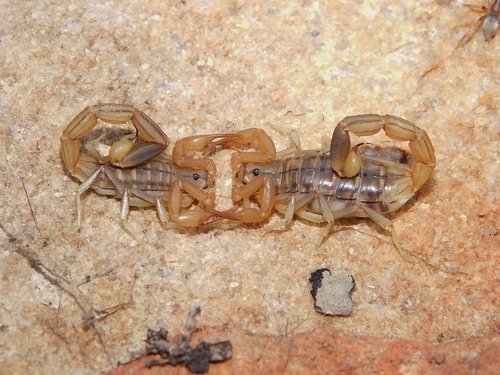
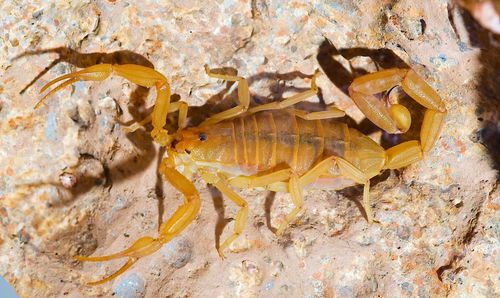
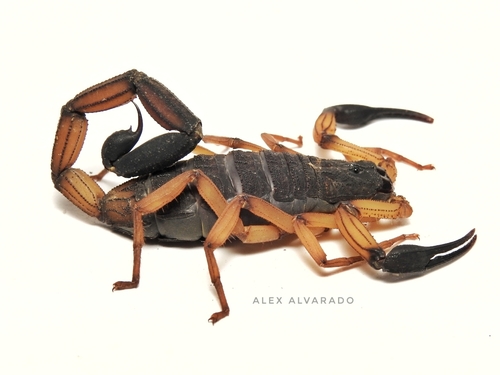
Centruroides bicolor is a relatively large scorpion that reaches a maximum length of 120 mm. It has very striking, showy coloration: most of its body is yellowish, while its pincers, final tail segments, cephalothorax, and part of the abdomen are blackish. It has been described as a "very beautiful scorpion". This species is concentrated along the southern Pacific coast of Costa Rica and Panama. Within this range, C. bicolor lives in the forest understory, where it occurs among vegetation. It also often enters houses and other buildings that provide abundant shelter and food. It has been recorded at elevations from sea level up to 1,670 meters (5,480 feet). Before mating, Centruroides bicolor individuals perform a courtship dance that can last several minutes, and sometimes continues for a full day or longer. During this ritual, the scorpions repeatedly raise and cross their tails, push and pull at each other, and then separate. Eventually, after a series of contractions, the male produces an off-white spermatophore that contains sperm. This structure hardens when it comes into contact with air. After the sperm packet is introduced to the female's genital opening, the female becomes aggressive toward her mate, and sometimes eats him in an act of sexual cannibalism. Gestation for this species lasts 60 to 90 days. After birth, immature scorpions instinctively climb onto their mother's back, where they remain until their first molt. Females have been observed carrying more than fifty of their young this way.