About Centrostephanus longispinus (Philippi, 1845)
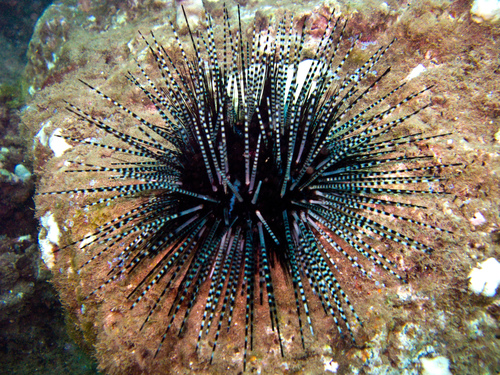
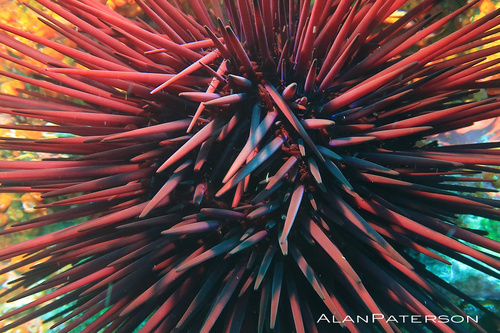
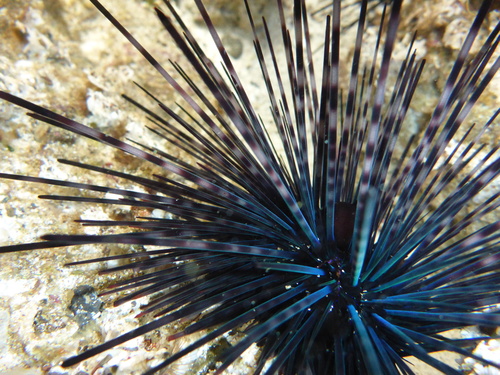
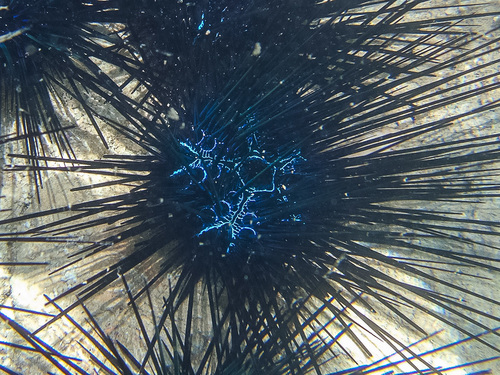
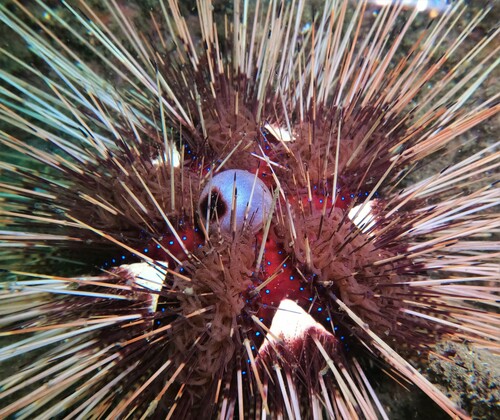
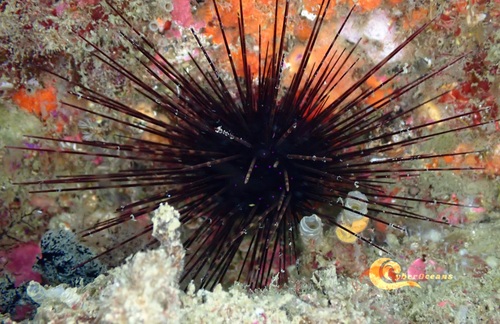
Centrostephanus longispinus (Philippi, 1845) has a small central test, with spines that can reach up to 30 centimetres (12 inches) in length. These spines are toxic and can inflict a painful sting. The spines vary in length, are mobile, and are used for locomotion. A distinctive feature of this species is the presence of multiple club-shaped spines on its oral (lower) surface; this characteristic is shared with C. besnardi and C. coronatus, but not with other members of the Centrostephanus genus. These club-shaped spines are reddish brown and tipped with purple or pink pigment. The nominate subspecies C. l. longispinus has spines that are purple-banded, on a pale green, buff, or whitish background. Juvenile individuals of the subspecies C. l. rubricingulus have reddish-brown spines on a pale background, while adults have either brown-banded spines on pale brown or uniformly dark-colored spines. Research has shown that C. longispinus has chromatophores, which are pigment-carrying cell structures that are sensitive to light. When these chromatophores change shape, they alter the overall color of the urchin: the animal is black at night, and changes to a greyish brown during the day. This sea urchin is found on the continental shelf on both sides of the Atlantic Ocean. Its range extends from the Mediterranean Sea and the North African coast to the Caribbean Sea and the Gulf of Mexico. It occurs at depths between 40 and 210 metres (130 and 690 feet). Off the coast of Florida, this urchin is most commonly found growing on algae or broken coral substrates, especially the rubble remains of dead ivory bush coral (Oculina varicosa). It is a member of a species-rich community that also includes other sea urchins, mollusks, polychaete worms, crabs, and encrusting organisms. These sea urchins are not typically found on living reefs. This may be because macro-algae rarely grows on living reefs, or because predatory fish that hide among coral heads consume juvenile urchins.