About Centropus phasianinus (Latham, 1802)
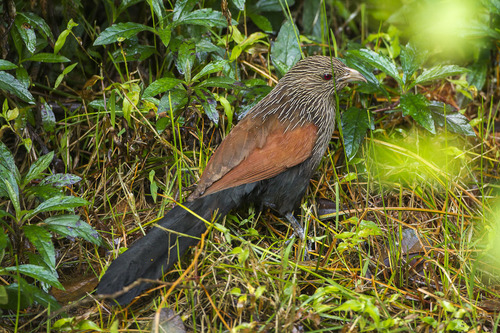
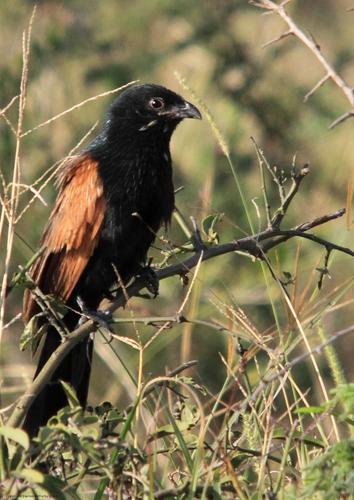
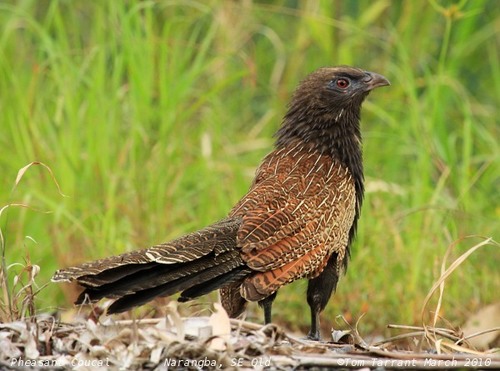
The pheasant coucal, with the scientific name Centropus phasianinus (Latham, 1802), measures 50 to 70 cm, or 20 to 28 inches, in total length. It is a large, heavy-set bird adapted to a ground-dwelling lifestyle, and has a body shape similar to that of a pheasant. When in breeding plumage, this bird has black coloring on its head, neck, breast and belly, barred chestnut wings, and a long tail with black, brown and cream barring. Outside of the breeding season, the black coloration on its head and underparts is replaced by a white-streaked chestnut color after moulting. During summer, the pheasant coucal produces a low descending call that sounds like 'boop boop boop'. In winter, its call is a sharp hissing sound. This species can be found in eastern and northern Australia, ranging from the south coast of New South Wales north to Cape York, across the northernmost part of Australia to the Pilbara. It also occurs in eastern Timor and lowland New Guinea. Its preferred habitat always includes dense understory, most commonly shrubby understory in forests, or tall grasses in grasslands or swampy areas. It also inhabits sugar cane in cane plantations, and patches of weedy vegetation including blackberry or lantana.