About Centrochelys sulcata (Miller, 1779)
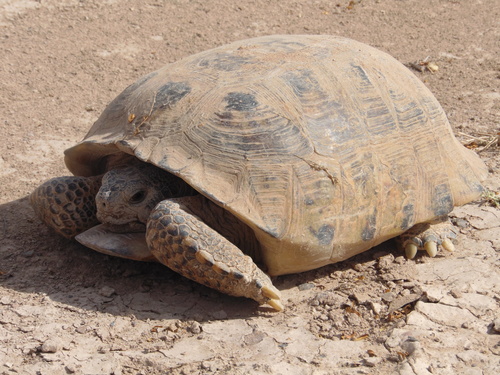
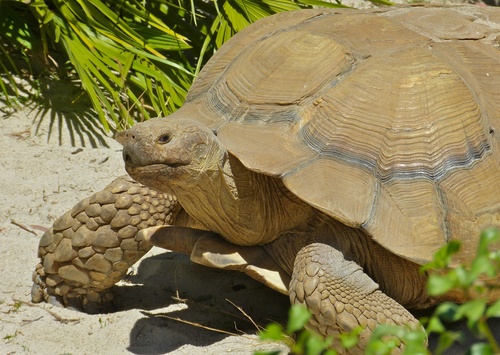
The African spurred tortoise, also commonly called the sulcata tortoise, has the scientific name Centrochelys sulcata (Miller, 1779). It is an endangered species of tortoise that lives along the southern edge of the Sahara Desert and the Sahel. It is the largest mainland tortoise species native to Africa, and the third-largest tortoise species in the world, ranking after the Galapagos tortoise and Aldabra giant tortoise. It is the only living species within its genus, Centrochelys. This species is native to the Sahara Desert and the Sahel, a transitional arid ecoregion of semiarid grasslands, savannas, and thorn shrublands. Confirmed native populations exist in Burkina Faso, the Central African Republic, Chad, Eritrea, Ethiopia, Mali, Mauritania, Nigeria, Senegal, Saudi Arabia, Sudan, and Yemen. It may also occur in Somalia, Algeria, Benin, and Cameroon, and is possibly completely extirpated from Djibouti and Togo. Individuals occupy hills, stable dunes, and flat areas that support shrubs and tall grass. They also prefer to settle in regions near intermittent streams or rivers. In these dry arid habitats, the tortoise digs deep burrows into the ground to reach moister soil, and stays inside these burrows during the hottest part of the day. This seasonal hot-weather inactivity is called aestivation. Wild burrows can reach up to 15 meters in depth and 30 meters in length. When burrows stay moist, grasses and succulents often grow around their entrances; the tortoise's feces replenish nutrients in the soil, allowing these plants to keep growing as a food source for the animal. Sulcata tortoises that live in the Sudanese portion of the species' range grow to a significantly larger size at maturity than individuals from other regions.