About Centaurea montana L.
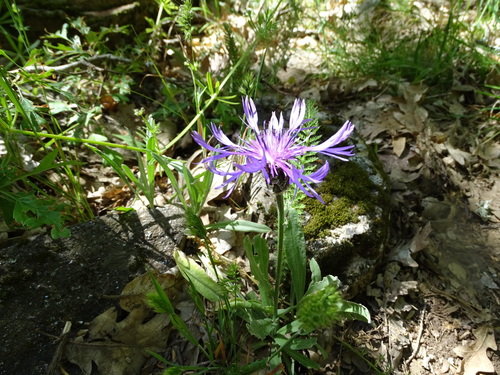
Centaurea montana, commonly known as perennial cornflower, mountain cornflower, bachelor's button, montane knapweed, or mountain bluet, is a flowering plant species in the family Asteraceae that is endemic to Europe. It is widespread and common in the more southerly mountain ranges of Europe, but rarer in the northern part of the continent. It readily escapes from cultivation, and has become established in the British Isles, Scandinavia, and North America as a result, and has become an invasive species in British Columbia, Canada. Centaurea montana grows in meadows and open woodland in the upper montane and sub-alpine zones of basic areas. It reaches 30–70 centimetres (12–28 in) tall, and mainly flowers from May to August. This species can be distinguished from other Centaurea species in its native region by its typically entire leaves, and the blue-purple color of the outermost ray florets. It can be told apart from cornflower (Centaurea cyanus) by its usually single (rarely up to three) flower heads and perennial growth habit, while cornflower produces many flower heads and is an annual. The closely related Centaurea triumfettii has more narrowly winged stems, narrower leaves, and grows in rockier habitats than Centaurea montana.
Centaurea montana is grown as an ornamental plant in gardens, where it grows best in full sun. It can tolerate some light shade; as an evergreen species, it is able to use available light in winter and early spring, when deciduous trees and shrubs have not yet leafed out. It tolerates deciduous shade better than shade from evergreen plants, and prepares to flower while deciduous plants are still bare, so it can flower reasonably well in light deciduous shade. If the plant is dug up, a new individual can eventually regenerate from small pieces of root left remaining in the soil. It grows well in a wide range of soil textures, from light sand to heavy clay, and also tolerates acid, neutral, and very alkaline soils. It can tolerate drought, but cannot grow in waterlogged conditions. The Royal Horticultural Society lists Centaurea montana as a good plant for attracting pollinators, and it is widely available from commercial plant suppliers. While this plant is inedible, it is recognized as a medicinal plant in Central Europe.