About Celtis tenuifolia Nutt.
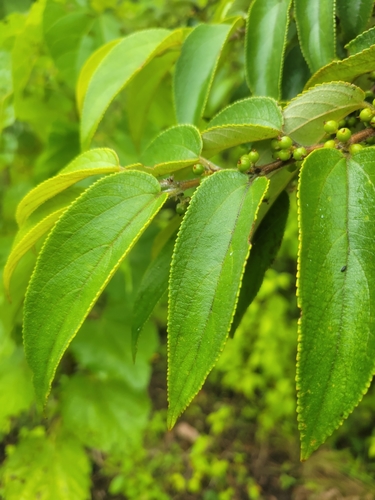
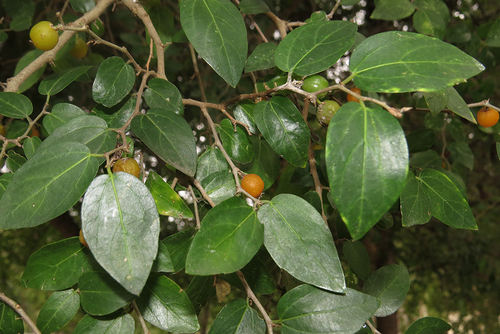
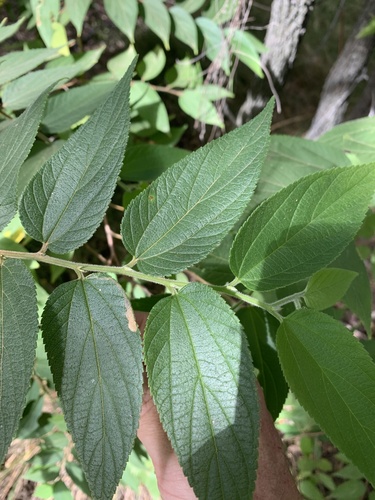
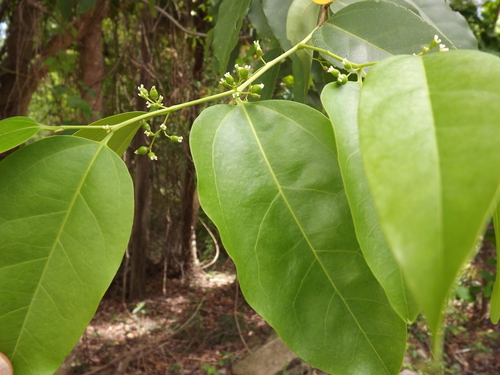
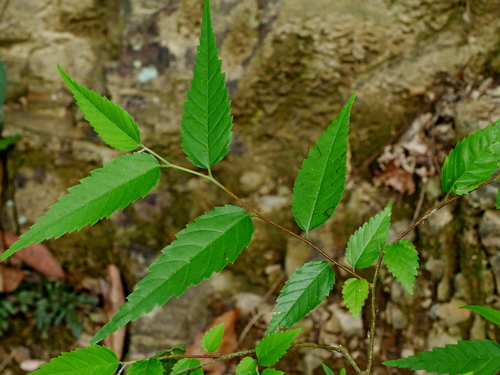
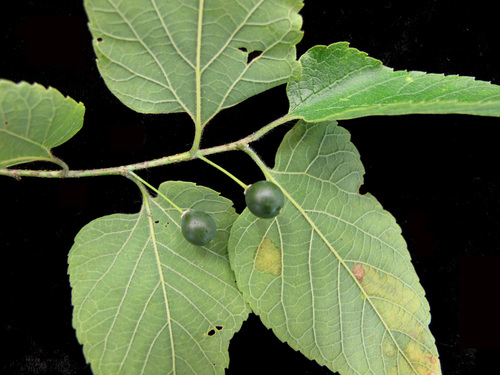
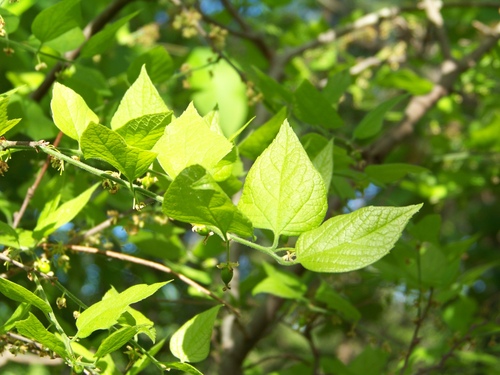
The scientific name of this species is Celtis tenuifolia Nutt., commonly known as dwarf hackberry. Its leaves are alternate, simple, with blades 5–7 centimeters (2.0–2.8 in) long and 2–3.5 centimeters (0.8–1.4 in) wide. The leaves are shallowly toothed and finely hairy. The winter buds are brown and hairy, similar to those of other hackberries, but smaller, only 1 to 2 millimeters long, and there are no terminal buds. Plants are monoecious with unisexual flowers, which occur either solitarily or in small clusters. This species is wind-pollinated and appears to be self-compatible. The fruit is a berry-like drupe, 5 to 8 millimeters in diameter, that contains a single stone encased in a thin, sweet mesocarp. As the fruit matures, it changes color from green to light orange, then to dark red, and finally to purplish-brown. This edible mesocarp is made up of a smooth outer crust and a pulpy yellow interior. Dwarf hackberry is shade intolerant, drought tolerant and slow-growing. It grows in dry upland habitats, including open woodlands, alvars, and sandy near-shore habitats. It is usually not found growing alongside other hackberries, although when other hackberry species occur near dwarf hackberry, intermediate forms may develop. Like other Celtis species, this species is a moderate calciphile, and is often found growing in thin soil over limestone. Songbirds and other wildlife eat the fruit, and this likely plays a role in local seed dispersal.