About Celtis africana Burm.fil.
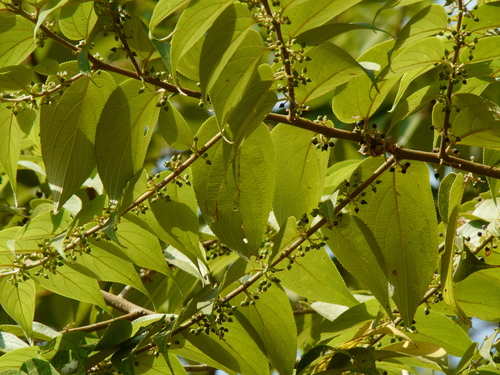
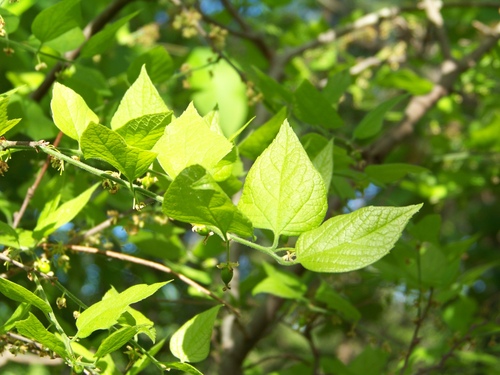
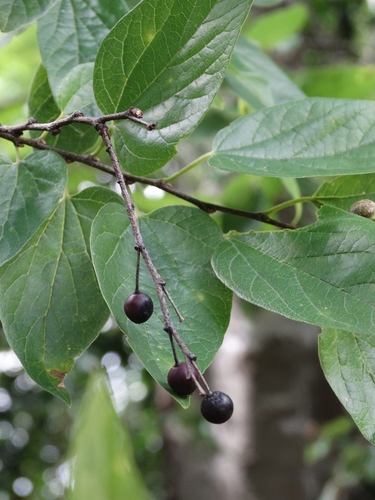
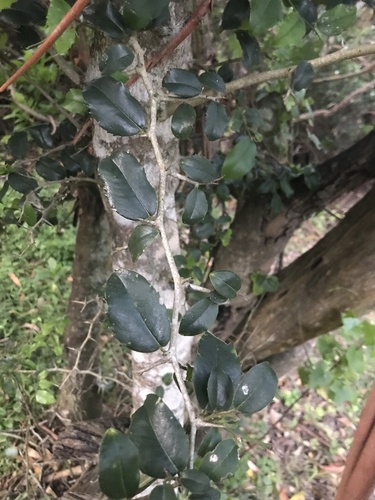
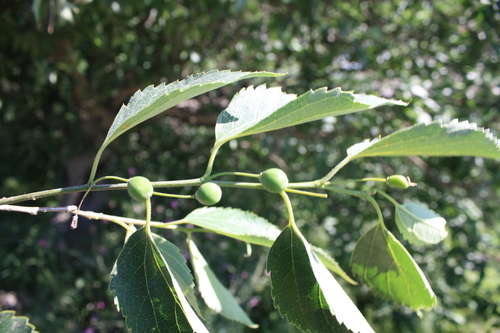
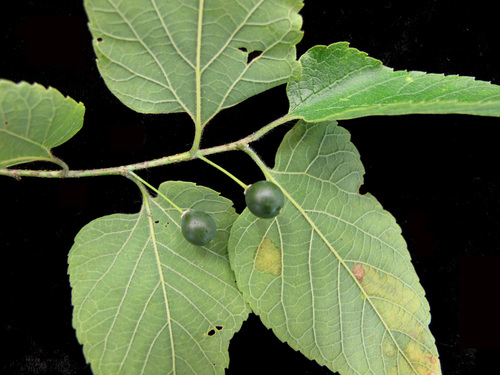
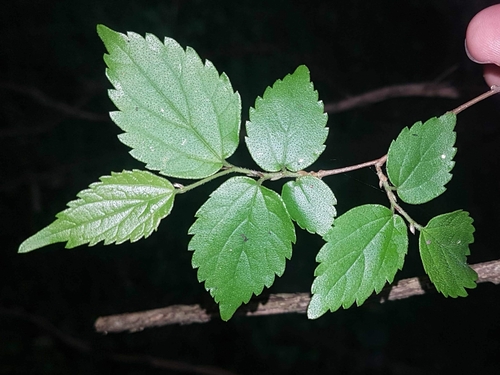
Celtis africana, commonly known as white stinkwood, is a deciduous tree in the family Cannabaceae. Its growth form changes based on environment: it is a tall tree in forests, a medium-sized tree in bushveld and open country, and a shrub on rocky soil. It grows in Yemen, Somaliland, and across large parts of Africa south of the Sahara. It is a common tree in the south and east of southern Africa, where freshly cut green timber gives off an odour similar to that of Ocotea bullata, or black stinkwood. It occurs in a wide variety of habitats, from wet forest and coastal bush to bushveld, mountain gorges, and open country, typically savanna. Its range extends from the Western Cape, eastwards and northwards around the southern African coastline, extends inland into warmer, wetter regions, and reaches further north into Ethiopia. The leaves of Celtis africana are browsed by cattle and goats, and are also eaten from the ground after they are shed. Various Celtis species are food plants for larvae of long-nosed butterflies in the genus Libythea; specifically, Celtis africana is the host plant for Libythea labdaca. Its leaves also provide food for the larvae of Caloptilia celtina. The small, inconspicuous, greenish, star-like flowers appear in early spring, from August to October. Male and female flowers are separate, but both grow on the same tree. Various insects, particularly honeybees, pollinate the flowers. After flowering, rounded, berry-like fruits (botanically drupes) develop from October to February. They are borne in large numbers on 1–2 cm long stalks, and turn from green to yellow-brown or black as they ripen. Though small, the fruits are usually plentiful enough to be an important food source for many frugivorous bird species. Birds eat the fruits and disperse seeds in their droppings, so seedlings can grow far from parent trees, and germinate unpredictably in cracks in rocks or rotting wood as well as in good soil. Because it attracts birds, Celtis africana is a popular tree for bird-friendly gardens. Its fruits and seeds are eaten by many animals, including chacma baboon, vervet monkey, tambourine dove, Cape parrot, Rameron pigeon, Knysna lourie, purple-crested lourie, mousebirds, black-collared barbet, crested barbet, Karoo thrush, Cape robin-chat, chorister robin-chat, Cape bulbul, black-eyed bulbul, plum-coloured starling and thick-billed weaver. The species is easily propagated from seed, but for best results, ripe fruit should be collected directly from the tree, because seeds from fallen fruit are often damaged by insects. It is best to separate seed from fruit tissue before planting, since fruit pulp inhibits germination until it is removed by birds' digestive processes. Celtis africana is a useful tree for roadside planting in urban areas of southern Africa. Seedlings are best planted in good soil several metres away from paving and walls, but once established, it grows well even in fairly challenging conditions. Many people avoid planting it in small gardens because it grows quite large. Some care is needed because heavy branches growing at unfavourable angles can split off and fall dangerously, but this can be prevented with proper pruning and arboricultural practices.