About Celosia argentea L.
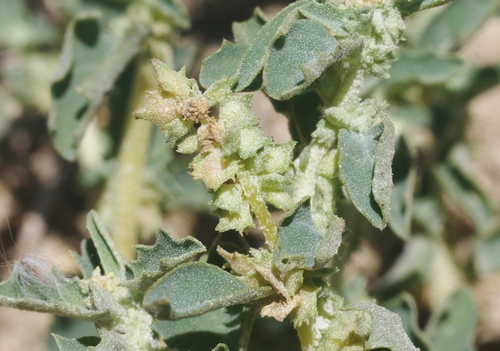
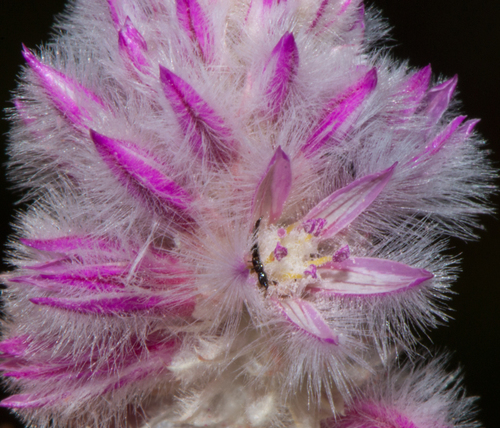
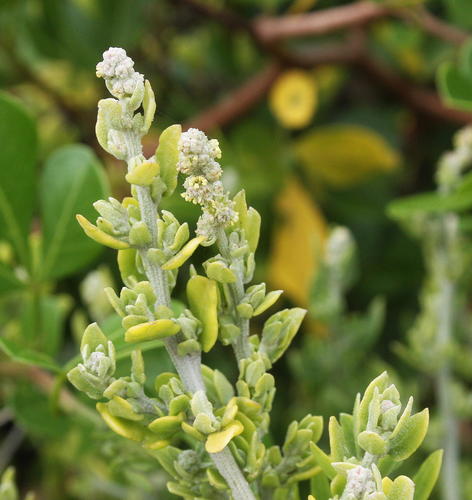
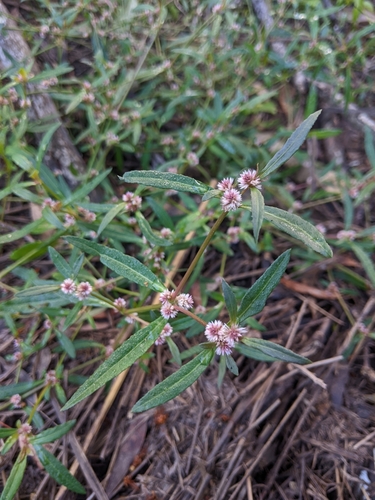
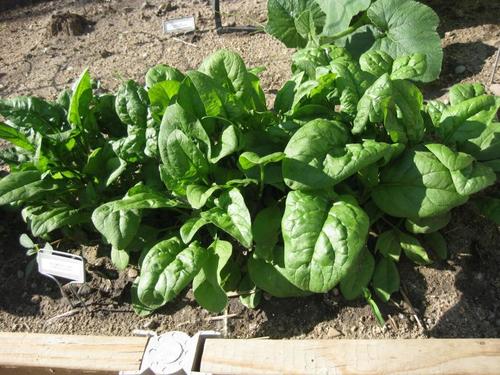
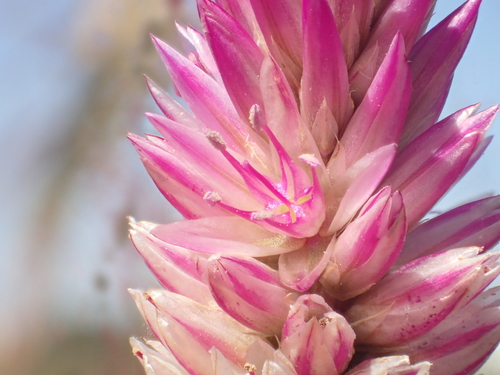
Celosia argentea L. is a tender annual plant commonly grown in gardens, though it can also grow as a perennial. It blooms from mid-spring through summer, and the species exhibits dodecaploidy. Its flowers are tiny, hermaphroditic, and packed into narrow, pyramidal, plume-like heads 10 to 25 centimeters (4 to 10 inches) long. Flower colors are vivid, and include shades of orange, red, purple, yellow, and cream. This species is propagated from extremely small black seeds, which form inside capsules. A single ounce can hold up to 43,000 seeds. Originating from tropical regions, Celosia argentea grows best in full sunlight—meaning at least 8 hours of direct sunlight per day—planted in a well-drained location. For healthy growth, it can also be planted where it receives early morning sunlight and afternoon shade; afternoon sunlight is often harsh, especially in hot summers, and afternoon shade protects the plant from excess heat. Flowerheads can last up to 8 weeks, and removing dead flowers promotes further plant growth. In Africa, this species is used to control growth of the parasitic Striga plant. It is also an ingredient in soaps. It is a natural source of hyaluronic acid, a substance that retains water to provide moisture and lubrication to various tissues, and hyaluronic acid from this plant is used in moisturizers, serums, and other skincare products. Both the leaves and flowers of Celosia argentea are edible, and the plant is grown specifically for food use particularly in West Africa and Southeast Asia. Celosia argentea var. argentea, commonly called "Lagos spinach", is one of the main boiled leafy greens in West Africa, where it is known as soko yòkòtò in Yoruba and farar áláyyafó in Hausa.