About Cellana exarata (Reeve, 1854)
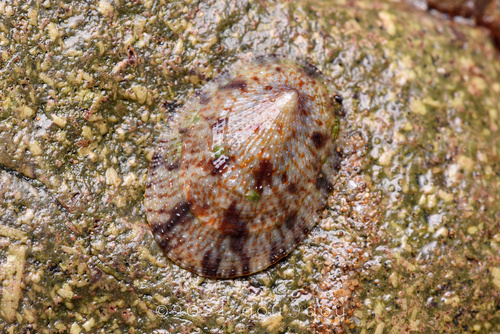
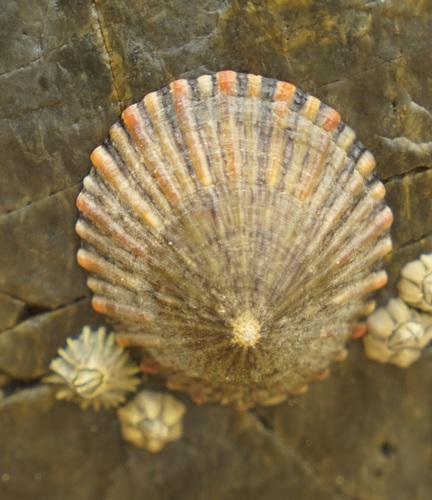
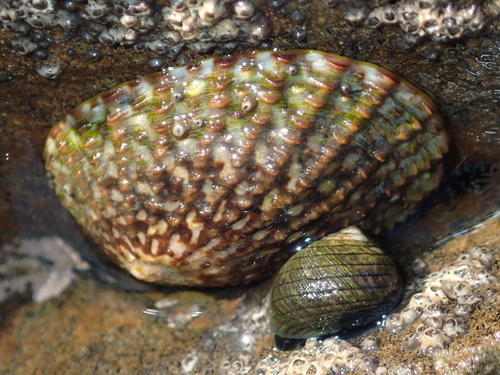
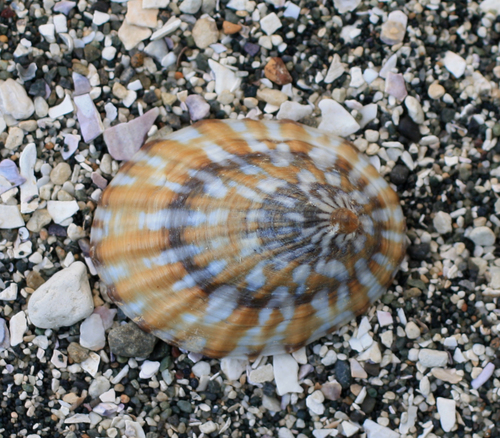
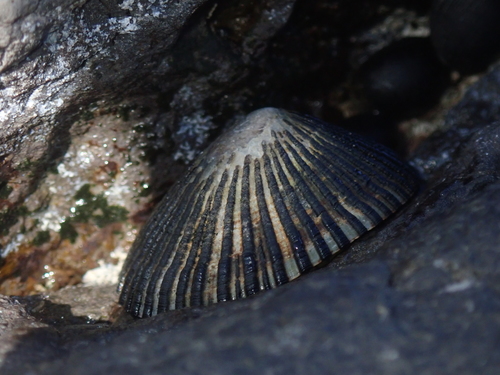
Cellana exarata (Reeve, 1854) is a unique species of limpet that has adapted to develop a taller shell compared to its relatives in lower tidal zones. This taller shell gives the limpet an oblong shape, which increases the ratio of volume to evaporative surface area to help the species endure thermal stress. Because its typical habitat lies above the range of its common predators, the increased shell height has no negative effects for this limpet. Both the shell and the foot of the animal are black in color. This species is endemic to the islands of Hawaii. It is abundant on wave-exposed, rocky windward shorelines formed from basalt or aeolianite. This limpet resides in the high intertidal zone on the shores of the Hawaiian islands. Coastlines differ across each island, so different substrates (basalt and aeolianite) affect the shape of limpets in each location. Additionally, intertidal zone challenges such as wave stress and heat exposure have further impacted the shape of this limpet species. Basalt substrate increases desiccation risk, while aeolianite substrate brings increased wave exposure, so each environment requires different adaptations for the species. In this species of limpets, sexes are separate and fertilization occurs externally. There is no parental care; embryos drift in ocean currents until they settle onto shoreline rocks. C. exarata adds 4–5 mm of continuous monthly shell growth until it reaches sexual maturity. After reaching maturity, monthly growth decreases to 2–3 mm. Its monthly weight gain follows the same pattern: weight increases monthly until sexual maturity, then decreases after maturity. The lifespan of this species is less than one and a half years. This species is used as a food item, and it is considered not as high in quality as the yellow-foot ʻopihi, Cellana sandwicensis. It is a Hawaiian delicacy, and ʻopihi can be served either raw or cooked. It is very important to Hawaiian culture, and is used for celebrations and special events. Due to over-picking, legislation was passed in 2006 to limit the sale of ʻopihi, and collection is now reserved solely for personal use.