About Cedrus atlantica (Endl.) Manetti ex Carriere
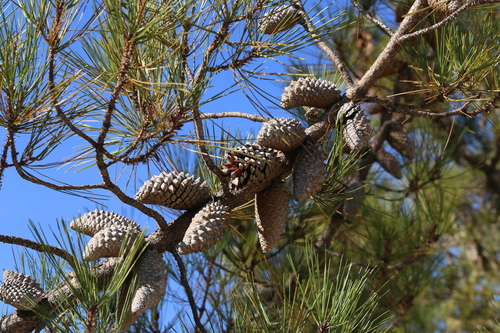
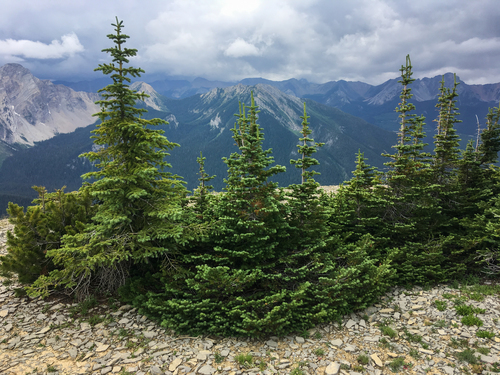
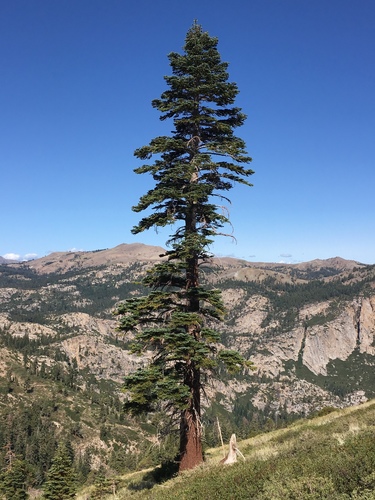
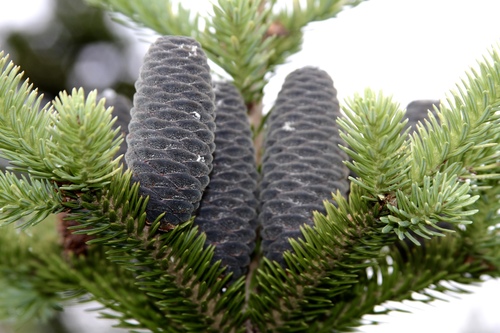
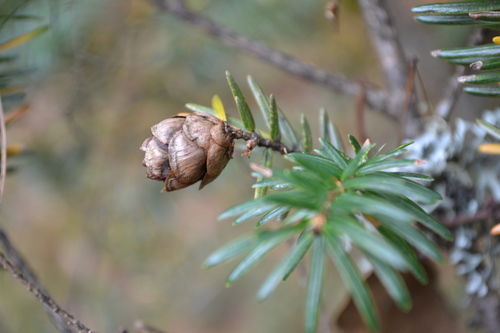
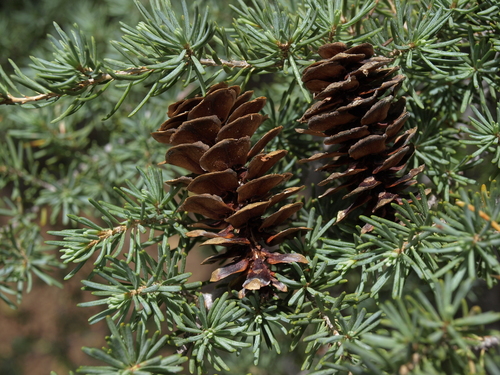
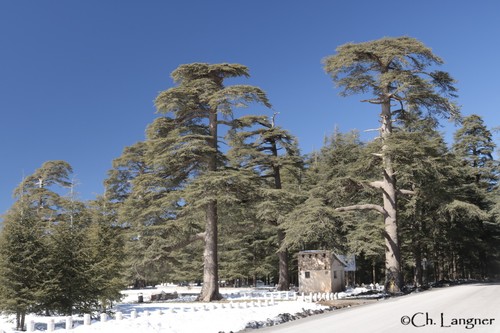
Fully grown Atlas cedar (Cedrus atlantica) is a large coniferous evergreen tree, reaching 30 to 35 m (98 to 115 ft) tall, and rarely up to 40 m. Its trunk has a diameter of 1.5 to 2 m (4.9 to 6.6 ft). It closely matches all traits of other varieties of Lebanon cedar, and differences between them are hard to identify. On average, its cones are somewhat smaller than related cedars: while the maximum recorded cone length is 12 cm, cones only rarely grow over 9 cm long. For comparison, maximum cone length reaches 10 cm in C. brevifolia, and 12 cm in C. libani. There is considerable size overlap between species, as all can produce cones as short as 6 cm. The leaves of Cedrus atlantica are 10–25 mm long; this length is similar to that of C. libani subsp. stenocoma, on average longer than leaves of C. brevifolia and shorter than leaves of C. libani subsp. libani, and there is again considerable overlap in this trait. Atlas cedar grows in mountain-side forests at elevations from 1,170 to 2,200 m (3,840 to 7,220 ft). It often forms pure stands, or grows in mixed forests alongside Algerian fir (Abies numidica), Juniperus oxycedrus, holm oak (Quercus ilex), and Acer opalus. These forests serve as habitat for the endangered Barbary macaque (Macaca sylvanus), a primate that had a much wider prehistoric distribution across northern Morocco and Algeria. Currently, Morocco holds the largest total area of Atlas cedar forest globally. It forms extensive forests in the country’s humid zones, across the Middle Atlas range, the oriental and Northern High Atlas range, and the Western and Central Rif mountain range. The total current area of Atlas cedar forest is approximately 163,000 hectares, with around 115,000 hectares (80% of Morocco’s total) located in the Middle Atlas mountains. The species is threatened by human activity, wood harvesting, and fires. Records from 1927 show that Atlas cedar occupied more than 150,000 hectares in the Middle Atlas mountains alone, a larger area than today. The Rif mountains once held one of the largest Atlas cedar forests, but modern forest extent is much smaller, making up only 15% of Morocco’s total current Atlas cedar area. Large-scale reforestation campaigns have recently been carried out in the region of Ifrane Province. In Algeria, Atlas cedar populations have undergone significant decline. Data from 1966 shows the species occupied 23,000 hectares of forest in the Djurdjura Mountains of Kabylie and the Aures Mountains. Due to extensive fires and human use, its current occupied area is expected to be fewer than 15,000 hectares.