About Cedrela odorata L.
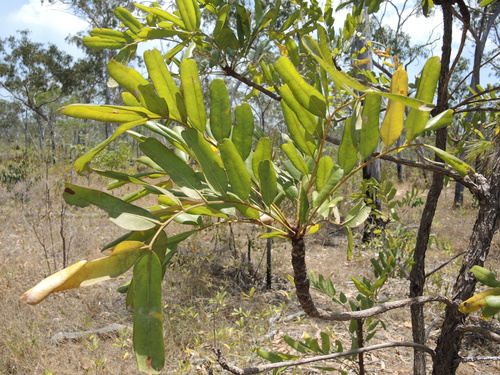
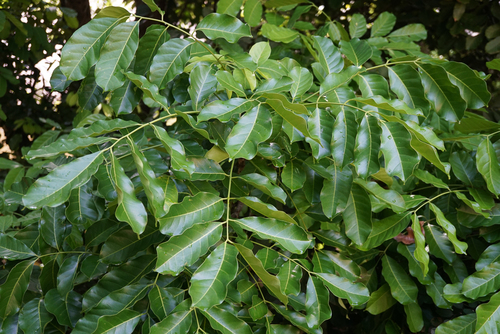
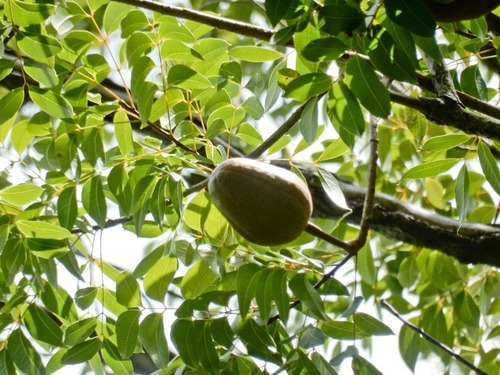
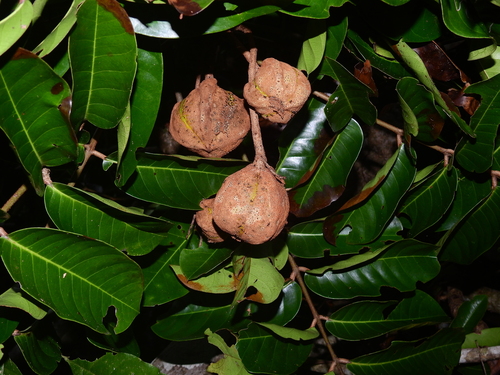
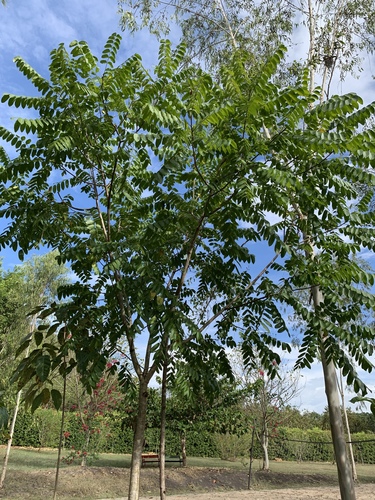
Cedrela odorata L., commonly called cedro or Spanish cedar, is a monoecious, semi-deciduous tree. It grows to heights between 10 and 30 m (30 to 100 ft). Its trunk has thick grey-brown bark marked with irregular longitudinal grain. Leaves are pinnately compound, grouped toward the ends of branches, and 15–50 cm (6–20 in) long. They bear pairs of scythe-shaped leaflets that are lanceolate to oblong, measuring 7–15 cm (3–6 in) by 3–5 cm (1–2 in), with obliquely truncated, asymmetric bases. This species is native to the New World tropics, where it grows in moist and seasonally dry subtropical or tropical forests. Its natural range extends from 26°N latitude on Mexico’s Pacific coast, through Central America and the Caribbean, to the lowlands and foothills of most of South America, reaching a southern limit near 28°S latitude in Argentina. It grows at altitudes up to 1,200 metres (3,900 ft). It has become a problematic invasive species in the Galapagos Islands, where it forms barriers that block tortoise migration. In its natural habitat, Cedrela odorata always grows on well-drained soils, and is often but not exclusively found on limestone. It tolerates long dry seasons, but does not grow well in areas with annual rainfall over approximately 3,000 millimetres (120 in), or on sites with heavy or waterlogged soils. Individual trees are typically scattered throughout mixed semi-evergreen or semi-deciduous forests dominated by other tree species. It is often found growing near its close relative mahogany (Swietenia sp.), and both species are damaged by the same pest, the mahogany shootborer (Hypsipyla grandella). Cedrela odorata is the most commercially important and most widely distributed species in the genus Cedrela. In English trade, it is known as Spanish cedar. Its aromatic wood is naturally resistant to termites and rot, making it highly sought after in the American tropics. The wood is attractive and moderately lightweight, with a specific gravity of 0.4. Its primary use is for household articles that store clothing. The heartwood contains an aromatic, insect-repelling resin that gives the species its common name Spanish-cedar, as its aroma resembles that of the unrelated true cedars (Cedrus spp.). The wood works easily, produces excellent plywood and veneer, and would see wider use if it could be successfully grown in plantations. Other common uses include honey production through beekeeping, and construction of humidors. It is occasionally used for tops or veneers on some types of electric guitars, and it is the traditional material chosen for the necks of flamenco and classical guitars. Its timber has high chatoyance, with an average value above 20 PZC.