About Cecropis abyssinica (Guerin-Meneville, 1843)
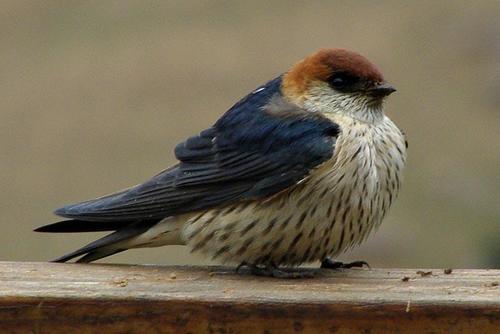
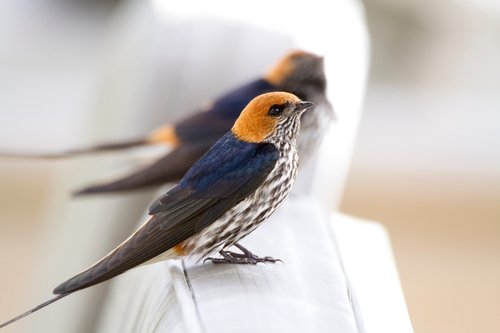
The lesser striped swallow, scientifically named Cecropis abyssinica (Guerin-Meneville, 1843), measures 15–18 cm in length. It has dark blue upperparts, a red rump, and a rufous-chestnut crown, nape, and sides of the head. Its underparts are white with dark streaking; the upper wings and underwing flight feathers are blackish-brown, while the underwing coverts are tawny. Its blackish tail has very long outer feathers, which are slightly longer in males than in females. Juveniles are duller and browner, with less contrast and shorter outer tail feathers. There are five to six subspecies, which differ in how extensive the underpart streaking is. Compared to the larger greater striped swallow, the lesser striped swallow has heavier, darker underpart striping, a deeper red rump, and brighter head colour. This species occurs in wooded, mainly lowland habitats. It prefers less open habitats, and is replaced in montane grassland by the greater striped swallow, Hirundo cucullata. It is common and often found around areas of human habitation. The species is endemic to Sub-Saharan Africa and is relatively sedentary. There is one confirmed record in Oman, and as of May 2025, one record in Kuwait, which is the first record of the species in the Western Palaearctic.