About Cecropia schreberiana Miq.
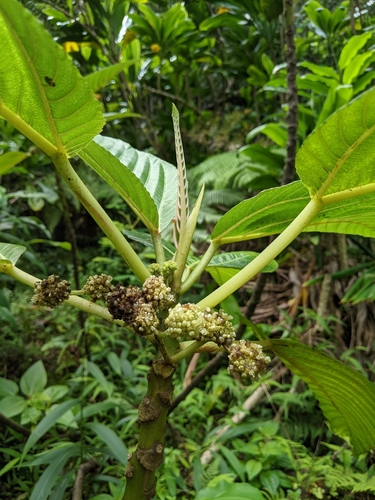
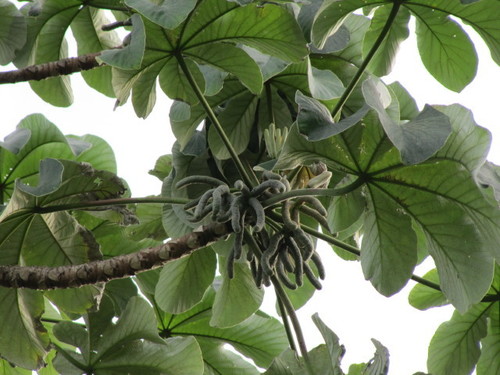
Cecropia schreberiana Miq. is a medium-sized tree that usually grows between 10 and 25 meters tall. It produces large, distinctively shaped leaves that can reach up to 51 centimeters in diameter. Each leaf has 9 to 11 lobes and grows on a long, thick petiole. The underside of every leaf is white and densely covered in short, wooly hairs. This tree has a straight trunk marked with distinctive ring-like scars left by fallen leaves. The trunk and branches are typically hollow, filled with mucilage, and leak mucilaginous sap when damaged. This species is dioecious, meaning male and female flowers grow on separate individual trees. Flowers of both sexes are small, around 1.6 millimeters long, and grow in elongated spikes. Female spikes develop into fleshy, green, finger-shaped fruits that measure 5 to 10 centimeters long. This tree has a range of local uses. Its lightweight timber is used to make crates, matchsticks, toys, plywood, and paper pulp. Latex extracted from its trunk can be used to produce rubber. Indigenous peoples of Saint Lucia, Jamaica, and the Amazon rainforest have used the tree's hollow stems to make musical instruments. It also has many applications in traditional medicine: its sap is used to treat wounds, its leaves are smoked to reduce asthma symptoms, and leaf tea is used to treat colds, hypertension, back pain, kidney infections, heart conditions, and nervous diseases.