About Cebus aequatorialis J.A.Allen, 1914
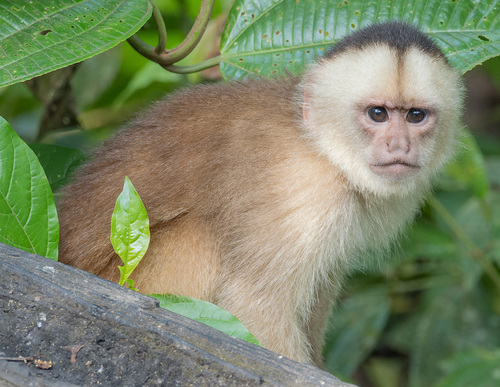
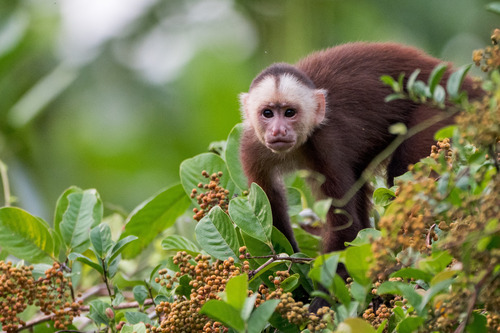
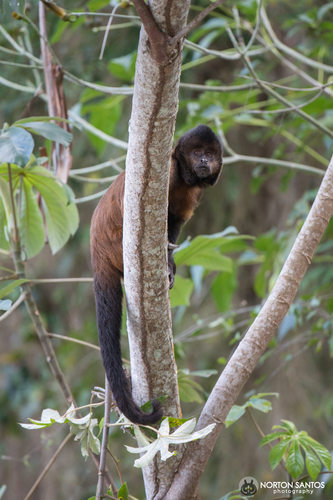
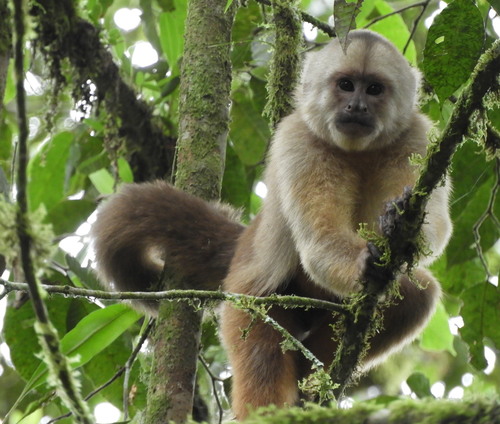
The Ecuadorian capuchin (Cebus aequatorialis), also called the Ecuadorian white-fronted capuchin, is a species of gracile capuchin monkey in the family Cebidae. It was originally classified as a subspecies of the white-fronted capuchin (C. albifrons), before Mittermeier and Rylands raised it to full separate species status in 2013. The main physical difference between C. albifrons and C. aequatorialis is their coloration. Because of the species' low population density and limited distribution, researchers have not been able to produce a confident molecular genetic assessment of the C. aequatorialis population. It is assigned species status based on its geographical isolation, morphological characteristics, and application of the phylogenetic species concept. The Ecuadorian capuchin ranges from western lowland Ecuador to northwestern Peru. Its conservation status was originally rated as near threatened, but the IUCN revised it to critically endangered in 2008 following rapid population decline. Human-caused factors including habitat fragmentation from rapid deforestation, creation of agricultural land, and persecution by farmers are responsible for the species' critically endangered status. Suitable habitat for the Ecuadorian capuchin is defined by a high percentage of tree cover (the most important factor, which is maximized when tree cover exceeds 25%), land cover that is deciduous, evergreen broad-leaved, or forested cropland mosaic, mild temperature seasonality, low annual precipitation, and low human population density. According to research by Tleimat, the Ecuadorian capuchin requires an area of approximately 500 hectares to meet its energy expenditure needs. Deforestation and habitat fragmentation have restricted the dispersal of the Ecuadorian capuchin, shrinking its original distribution range that once extended from western Ecuador to northwestern Peru. A study by Hurtado et al. found that the Ecuadorian capuchin has a low encounter rate and low population density across its entire distribution, which means it should be a high conservation priority. When combining data from the IUCN's map with research by Campos and Jack, it is estimated that the Ecuadorian capuchin has lost more than 90% of its original habitat. The species' remaining habitat continues to face a range of threats from habitat fragmentation, deforestation, and other human activities including farmer-controlled bush burning, livestock grazing, and illegal mining and logging. Habitat fragmentation is a severe threat to primates: it restricts movement, forces primates to expend more energy to find food, and leads to inbreeding and reduced gene flow. More than 98% of the original primary forest in western Ecuador has been lost, and the remaining forest is split into small fragments that are at risk of further clearing. The Ecuadorian capuchin is adapted to thrive in large tropical dry forests, so fragmentation makes foraging more difficult and leaves insufficient space to support the species' energy needs. To address habitat fragmentation, the Three Forest Conservation Corridor was established to reconnect isolated habitat patches. A study by Tleimat found that the Ecuadorian capuchin does use this corridor to move between fragmented forest patches, so similar conservation approaches can help sustain populations of the species.