About Ceanothus integerrimus Hook. & Arn.
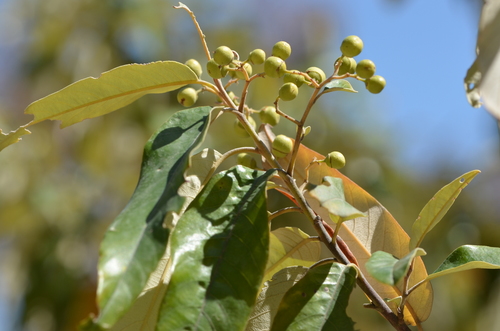
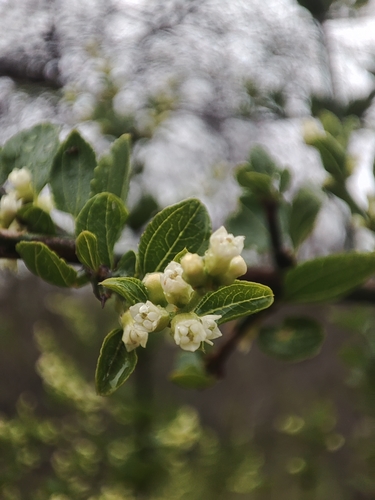
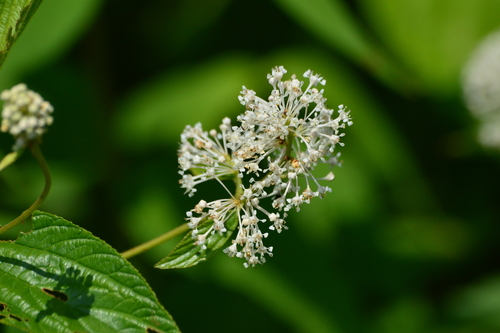
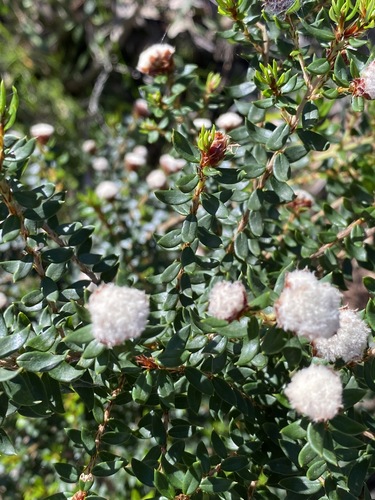
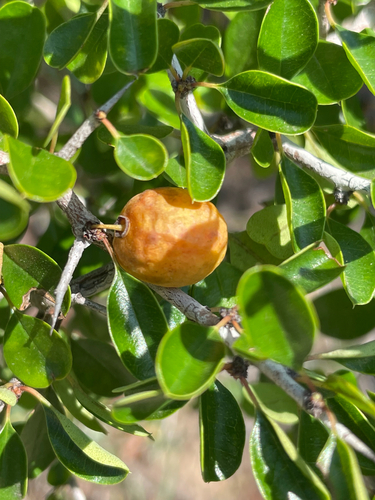
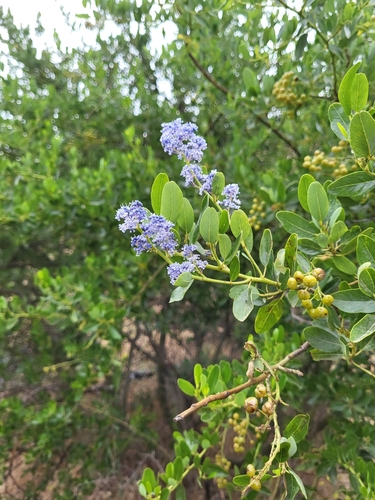
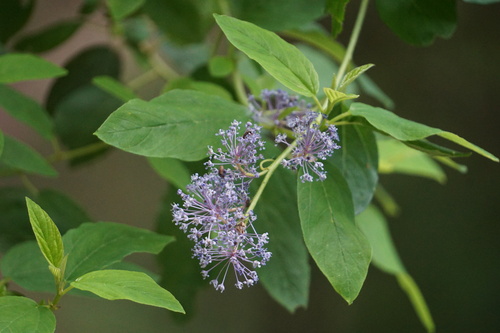
Ceanothus integerrimus Hook. & Arn. is a deciduous shrub that grows 1 to 4 metres (3.3 to 13.1 ft) tall, with an open growth habit of ascending to erect branches. It is a drought-tolerant phanerophyte. Nitrogen-fixing actinomycete bacteria form root nodules on Ceanothus integerrimus roots. Its stems are round, yellow to pale green in color, and covered with small soft to straight stiff sharp hairs that lie parallel to or in contact with the stem surface. Its leaves are glossy, deciduous, 2.5 to 8 cm long, and grow alternately along stems. Leaf petioles are less than 15 mm in length, and the stipules are also deciduous. Leaf blades are lanceolate, elliptical, oblong, or widely ovate in shape. Leaves typically have one to two ribs extending from the base, are generally thin, and end in an acute to obtuse tip. Leaf margins are either entire or slightly dentate, with more noticeable toothiness toward the leaf tip. Leaf surfaces are light green, ciliate, or have hairs only visible under magnification. Lower leaves are hairy and lighter in color than upper leaves. Flowers are white or blue, and rarely pink. They grow in raceme clusters up to 15 centimeters long, and each flower contains both male and female reproductive organs. The fruit is a sticky valved capsule about 4 to 5 mm in diameter with a slight crest; after the capsule splits, the seed is ejected from the fruit. Ceanothus integerrimus can regenerate via seed, new shoot growth from its crown and stem, and layering when growing branches come into contact with soil. It has been observed that while most Ceanothus species can regenerate after fire, some do not resprout from the root after their crown is killed by fire. Pollination of this species' flowers is primarily done by bees. Seed production begins after the plant reaches approximately four years of age. High densities of seeds accumulate in the upper soil of Ceanothus communities. Seeds can remain viable for 24 years or more. Seed dormancy is broken when fire scarification or physical disturbance removes part of the seed coat. Seeds germinate best when planted around 1 inch deep in shady areas, in the spring after fire scarification has occurred. In ecology, Ceanothus integerrimus plays an important role in forest regeneration after wildfires by adding nitrogen to the soil, creating nitrogen-rich patches through its root association with nitrogen-fixing bacteria. Mule deer in particular feed on this species, and porcupines and quail have been observed eating its stems and seeds. Nutritionally, its leaves are a good source of protein, and both its stems and leaves contain high levels of calcium. The nutritional quality of the leaves varies by season, and is highest from fall to early spring. Indigenous peoples of California use the branches of this plant to treat women after childbirth. Miwok Indians of Northern California use its branches to weave complex baskets. The Concow tribe of the Konkow language calls the tree hē′-bē. Cattle ranchers report that cattle thrive when grazing on this plant during its seasonal growing period.