About Cavia porcellus (Linnaeus, 1758)
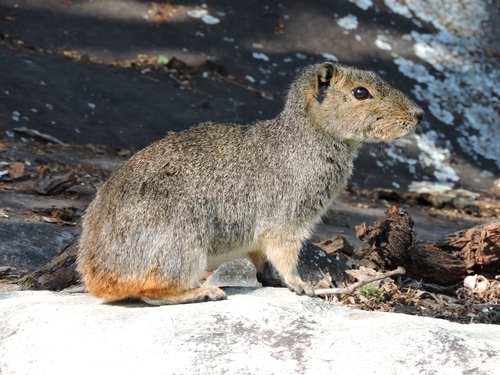
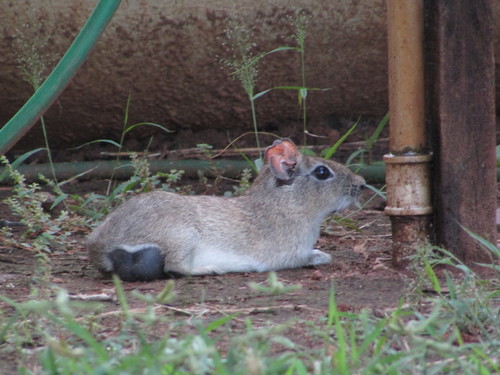
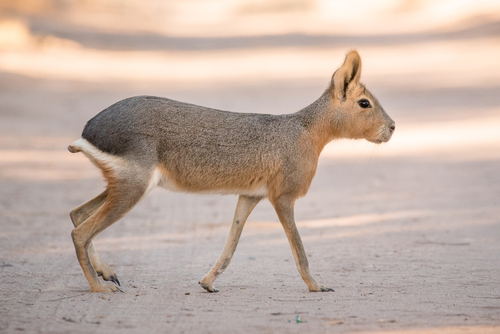
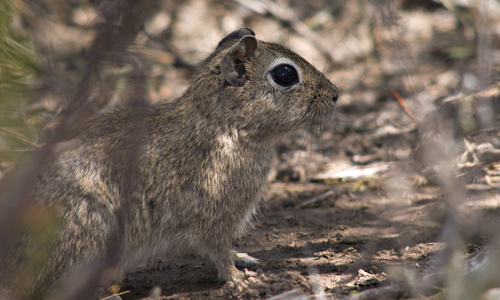
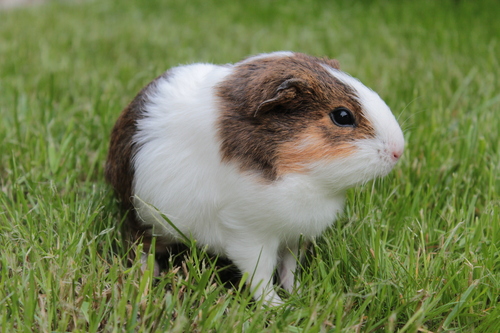
The guinea pig, also called domestic guinea pig, cavy or domestic cavy (Cavia porcellus), is a rodent species in the genus Cavia and family Caviidae. Breeders most often use the name 'cavy' for the species, while 'guinea pig' is the more common term in scientific and laboratory settings. Contrary to their common name, guinea pigs are not native to Guinea, and they are not closely related to pigs. They originated in the Andes region of South America, where wild guinea pig populations still exist today. Research based on biochemistry and DNA hybridization indicates that guinea pigs are domesticated animals that do not occur naturally in the wild, and are descended from a closely related related cavy species, such as C. tschudii. Originally, guinea pigs were domesticated as livestock for meat in the Andean region, and they are still consumed as food in some parts of the world today. In Western society, guinea pigs have been widely popular as pets since European traders introduced them to Europe and North America in the 16th century. Their docile temperament, friendly response to handling and feeding, and the relative simplicity of caring for them have kept them a popular choice for household pets. This popularity has led to the formation of organizations focused on competitive breeding of guinea pigs across the world. Through artificial selection, breeders have developed many specialized breeds with a wide range of coat colors and textures. Studies confirm that appropriate housing conditions, including sufficient cage size and environmental enrichment, are important for guinea pig welfare. Livestock guinea pig breeds hold an important role in the folk culture of many indigenous Andean peoples, primarily as a food source. They are also used in folk medicine and community religious ceremonies, in addition to being raised for meat. Guinea pigs are a key culinary staple in the Andes Mountains, where they are called cuy. In the early 2000s, marketers worked to expand guinea pig consumption outside of South America. Biological experiments using domestic guinea pigs have been conducted since the 17th century. The species was used so often as a model organism in the 19th and 20th centuries that the term 'guinea pig' became a common phrase to refer to a human test subject. Since that period, guinea pigs have mostly been replaced in research by other rodents such as mice and rats. They are still used in research today, however, primarily as model organisms to study human medical conditions including juvenile diabetes, tuberculosis, scurvy (guinea pigs, like humans, require dietary vitamin C), and pregnancy complications. For reproduction, male guinea pigs (called boars) reach sexual maturity between 3 and 5 weeks of age. Female guinea pigs (called sows) can become fertile as early as 4 weeks old, and can carry litters before they are fully grown adults. Sows can breed year-round, with spring being the peak breeding season. A sow can produce up to five litters per year, though six is theoretically possible. Unlike the altricial newborn offspring of most rodent species, newborn guinea pig pups are precocial: they are well-developed at birth, with fur, teeth, claws, and partial eyesight. Pups are immediately mobile and able to eat solid food, though they will continue to nurse from their mother. Sows can become pregnant again as soon as 6 to 48 hours after giving birth, but constant pregnancy is unhealthy for female guinea pigs. The gestation period for guinea pigs ranges from 59 to 72 days (1.9 to 2.4 months), with an average gestation length of 63 to 68 days (2.1 to 2.2 months). Due to the long gestation period and large size of pups, pregnant sows often become large and take on an eggplant shape, though the degree of change in size and shape depends on litter size. Litter sizes range from 1 to 6 pups, with 3 being the average; the largest recorded litter size is 9. A guinea pig mother only has two nipples, but she can successfully raise average-sized litters of 2 to 4 pups. Smaller litters may lead to labor difficulties caused by oversized individual pups. Larger litters have higher rates of stillbirth, but because pups are born at an advanced stage of development, lack of access to the mother's milk has little effect on newborn mortality. If they are lactating, cohabiting female guinea pigs will assist with caring for pups; guinea pigs engage in alloparental care, where a sow may adopt another sow’s pups. This often occurs if the original parents die or become separated from the pups for other reasons. Alloparental care is common in guinea pigs, and is also seen in other animal species including elephants. Toxemia of pregnancy, a form of hypertension, is a common health issue that kills many pregnant female guinea pigs. Symptoms of toxemia include anorexia (loss of appetite), low energy, excessive salivation, a sweet or fruity ketone-related odor on the breath, and seizures in advanced cases. Pregnancy toxemia is most common in hot climates. Other serious pregnancy complications include uterine prolapse, hypocalcaemia, and mastitis. Females that do not give birth can develop irreversible fusing or calcification of the cartilage in the pubic symphysis, a pelvic joint, after they reach six months of age. If a female becomes pregnant after this change develops, the birth canal may not widen enough for delivery, which can lead to dystocia and death during birth. Domestic guinea pigs are typically kept in cages, though some owners that keep large numbers of cavies devote entire rooms to their pets. Empirical research shows that larger cages and environmental enrichment such as hiding places improve guinea pig welfare, but owners often provide less space than the recommended amount. Wire mesh cage floors can cause injury, and are linked to an infection called bumblefoot (ulcerative pododermatitis), so solid-bottom cages that allow guinea pigs to walk directly on bedding are the standard choice. Large cages with enough running space can be built from wire grid panels and plastic sheeting, a design called C&C, or 'cubes and coroplast'. Red cedar (both Eastern and Western) and pine, both softwoods, were once commonly used as bedding. These materials are now thought to contain harmful phenols (aromatic hydrocarbons) and oils, so alternative bedding materials are used instead, including those made from hardwoods like aspen, paper products, and corn cobs. Guinea pigs are naturally messy: they often jump into their food bowls or kick bedding and feces into them, and their urine sometimes forms crystals on cage surfaces that are difficult to remove. After a guinea pig’s cage is cleaned, the guinea pig will typically urinate and drag its lower body across the cage floor to mark its territory. Male guinea pigs may also mark their territory this way when they are returned to their cages after being removed. Guinea pigs thrive when kept in groups of two or more; common group combinations are groups of all sows, or groups of one or more sows with a neutered boar, though boars can sometimes live together successfully. Guinea pigs can learn to recognize and bond with other individual guinea pigs, and tests show that a boar’s neuroendocrine stress response in an unfamiliar environment is significantly reduced when a bonded female is present, but not when an unfamiliar female is present. Groups of boars can get along if their cage has enough space, they are introduced when young, and no females are present in the group. In Switzerland, owning a single guinea pig is considered harmful to the animal’s well-being, so keeping a guinea pig without a companion is illegal. There is even a service that rents guinea pigs to temporarily replace a deceased cage-mate. Sweden has similar laws that prohibit keeping a guinea pig alone. In Andean indigenous populations, guinea pigs have a wide range of traditional uses. There are many folklore traditions centered on guinea pigs: they are exchanged as gifts, used in customary social and religious ceremonies, and frequently referenced in spoken metaphors. They are also used in traditional healing rituals by folk healers called curanderos, who use the animals to diagnose conditions including jaundice, rheumatism, arthritis, and typhus. Curanderos rub guinea pigs on the bodies of sick people, and the animals act as a supernatural medium. Black guinea pigs are considered especially useful for diagnoses. After rubbing, the animal may be cut open and its entrails examined to check if the cure will be effective. These traditional diagnostic methods are widely accepted in many parts of the Andes, where Western medicine is either unavailable or distrusted. Peruvians consume an estimated 65 million guinea pigs each year. The animal is so deeply embedded in Peruvian culture that a famous Last Supper painting in Cusco’s main cathedral depicts Christ and his disciples eating guinea pig. Guinea pigs remain an important part of religious events in both rural and urban areas of Peru. A religious celebration called jaca tsariy, meaning 'collecting the cuys', is a major festival in many villages in the Antonio Raimondi province of eastern Peru, and is held in smaller ceremonies in Lima. This is a syncretistic event that combines elements of Catholicism and pre-Columbian religious practices, centered around celebrating local patron saints. The exact format of jaca tsariy varies between towns: in some areas, a person called a sirvinti (servant) is appointed to go door-to-door collecting donated guinea pigs, while in other areas, guinea pigs are brought to a communal space and released in a mock bullfight. Dishes like cuy chactado are always served as part of these festivities, and killing and serving the animal is framed by some communities as a symbolic satire of local politicians or important figures. In the Tungurahua and Cotopaxi provinces of central Ecuador, guinea pigs are used in celebrations for the feast of Corpus Christi, as part of the Ensayo community meal and the Octava event. During the Octava, greased poles called castillos are erected with prizes tied to the crossbars, and several guinea pigs may be hung from these poles. The Peruvian town of Churin holds an annual festival that involves dressing guinea pigs in elaborate costumes for a competition. Guinea pig festivals are also held in Huancayo, Cusco, Lima, and Huacho, featuring costume events and guinea pig dishes. Most guinea pig celebrations across Peru are held on National Guinea Pig Day (Día Nacional del Cuy), which takes place on the second Friday of October.