About Causonis clematidea (F.Muell.) Jackes
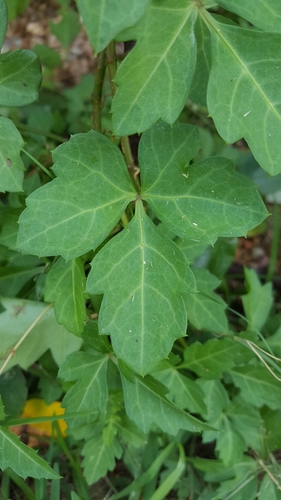
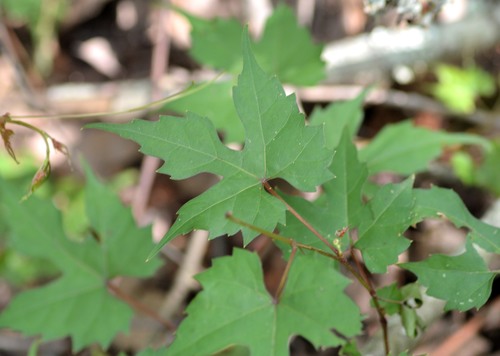
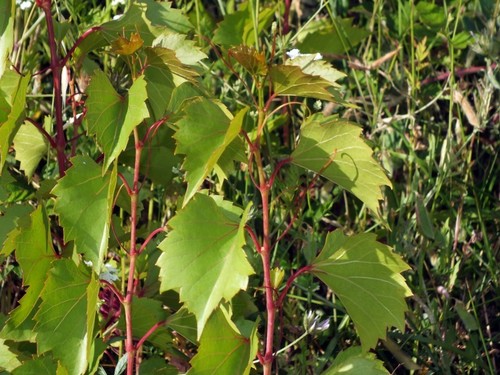
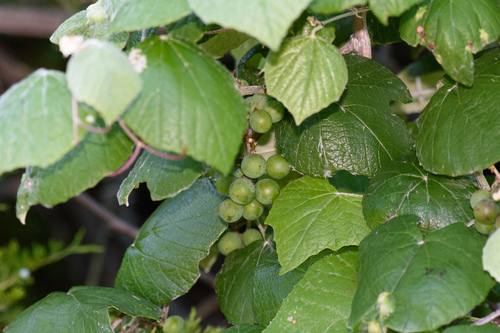
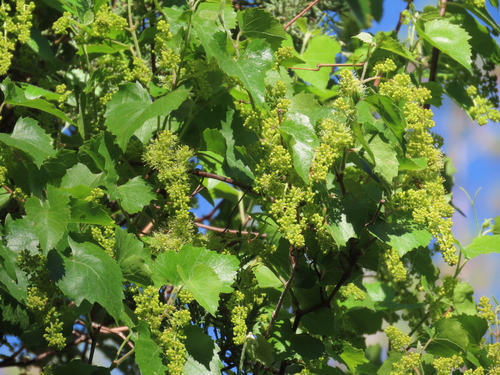
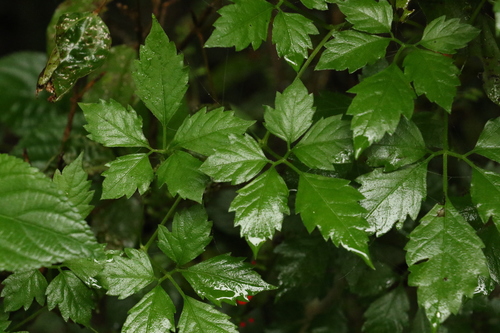
Causonis clematidea is a weak climbing plant. Its stems grow up to 2 meters long, are either pubescent or glabrous, and do not exceed 2 centimeters in diameter; older stems may become woody. It forms underground stems that typically produce small tubers, and has two tendrils or several arms with no adhesive discs. Leaves are compound, usually pentafoliate with a larger terminal leaflet. Leaflets are ovate to elliptic, 1 to 8 centimeters long and 0.5 to 4 centimeters wide, with an acuminate to acute apex, obtuse to cuneate base, and deeply toothed margins. Leaf surfaces are matte, mostly glabrous, and attach to a 1 to 8 centimeter long petiole. Its stipules are triangular and around 1.5 millimeters long. New foliage sprouts from tubers each spring and dies back in autumn; the species is evergreen in warmer regions and typically deciduous in cooler zones. In Australia, it should not be confused with the introduced alien weed Cardiospermum halicacabum (balloon vine): both have compound leaves with toothed margins, but this native vine has five hairless leaflets, while the weed has nine leaflets. This species is distributed across Australia from the Shoalhaven River gorges in southern New South Wales north to the tropical forests around Townsville in northeastern Queensland. It grows best in humid, shaded locations, and is often found climbing over rocks and shrubs at rainforest margins. In northeastern Queensland it typically occurs in vine thickets and monsoon forest; in the southern part of its range it is common along creek banks and riparian zones within Coastal Swamp Oak Forests. In northeastern Queensland it occurs at altitudes between 80 and 750 metres (260 to 2,460 ft). It can also grow on farmlands within its range, where it is considered a weed due to its fast-growing, smothering growth habit. It prefers full sun to partial shade, and can be cultivated in gardens. Its blackish berries and tubers are edible, though the berries do not have a strong flavor. Its flowers attract birds and moth caterpillars to gardens, and the attracted bird species include the Australian king parrot, Blue-faced Honeyeater, Brown Cuckoo-dove, Channel-billed Cuckoo, Common Koel, Crimson Rosella, Lewin's Honeyeater, Little Lorikeet, Noisy Friarbird, Pacific Emerald Dove, Red-winged Parrot, Rose-crowned Fruit-dove, Scaly-breasted Lorikeet, Pied Currawong, and many others. Historically, Aboriginal Australians used the tubers of this native grape, along with tubers of Cissus opaca, as a type of yam, preparing the tubers by pounding them on stones before roasting.