About Caulerpa taxifolia (M.Vahl) C.Agardh
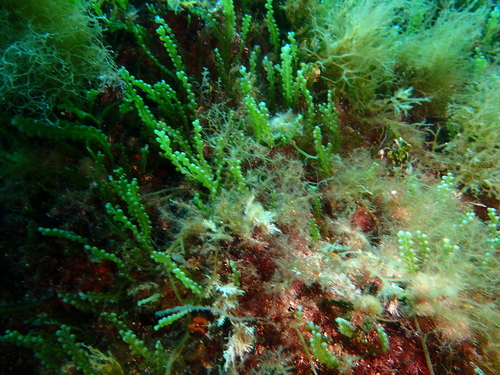
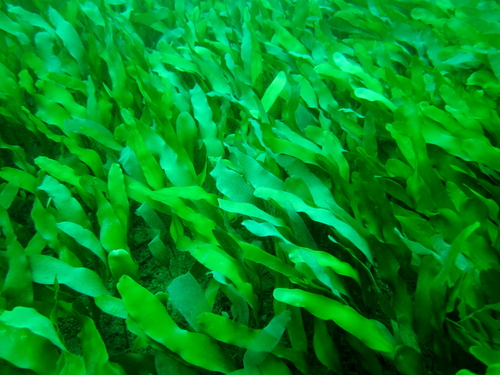
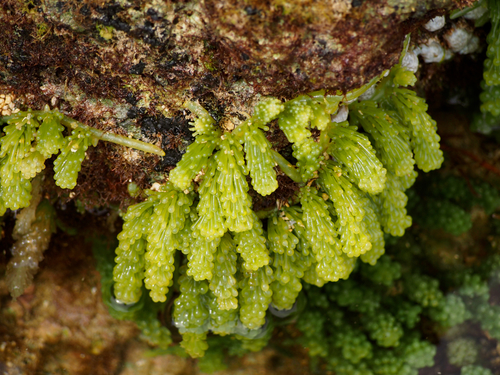
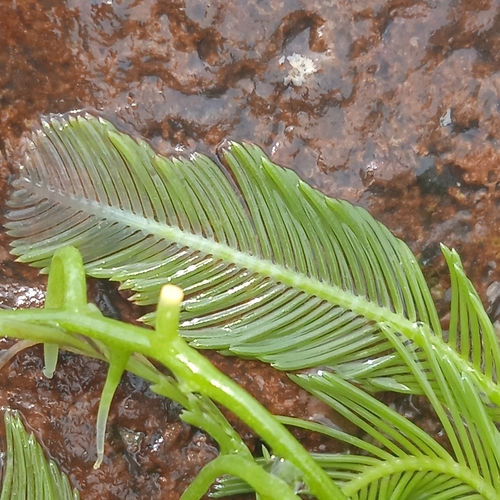
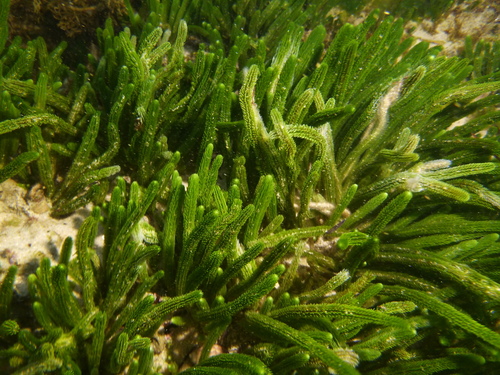
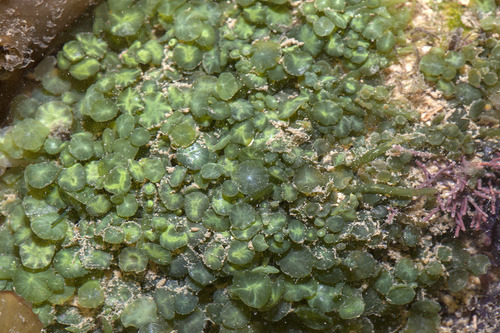
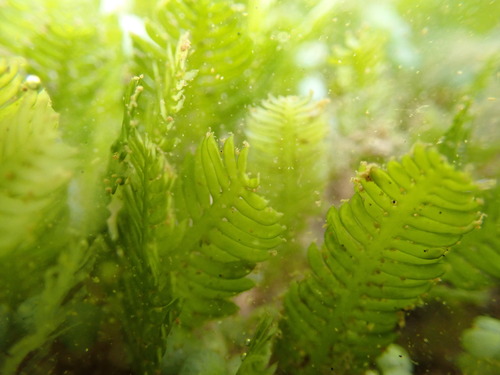
Caulerpa taxifolia is a species of green alga. It is light green, and grows stolons (stem-like structures) along the sea floor. Sparsely branched upright fronds, measuring roughly 20 to 60 cm (8 to 24 inches) in height, grow up from these stolons. Like all species in the genus Caulerpa, C. taxifolia is made up of a single cell that contains many nuclei, and it has been identified as the largest known single-celled organism. Wild-type C. taxifolia is monoecious. Algae in the genus Caulerpa produce a mix of toxins called caulerpicin, which is thought to give the algae a peppery taste. The effects of caulerpenyne, a specific toxin produced by C. taxifolia, have been studied. Research has found that extracts from C. taxifolia negatively impact P-glycoprotein-ATPase in the sea sponge Geodia cydonium. Caulerpa species are commonly used in aquariums, valued for their appearance and their ability to limit the growth of unwanted species. C. taxifolia has been grown for aquarium use in western Europe since the early 1970s. A cold-resistant clone of the alga was first noted in the tropical aquarium at Wilhelma Zoo in Stuttgart, and was further bred through exposure to chemicals and ultraviolet light. The zoo distributed this strain to other aquariums, including the Oceanographic Museum of Monaco. This aquarium strain is morphologically identical to native populations of the species. However, a 2008 study found that a population of the aquarium strain near Caloundra, Australia had greatly reduced sexual reproduction, with only male plants present during some reproductive events. The aquarium strain can survive out of water for up to 10 days when kept in moist conditions, and fragments as small as 1 cm can grow into new viable plants.