About Catriona aurantia (Alder & Hancock, 1842)
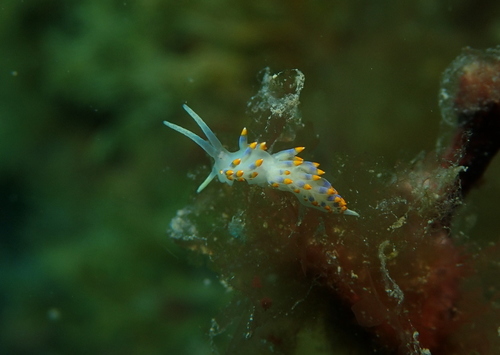
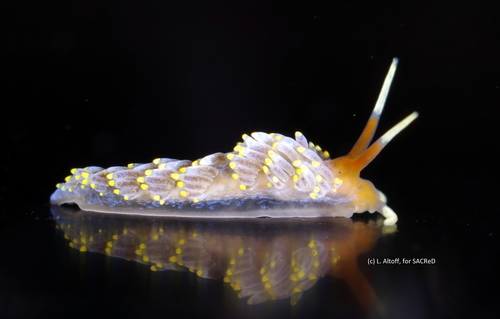
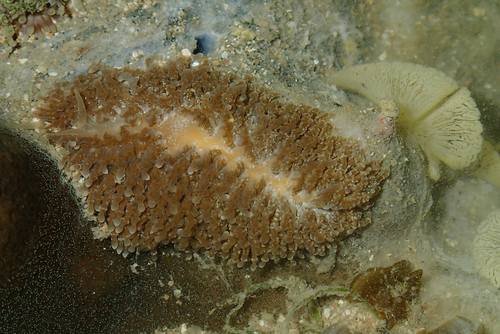
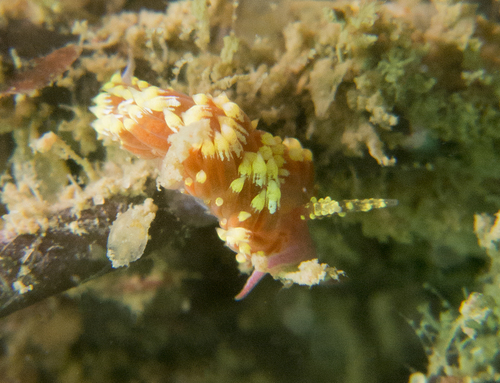
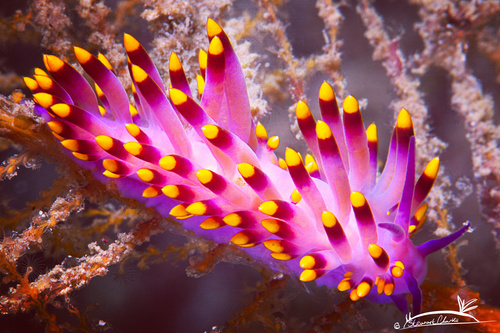
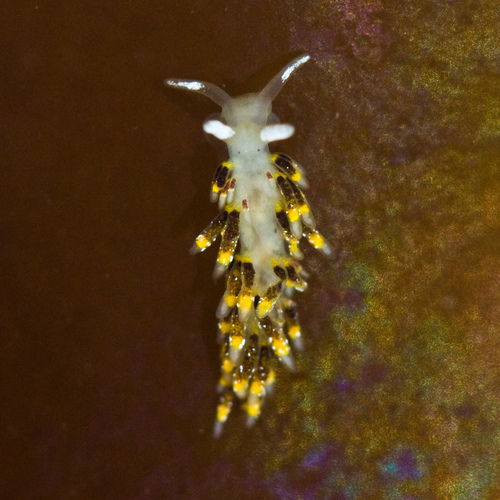
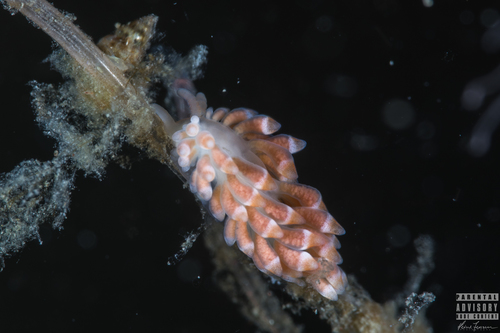
Catriona aurantia (Alder & Hancock, 1842) has a translucent white body and slightly swollen cerata. Its digestive gland is orange-pink, and the tips of the cerata bear a broad white band made of tiny epidermal glands. In larger specimens, the rhinophores develop a pale orange diffuse coloration. The foot is broad and rounded at its anterior end. Large individuals can grow to over 20 mm in length. This species was originally described from Whitley, located on the North Sea coast of England. Catriona aurantia feeds on the hydroid Tubularia larynx. It is thought to feed by eating through the stems of this hydroid, rather than consuming the polyps. It is typically found in exposed locations with strong tidal streams, in shallow water at depths ranging from 0 m to 20 m. This species produces egg masses made of lozenge-shaped egg packets.