About Catostylus tagi (Haeckel, 1869)
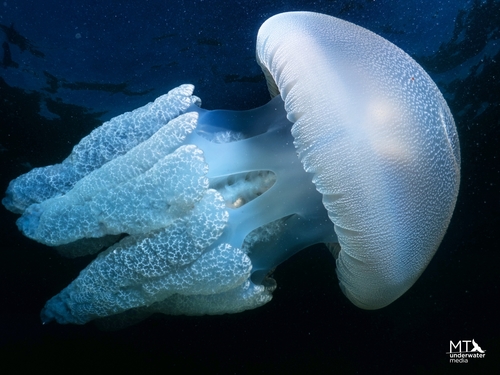
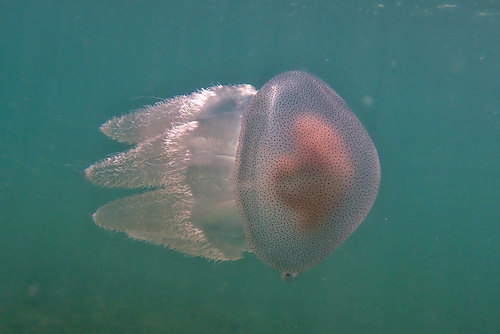
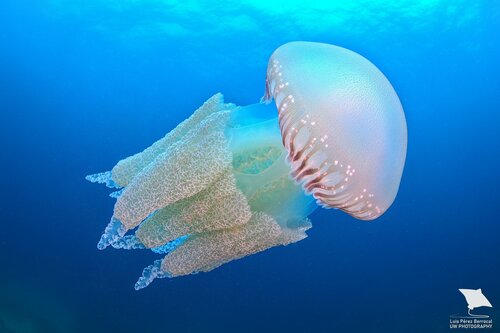
This species is a typical Catostylus jellyfish, with a thick appendage and a tentacle paired with each appendage. Its sting causes mild pain and a skin rash, but generally does not pose a serious threat to humans. The maximum recorded bell diameter of this jellyfish is 65 cm (26 in); more typical individuals reach 25 cm (10 in) in bell diameter and weigh 2.5 kg (5.5 lb). Its body color is variable, and can be blue-white, cream, brown, or off-white. The grooves on its exumbrella are reddish or purplish brown. C. tagi has X-shaped gonads located along the edge of its stomach. It has the octant structure that is characteristic of all Catostylus jellies, and the height of these octants is also variable. C. tagi feeds on zooplankton, phytoplankton, certain crustaceans, small fish, and marine snow. The collagen extracted from its bell is currently being researched for potential use as an intercellular matrix. This collagen is composed of one-third glycine, with most of the remaining content made up of water and other amino acids; the overall content of other amino acids is very low. The collagen denatures at a temperature of 29.9 °C (85.8 °F).