About Catostomus commersonii (Lacepède, 1803)
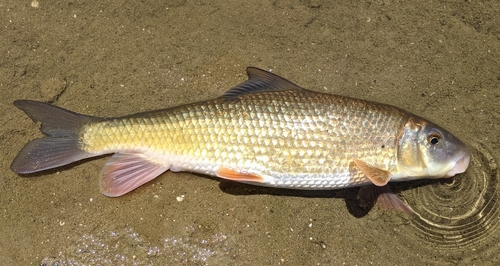
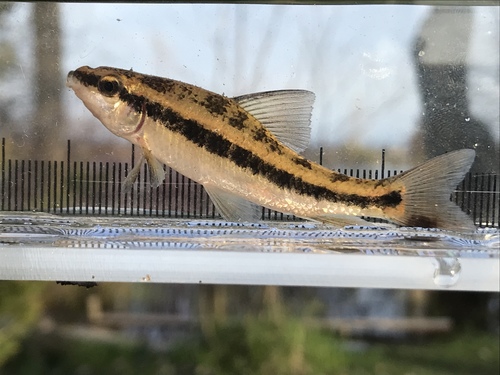
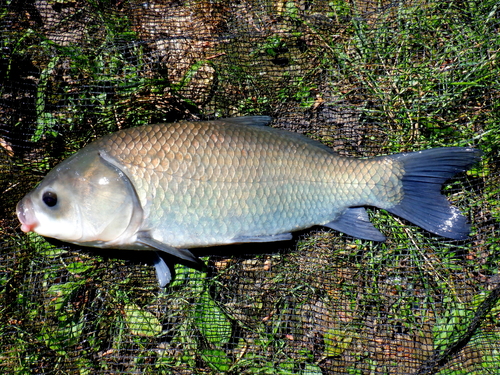
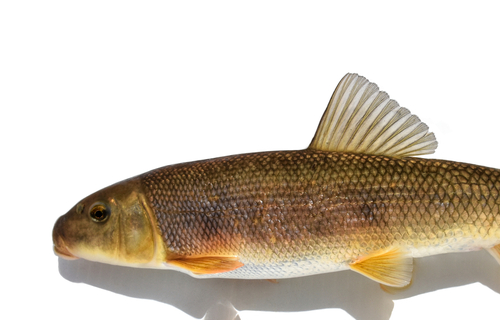
The white sucker, scientifically named Catostomus commersonii (Lacepède, 1803), is a long, round-bodied fish. Its back and sides are colored dark green, grey, copper, brown, or black, and it has a light underbelly. It shows typical features of primitive Cypriniformes, including a homocercal tail, cycloid scales, and fin rays on its dorsal, pectoral, and pelvic fins. When fully grown, this species reaches 12–20 inches (30–51 cm) in length, and weighs 2–6 pounds (0.91–2.72 kg). Its fleshy-lipped suckermouth sits in an inferior position on the underside of its head, because the fish feeds from bottom surfaces. White suckers are often confused with other species of suckers and redhorses, but can be identified by their complete lateral line system that holds 55–85 small scales. This fish uses chemosensory cues to detect and avoid predators and other members of its own species, during both day and night. The white sucker is highly adaptable to different habitats and changing environmental conditions. It is generally found in small streams, rivers, and lakes across the Midwest and East Coast of the United States. It is also relatively tolerant of turbid and polluted waters, though it has low breeding success in acidified waters, a condition that can result from acid rain. White suckers usually spawn in shallow water or streams during April and May. Spawning may be triggered by temperature changes and runoff from early snow melt. A spawning group typically consists of one female gathered with two or more males; the female releases up to 10,000 eggs, which are then fertilized by the assembled males.