About Catostomus clarkii Baird & Girard, 1854
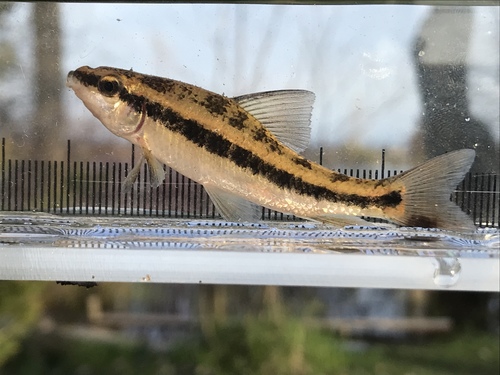
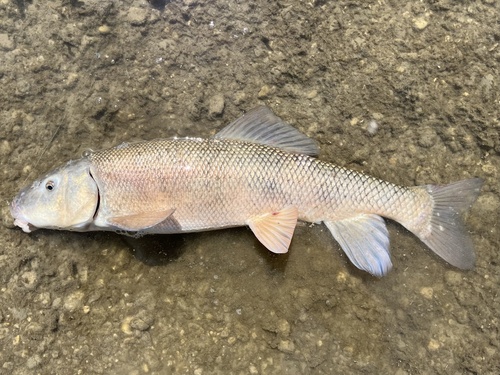
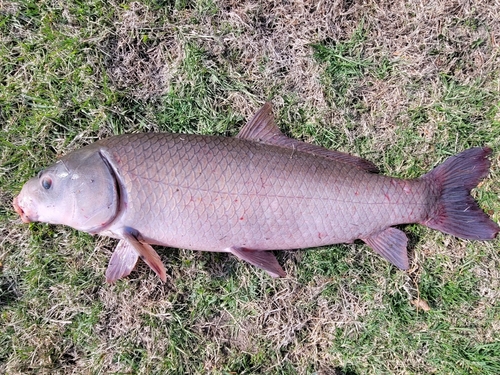
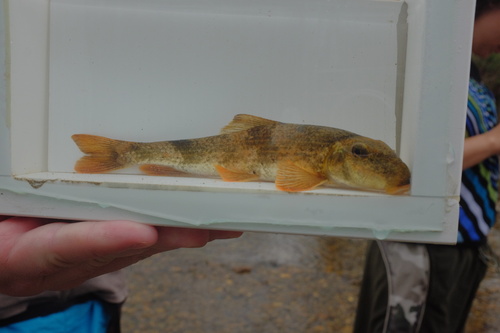
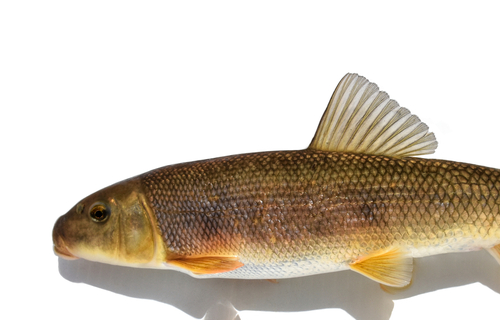
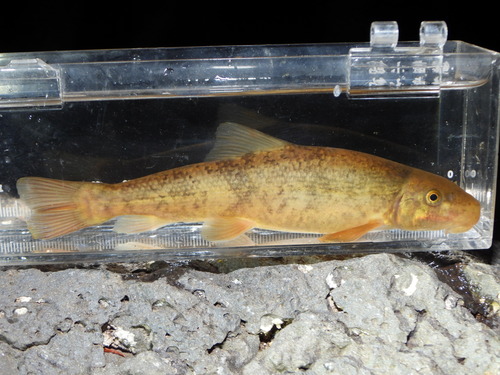
The desert sucker (Catostomus clarkii Baird & Girard, 1854) has a two-toned body. Its back and upper sides are darker, ranging from olive-brown to dark green, while its belly and lower sides are deep-yellow to silvery tan. The scales on the upper half of the body have dark spots that form faint dashed lines. It has a cylindrical head that tapers to a blunt face, with a lower lip roughly three times as thick as the upper lip. Its mouth is positioned on the ventral (underside) of the face and is proportionately large. The desert sucker's dorsal fin has 10 to 11 rays. Adult lengths measure between 4 to 16 inches (100 to 410 mm) in smaller streams, but can reach up to 31 inches (790 mm) in Arizona. Adult weight ranges from 4 to 65 ounces (110–1,840 g). This fish is distributed across Nevada, Utah, Arizona and New Mexico in the United States. It occurs in the lower Colorado River basin below the Grand Canyon, especially in the Gila River, and also lives above the Grand Canyon in streams of the Virgin River basin, White River basin, and other basins. The total range of the desert sucker is estimated to cover 128,000 km2 (49,000 sq mi). Desert suckers prefer rippling water, rapids, and flowing streams with gravelly bottoms. They reach sexual maturity in their second year, and spawning takes place from January through May, during winter and spring.