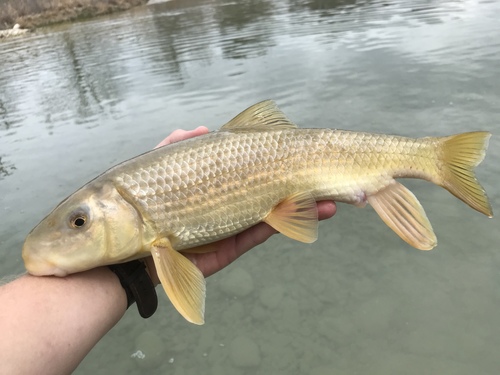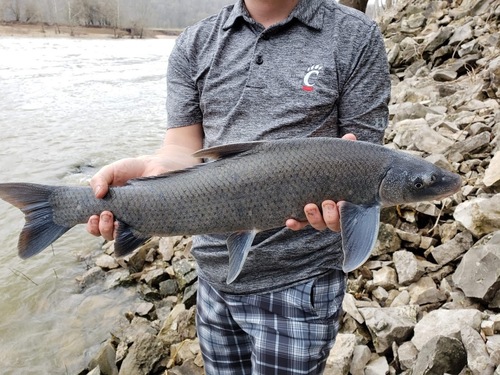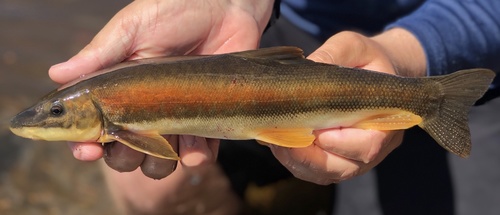
About Catostomus catostomus (Forster, 1773)
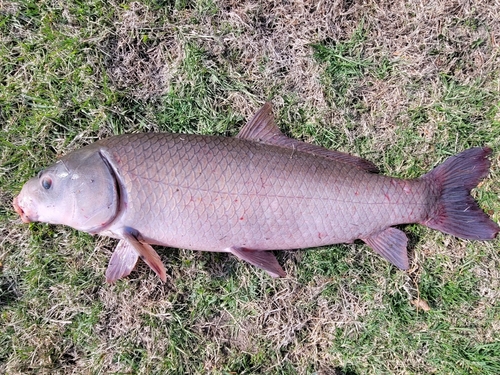
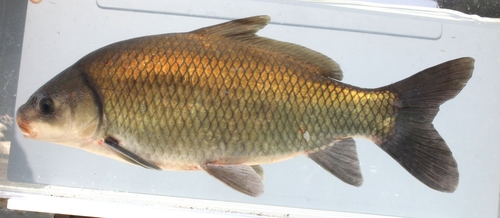
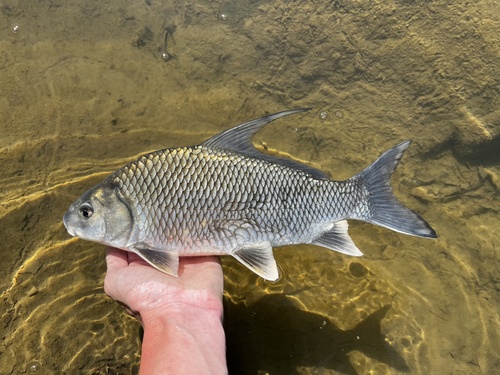
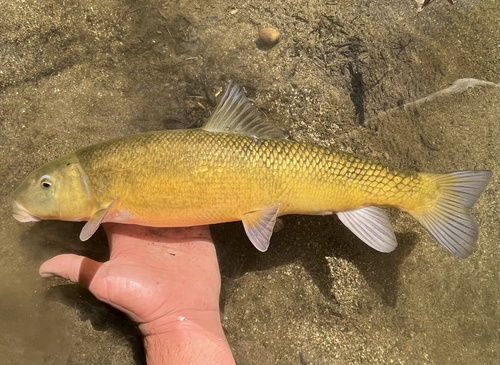
The longnose sucker (Catostomus catostomus) has a long, rounded body, with dark olive or grey sides and upper surfaces, and a pale underside. Adults reach a maximum total length of 64 cm (25 in) and a maximum weight of 3.3 kg (7.3 lb). This species is easily confused with the closely related white sucker (Catostomus commersoni) due to their similar appearance, but longnose suckers can be told apart by their comparatively finer scales. The longnose sucker has several distinctive physical traits. As its common name suggests, it has an elongated snout that distinguishes it from other sucker species; this snout can make up one-third of the fish’s total body length. It has a circular suction disc formed by large lips on the underside of its body near the mouth. These large lips are an adaptation that lets the longnose sucker attach to rocks and other substrates in fast-moving water. Contrary to the finer scale comparison to white suckers, the longnose sucker’s body is covered in large, prominent scales that provide protection from predators. Longnose suckers live in cold, clear bodies of water including lakes, pools, rivers, and streams, and can occasionally be found in brackish water. In North America, their range extends north from the Columbia, Delaware, Missouri, and Monongahela river basins, as well as the Great Lakes basin. A Russian subspecies population, sometimes called the Siberian sucker (C. c. rostratus), occurs in the Yana, Indigirka, Alazeya, and Kolyma river basins. It is a bottom-feeding fish that eats aquatic plants, algae, and small invertebrates. Longnose suckers are preyed on by larger predatory fish including bass, walleye, trout, northern pike, muskellunge, and burbot.