About Catoptria pinella Linnaeus, 1758
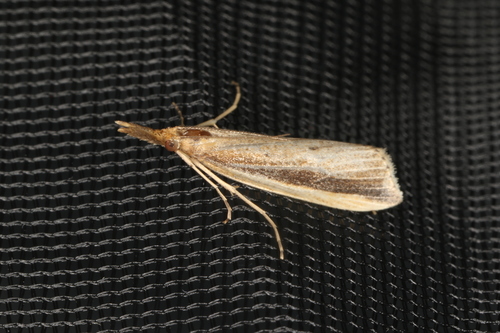
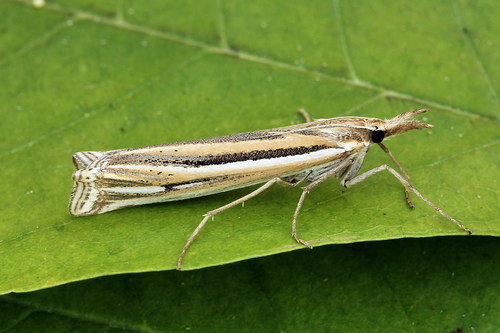
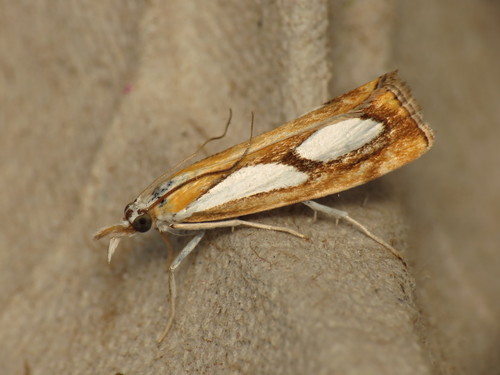
Catoptria pinella, first described by Linnaeus in 1758, is a moth species that belongs to the family Crambidae. It can be found in Europe, North Africa, and across the Palearctic region. This moth has a wingspan ranging from 18 to 24 millimeters. Its face bears a short cone-shaped structure. The forewings are colored ferruginous-ochreous; a shiny white median streak that broadens outward runs from the wing base to the fourth wing vein, and this streak is cut across its middle by a dark brown oblique bar. The posterior part of the streak is bordered by dark brown. The second line on the forewing shows a faint brown color near the costa. The cilia along the forewing edge are shiny brownish. The hindwings are a pale light grey. Full-grown larvae are a dull reddish-grey color, with black spots, a black head, and a black thoracic plate on the second body segment. Adult moths fly from July to August, with timing that varies by location. The larvae feed on many different types of grasses.