About Catha edulis Forssk.
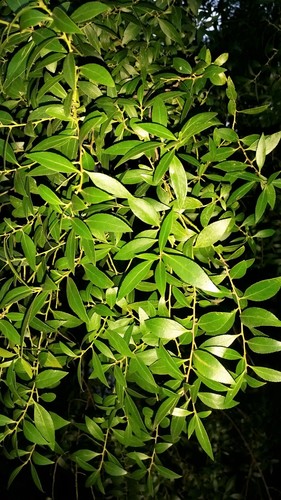
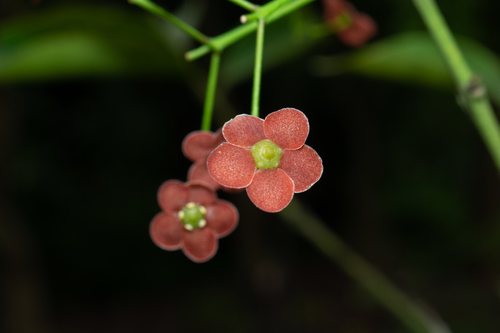
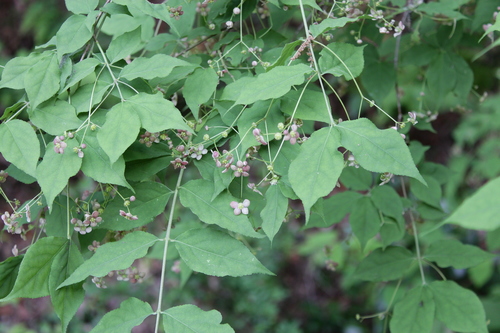
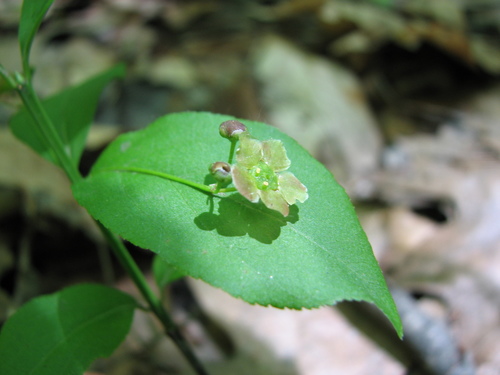
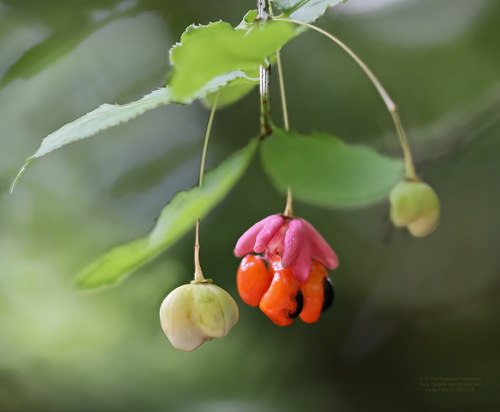
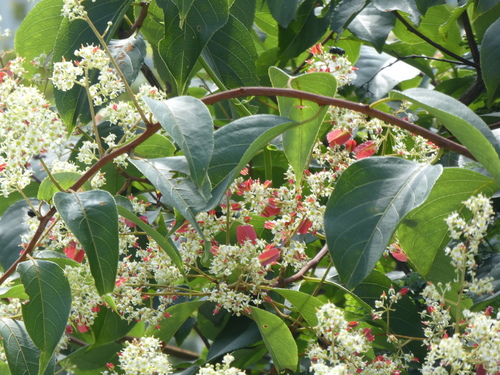
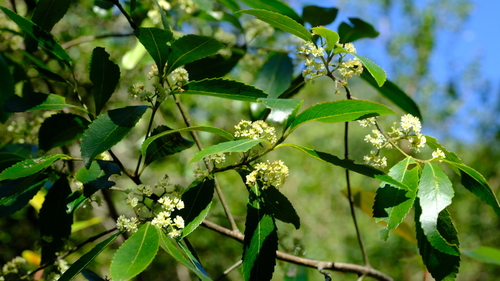
Catha edulis Forssk., commonly known as khat, is a slow-growing evergreen shrub or tree. It typically reaches 1 to 5 meters (3 feet 3 inches to 16 feet 5 inches) in height, and can grow up to 10 meters (33 feet) tall in equatorial areas. It takes seven to eight years for a khat plant to reach its full mature height. Khat usually grows in arid environments, tolerating temperatures between 5 and 35 degrees Celsius (41 to 95 degrees Fahrenheit). Its evergreen leaves are 5 to 10 centimeters (2 to 4 inches) long and 1 to 4 centimeters (0.39 to 1.6 inches) wide. Khat requires very little maintenance beyond access to sunlight and water. To irrigate khat crops, ground water is often pumped from deep wells using diesel engines, or transported by water trucks. Starting about one month before harvest, khat plants are watered heavily to keep their leaves and stems soft and moist. A healthy mature khat plant can be harvested four times per year, providing farmers with a year-round source of income. The plant produces small flowers on short axillary cymes that measure 4 to 8 centimeters (1.6 to 3.1 inches) in length; each flower has five small white petals. Its fruit is an oblong, three-valved samara capsule that holds one to three seeds. Khat is native to the entire eastern side of Africa, from Kenya south to Tanzania, Malawi, Zambia, and Zimbabwe, where it grows on rocky outcrops and along the edges of woodlands. In southern Africa, its range is scattered, but it grows in the KwaZulu-Natal, Eastern Cape, Western Cape, and Mpumalanga provinces of South Africa, as well as in Eswatini and Mozambique. In recent decades, improved roads, off-road motor vehicles, and air transport have increased global distribution of this perishable product, and the plant has now been recorded in Australia, the Netherlands, Canada, the United Kingdom, the Levant, Italy, New Zealand, and the United States. In the United States, freshly packed khat leaves are sold in African and Middle Eastern markets in Boston, Dallas, Los Angeles, and New York City, where demand for the plant is highest. Khat has been cultivated for use as a stimulant for centuries in the Horn of Africa and the Arabian Peninsula. Chewing khat in this region predates the use of coffee, and is used in a similar social context. Fresh leaves and stem tips are chewed to produce euphoria and stimulation; less often, dried khat is brewed and consumed as tea. Chewing khat with chewing gum or fried peanuts makes the leaves and soft stem easier to chew. Khat is cultivated in the central region of Uganda, especially in Kasenge (Wakiso), Butambala District, and Mabira Forest, as well as in some parts of western Uganda. In Kenya, khat is grown in Meru County and Embu County. High income for farmers is one key reason for the widespread cultivation of khat in Yemen. 2001 studies estimated that khat cultivation generated around 2.5 million Yemeni rials per hectare, while fruit crops generated only 0.57 million rials per hectare. Between 1970 and 2000, the total area of land cultivated with khat in Yemen grew from 8,000 hectares to 103,000 hectares. A 2000 World Bank estimate found that khat accounts for 30% of Yemen's total economy. Khat cultivation consumes a large share of Yemen's agricultural resources; an estimated 40% of the country's water supply is used to irrigate khat, and khat production increases by 10% to 15% every year. Producing one daily bag of khat requires an estimated 500 litres (130 US gallons) of water. High water consumption has led to diminishing groundwater levels in the Sanaa basin, so Yemeni government officials have proposed relocating much of Sanaa's population to Red Sea coastal areas. Traditionally, khat is used as a social drug; in Yemen, khat chewing is predominantly a male habit paired with conversation, hookah smoking, and tea drinking. While khat chewing remains primarily centered in its original cultivation area around the Red Sea, people outside this core region sometimes chew khat at parties or social events. Farmers and laborers may use khat to reduce physical fatigue and hunger, while drivers and students may use it to improve attention. In 2018, General Taher al-Aqili, chief of staff of the Yemeni Armed Forces, described khat as "our whisky" and stated that it gives his men strength to fight. Reports also note that child soldiers in Yemen chew khat to stay alert on the battlefield.