About Castor fiber Linnaeus, 1758
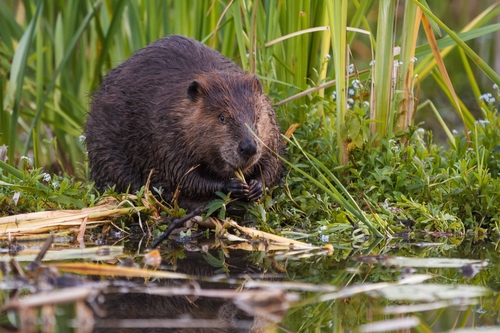
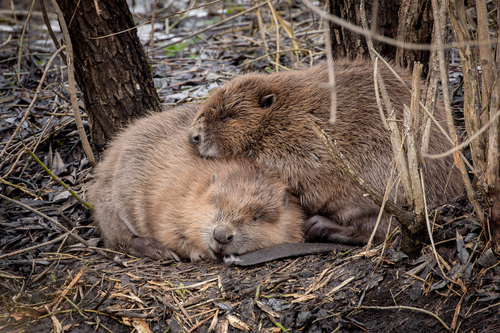
Castor fiber Linnaeus, 1758, commonly known as the Eurasian beaver, shows regional variation in fur colour. Light chestnut-rust is the dominant fur colour in Belarus; in Russia's Sozh River basin, fur is predominantly blackish brown, while beavers in the Voronezh Nature Reserve have both brown and blackish-brown fur. The Eurasian beaver is one of the largest living rodent species, and the largest rodent native to Eurasia. Its head-to-body length measures 80–100 cm (31–39 in), with an additional tail length of 25–50 cm (9.8–19.7 in). It typically weighs between 11–30 kg (24–66 lb). Based on recorded average weights, it is the world's second heaviest rodent after the capybara, and is slightly larger and heavier than the North American beaver. One exceptionally large recorded specimen weighed 31.7 kg (70 lb), and there are reports that the species can exceptionally exceed 40 kg (88 lb). The Eurasian beaver is currently recovering from near-extinction, after being heavily hunted by humans for its fur and for castoreum, a scent gland secretion believed to have medicinal properties. By the early 20th century, the estimated total population was only 1,200 individuals, and the species became extinct across many European nations. However, reintroduction and protection programs have led to gradual population recovery, so that by 2020, the total population numbered at least 1.5 million. The species likely survived east of the Ural Mountains from a 19th-century population that was as small as 300 animals. Factors that have enabled its recovery include the ability to maintain sufficient genetic diversity even when recovering from a population as small as three individuals, plus the fact that beavers are monogamous and select mates that are genetically different from themselves. Around 83% of the global Eurasian beaver population lives in the former Soviet Union as a result of reintroduction efforts. The Eurasian beaver is a keystone species that supports the ecosystems it inhabits. It creates wetlands that provide habitat for the European water vole, Eurasian otter, and Eurasian water shrew. By coppicing waterside trees and shrubs, it facilitates their regrowth into dense shrubs, which provide cover for birds and other animals. Beaver dams trap sediment, improve water quality, recharge groundwater tables, and increase cover and forage available for trout and salmon. The abundance and diversity of vespertilionid bats also increases in areas with beavers, apparently because beavers create gaps in forests that make it easier for bats to navigate. Eurasian beavers produce one litter per year. Females enter oestrus for only 12 to 24 hours, between late December and May, with oestrus peaking in January. Unlike most other rodents, beaver pairs are monogamous, staying together for multiple breeding seasons. The average gestation period is 107 days, and litters average three kits, with a range of two to six kits per litter. Most beavers do not reproduce until they reach three years of age, but around 20% of two-year-old females are able to reproduce.