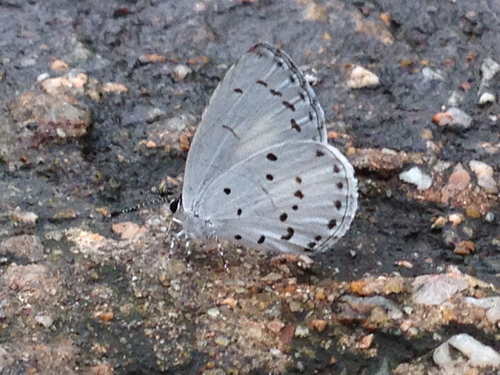
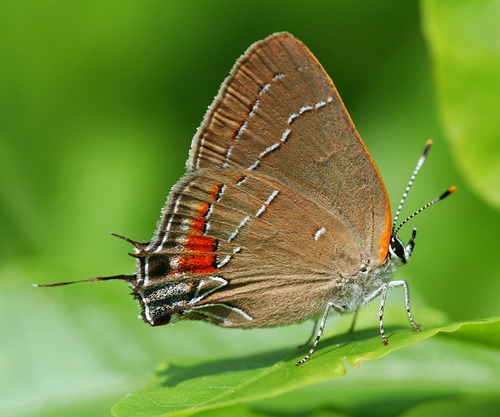
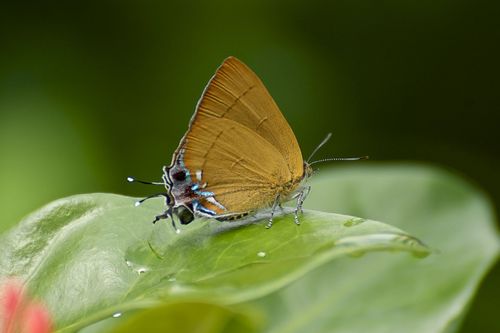
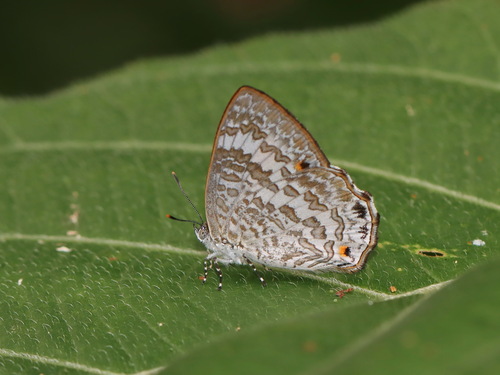
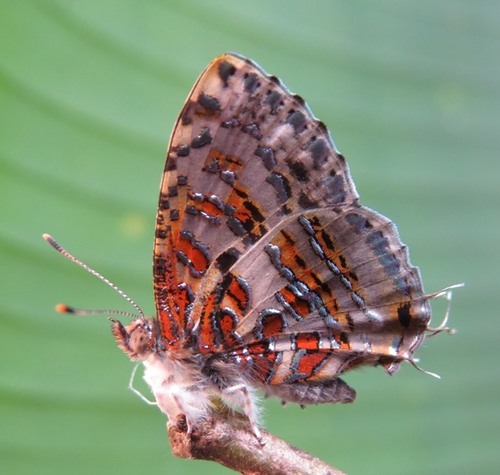
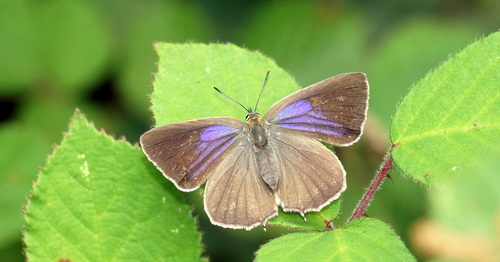
Castalius calice (Hopffer, 1855) is a animal in the Lycaenidae family, order Lepidoptera, kingdom Animalia. Not known to be toxic.

๐Ÿฆ‹
๐Ÿฆ‹ Animalia

Castalius calice (Hopffer, 1855)

Castalius calice (Hopffer, 1855)

Tuxentius calice, the white pie, is a Lycaenidae butterfly found in southern equatorial Africa with larvae feeding on Ziziphus plants.

Family
Genus
Castalius
Order
Lepidoptera
Class
Insecta

About Castalius calice (Hopffer, 1855)

This butterfly species was originally published under the scientific name Castalius calice (Hopffer, 1855), and is currently classified as Tuxentius calice, commonly known as the white pie. It belongs to the butterfly family Lycaenidae. Its distribution is limited to regions of Africa that lie south of the equator. Males of this species have a wingspan ranging from 21 to 24 mm, while females have a slightly broader wingspan range of 21 to 25 mm. Adult butterflies can be seen in flight throughout the entire year, though they are most commonly observed between October and March. The larvae of Tuxentius calice feed on Ziziphus mucronata, and are thought to also feed on other Ziziphus species.
Taxonomy

Animalia โ€บ Arthropoda โ€บ Insecta โ€บ Lepidoptera โ€บ Lycaenidae โ€บ Castalius

More from Lycaenidae

Sources: GBIF, iNaturalist, Wikipedia, NCBI Taxonomy ยท Disclaimer

Identify Castalius calice (Hopffer, 1855) instantly โ€” even offline

iNature uses on-device AI to identify plants, animals, fungi and more. No internet needed.

Download iNature โ€” Free

Start Exploring Nature Today

Download iNature for free. 10 identifications on us. No account needed. No credit card required.

Download Free on App Store