About Cassis madagascariensis Lamarck, 1822
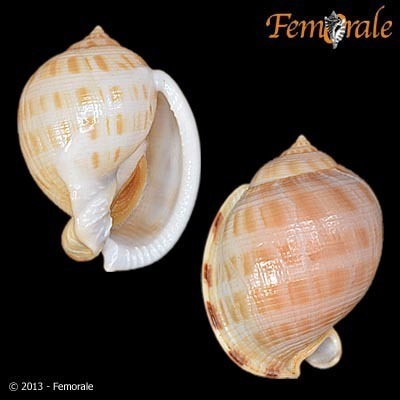
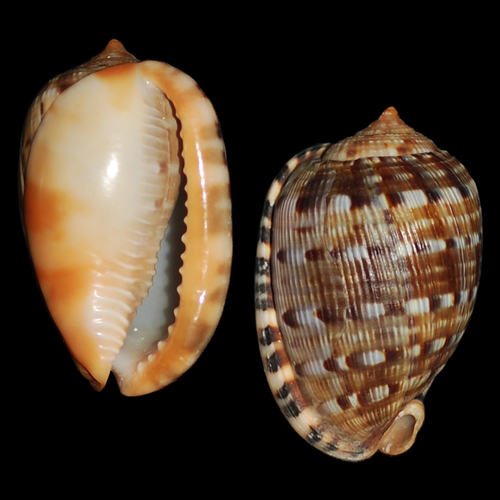
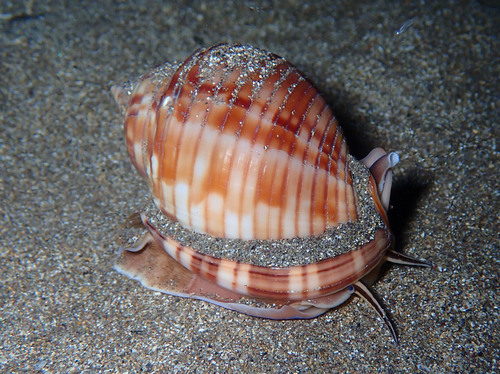
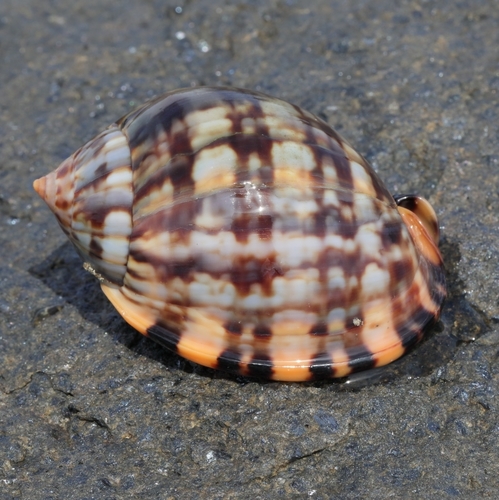
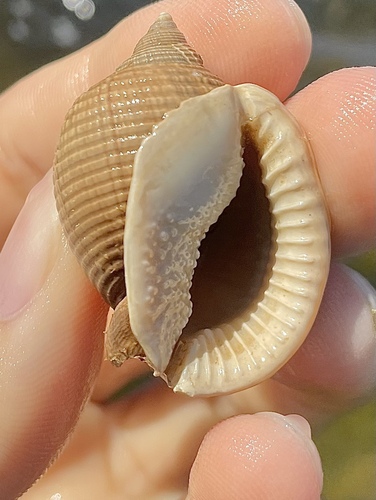
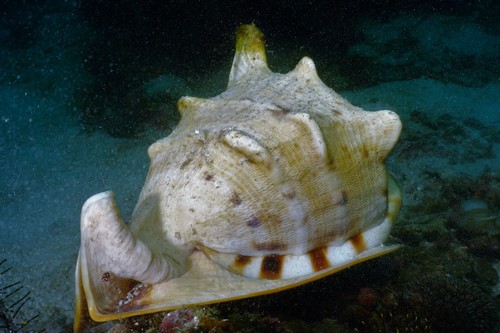
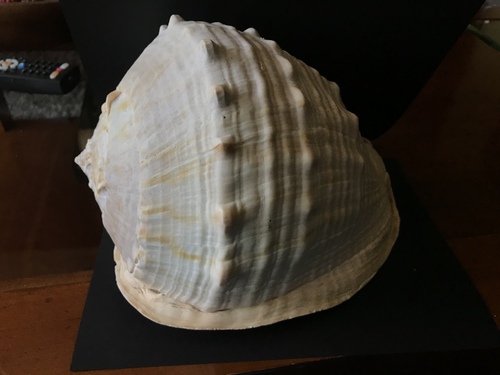
Cassia madagascariensis Lamarck, 1822 is an invertebrate organism that has no vertebrae. Its maximum recorded shell length is 409 mm. The shell is large and heavy with a short spire. It typically bears three rows of blunt knobs, alongside smaller lines of spiral folds. The aperture is elongated, with folds on both sides of the inner aperture. Shell color ranges from white to tan, and may sometimes have brown markings and blotches. Different species related to this taxon, commonly called the Queen Helmet Mollusk, can be distinguished by their size and the number of spines on their shell. Cassia madagascariensis Lamarck is relatively easy to identify: it has fewer spines than most related species, and those spines are larger. In particular, the topmost spine is notably larger than all other spines on the shell. This species occurs in the tropical Western Atlantic, the Gulf of Mexico and the Caribbean Sea. Its specific epithet madagascariensis literally means "of Madagascar", but this name comes from the original author's misunderstanding of the type locality. Shells of this species are used in jewelry to make cameos. In the Maldives, the shell is boiled, and the resulting boiled water is used as a traditional remedy for flu and fever-like symptoms.