About Carya pallida (Ashe) Engl. & Graebn.
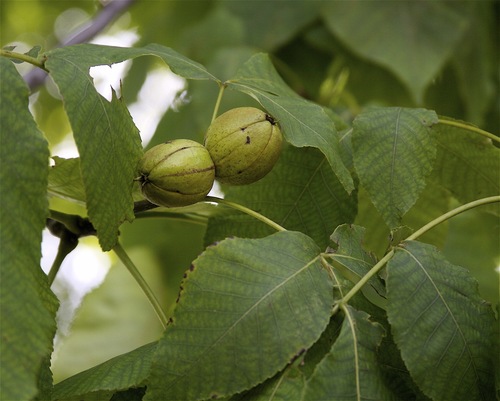
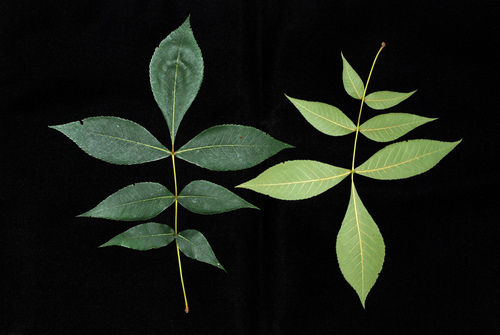
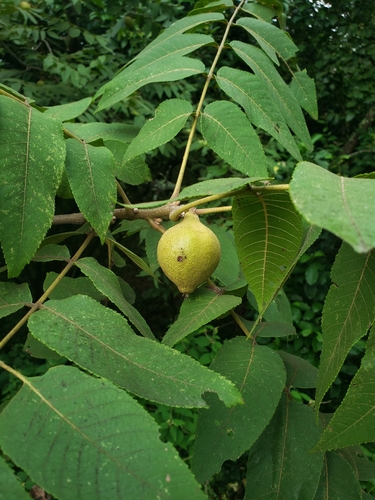
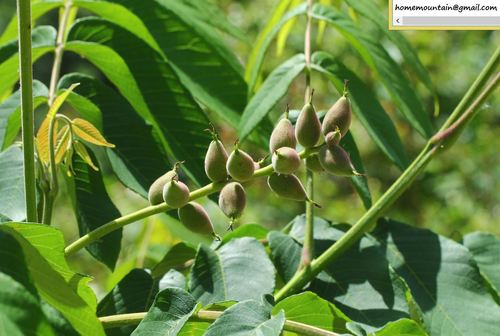
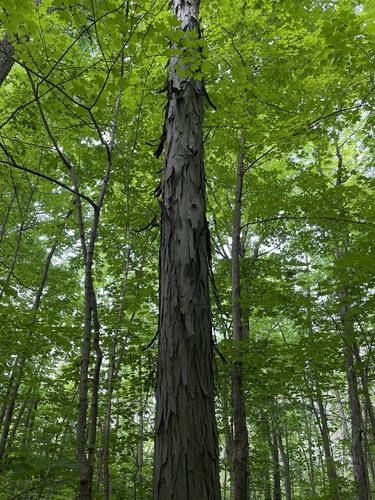
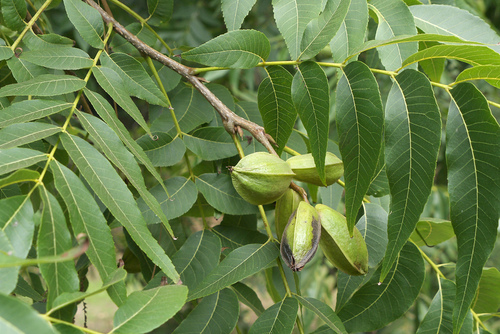
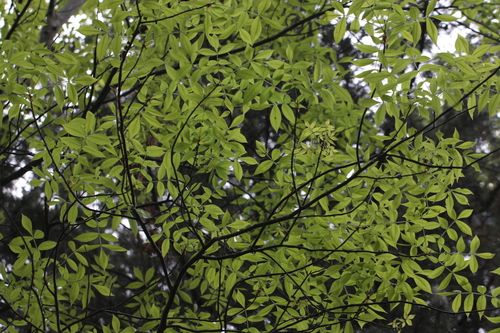
Carya pallida, commonly known as sand hickory, has bark that changes appearance as it reaches maturity. The bark of young sand hickory trees is smooth, and ranges in color from light gray to brown. Mature, older trees develop deep scaly ridges and dark gray bark. This species is monoecious, meaning each individual plant produces both male catkins and female flowers. Carya pallida has alternate compound leaves. Leaflets are typically ovate in shape, arranged in groups of 5 to 9, with 7 being the most common number. The leaf rachis and midrib are covered in coarse, soft, tattered hairs. The underside (abaxial side) of the leaf is covered in scales that range in color from silvery-blue to silvery-yellow. Like other hickories, C. pallida produces wood that is thick, durable, and shock absorbent. Compared to other hickory species, sand hickory has slimmer twigs. Newly emerging buds are protected by mahogany-colored bud scales. True hickories of the Carya genus grow extensive taproots, which can make transplanting these trees difficult or impossible. Loss of newly transplanted trees is common, so extra care is required when moving Carya pallida. This species has potential to be a good shade tree or specimen tree. Male catkins measure 7 to 10 cm (3–4 inches) long, and female flowers are a similar size. Pollination happens via wind dispersal. Sand hickory blooms in spring, from March to May. Its flowers range in color from yellow to green to brown. The nut produced by Carya pallida is oval, dark brown, and enclosed in a thin shell. The nut kernel is described as sweet tasting. The kernels are eaten by rodents, squirrels, and large birds. Sand hickory has been recorded in most southeastern United States. Its range extends from Delaware west to Missouri. It has not been recorded in Pennsylvania, West Virginia, or Ohio. It is rarely found in southwestern Indiana, and is uncommon in Maryland. Population decline has been reported in Arkansas, Illinois, Indiana, Louisiana, and Missouri. Sand hickory is prominent in dry oak-hickory forests. It is often found growing alongside longleaf pine (Pinus palustris) and scrub oak (Quercus marilandica). Hybridization between Carya pallida and pignut hickory (Carya glabra) has been reported.