About Carya ovalis (Wangenh.) Sarg.
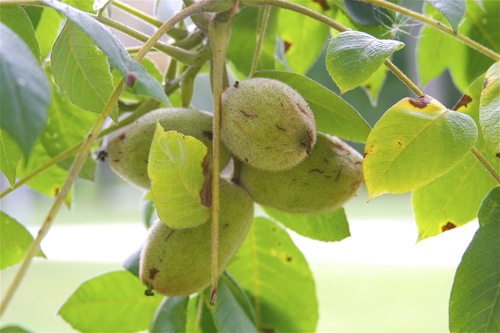
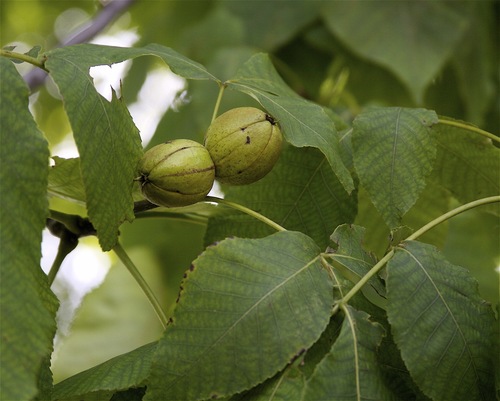
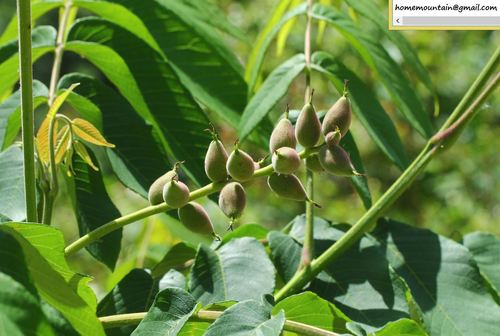
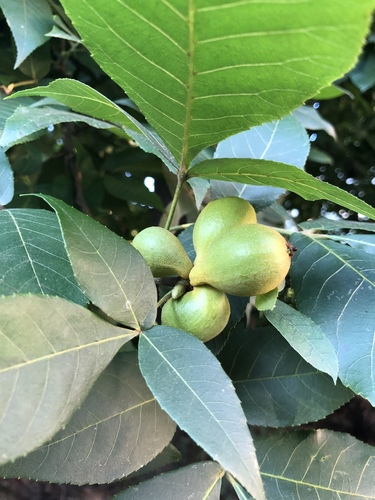
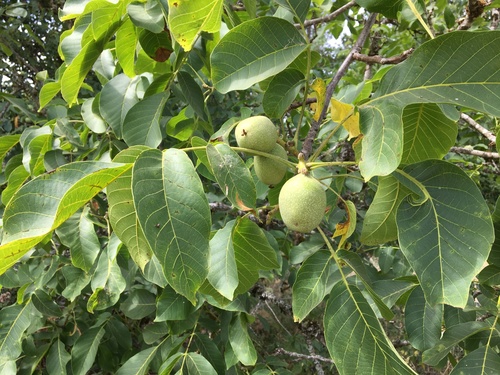
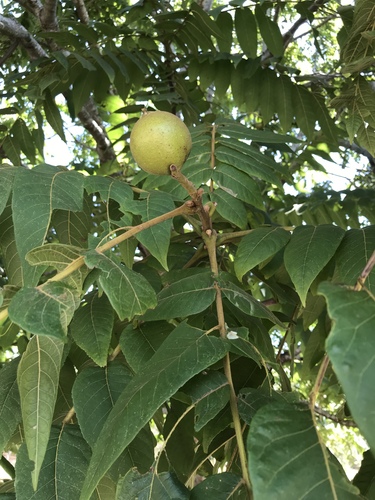
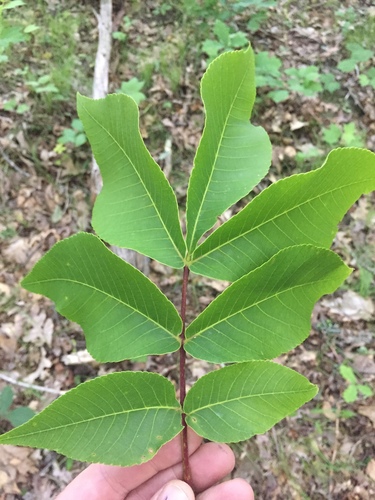
Red hickory, scientifically named Carya ovalis (Wangenh.) Sarg., is most often a medium-sized tree that can reach 30 m (100 ft) in height. It typically grows a single straight trunk that usually extends the full height of the tree, though sometimes it splits into several large limbs once it reaches the canopy. Its branches are strong, stout, and long; upper crown branches grow upward, lower crown branches droop, and branches around mid-height are roughly horizontal. This growth pattern forms a broad, thick, column-shaped tree that creates dense shade. Red hickories are known to live between 100 and 250 years. The largest recorded red hickory, found in Clay County, Kentucky, measures 175 feet tall and 56 inches in diameter at breast height. Its leaves are pinnately compound, and usually bear between five and nine leaflets, with seven being the most common. The terminal leaflet is usually the largest, and auxiliary leaflets decrease in size from the tip to the base of the leaf rachis. Leaflets are widest above or at their midpoint, and have finely serrated margins. The upper surface of leaflets is dark green and either smooth or glaucous, while the lower surface is paler and covered in fine hairs. The leaf rachis is typically bright red or purple, which is a distinctive trait that distinguishes red hickory from pignut hickory. The bark of mature red hickory is grey, made up of tight, flat-topped intersecting ridges that can look quite blocky but are generally strap-like. Occasionally, ridges may peel away from the trunk in strips that are loose at both ends, a trait common to shagbark and shellbark hickories. Young, actively growing red hickories are more likely to have peeling bark than mature individuals. Like all hickories, red hickory produces fruit that is a small round or slightly elliptical nut. Nuts grow singly or in groups of two or three at the ends of bearing branches. While immature, the nut is enclosed in a thin green husk with four clear seams. When the nut matures, between late September and mid-October, the husk changes from green, fleshy, and flexible to dark brown and very brittle. The seams split open from the base upward, and may or may not separate fully from the ripe nut. The nut itself is smooth, tan to beige in color, and has four shallow ridges that align with the husk seams. The inner kernel is very oily, and its flavor ranges from bitter and unpalatable to mildly sweet. For such a small nut, the shell is thick, making the kernel difficult to extract. These nuts are eaten by many wildlife species, including numerous rodents, birds, raccoons, and wild turkeys. Red hickory flowers open in spring at the same time that new leaves develop, between early and late May. Male flowers are long, green, inconspicuous drooping catkins that grow between the base of the leaf petiole and the developing twig. Female flowers have an unusual appearance, with a tuft of sticky green tissue growing out from a swollen base. They develop singly or in groups at the end of a new twig, after the leaves have started expanding. All hickories, including red hickory, are monoecious and self-infertile.