About Carya laciniosa (F.Michx.) Loudon
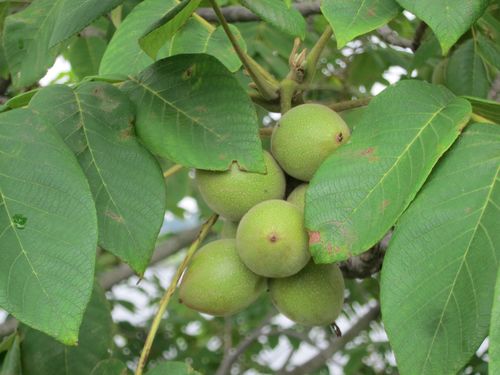
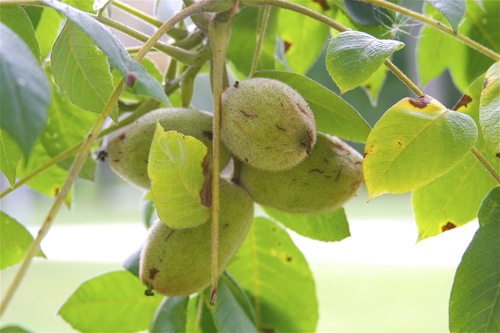
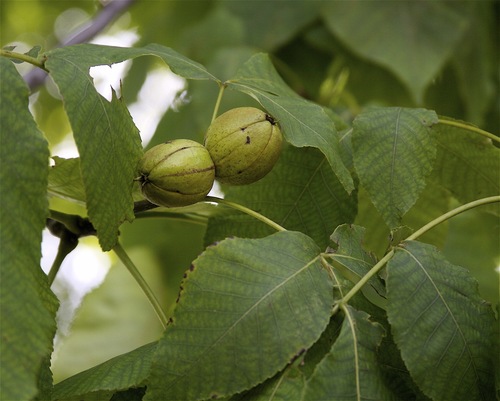
Carya laciniosa, commonly known as the shellbark hickory, is a member of the Juglandaceae (walnut) family. It is also called kingnut, big shellbark, bottom shellbark, thick shellbark, or western shellbark, names that reflect some of its key characteristics. This species is a slow-growing, long-lived tree. It is difficult to transplant because it develops a long taproot, and it is vulnerable to insect damage. Its nuts are the largest of all hickory nuts, with a sweet, edible kernel. Most nuts are harvested by wildlife and people, and any remaining nuts readily produce seedling trees. The wood of Carya laciniosa is hard, heavy, strong, and very flexible, which makes it a popular material for tool handles. A recorded specimen tree growing in Missouri measured 117 cm (46 in) in diameter at breast height, 36.9 m (121 ft 1 in) in height, and had a crown spread of 22.6 m (74 ft 2 in). Shellbark hickory has a wide distribution range, but it is not common anywhere within that range. Its range stretches from western New York through southern Michigan to southeast Iowa, then south through eastern Kansas into northern Oklahoma, and eastward through Tennessee into Pennsylvania. This species is most abundant in the lower Ohio River region and south along the Mississippi River to central Arkansas. It is frequently found in the large river swamps of central Missouri and the Wabash River region of Indiana and Ohio, and also occurs scattered through New York state’s Hudson Valley. Partly due to human activity, shellbark hickory is now rare across much of its natural range. Its heavy seeds cannot travel far from the parent tree, and many existing stands have been lost to forest clearing and lumber harvesting. It is also rarely planted as an ornamental tree, due to its slow growth rate and difficulty with transplanting. The edible seeds of shellbark hickory nuts are consumed by ducks, quail, wild turkeys, squirrels, chipmunks, deer, foxes, raccoons, and white-footed mice. A small number of shellbark hickory plantations have been established for nut production. While the kernel is sweet, the nuts are difficult to crack. The tree’s wood is used for furniture, tool handles, sporting goods, veneer, fuelwood, charcoal, and drum sticks.